There is a quiet revolution taking place inside the world’s most refined dressing rooms. For decades, the dominant cultural narrative dictated that an extraordinary wardrobe required an endless cycle of acquisition—chasing runway micro-trends, swapping palettes every season, and discarding last year’s silhouettes the moment editorial layouts shifted. Yet, if you speak to seasoned collectors, bespoke tailors, or the most effortlessly elegant dressers in fashion capitals from Milan to Tokyo, you will quickly discover an entirely different philosophy. True elegance does not shout; it endures. It exists independent of fleeting retail calendars, rooted instead in craftsmanship, material integrity, and intentional curation.
Building a high-end wardrobe that costs the earth nothing is not merely an exercise in self-restraint; it is the ultimate expression of modern luxury. In an era where hyper-consumption has created staggering environmental and structural strain across the globe, the most sophisticated style statement you can make is one of permanence. This approach bridges the gap between sartorial grandeur and planetary consciousness. When we speak of creating an exceptional personal collection with zero cost to the earth, we are looking through a double lens: minimizing ecological impact while maximizing lifetime value, so that neither the environment nor your long-term financial wellbeing is depleted by disposable design.
In this comprehensive editorial guide, we will deconstruct the architecture of an enduring, sustainable luxury wardrobe. You will learn how to read the physical language of superior garment construction, how to curate a foundation of versatile anchor pieces, how to navigate the worlds of high-end vintage and archival acquisition, and how to master garment care to ensure your pieces outlive seasonal cycles. By redefining what it means to invest in style, you can cultivate an aesthetic identity that feels deeply personal, impeccably tailored, and entirely timeless.
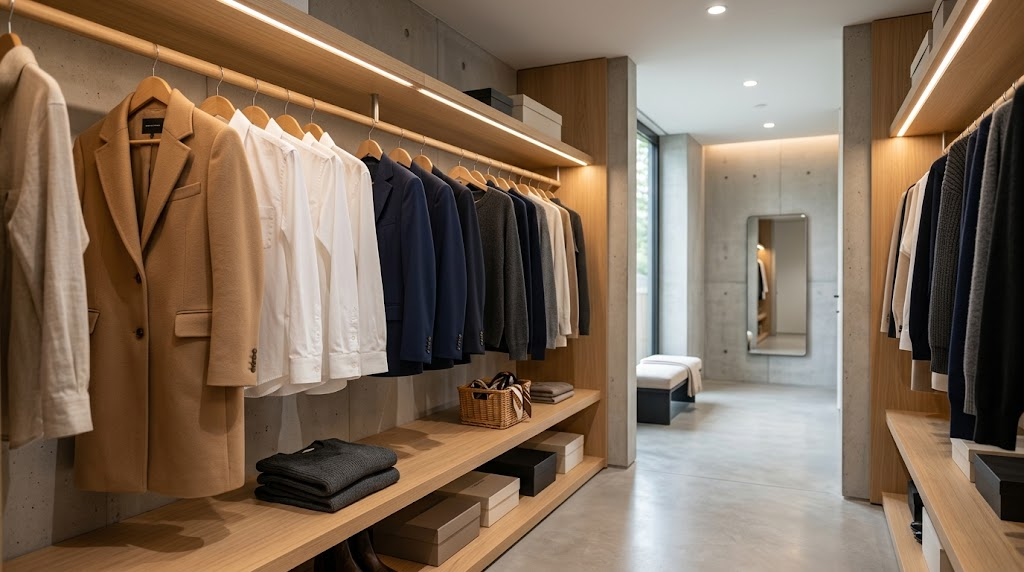
The True Cost of Ephemeral Fashion: Deconstructing the Modern Wardrobe Crisis
To understand why timeless luxury matters, one must first confront the reality of how fashion production has evolved over the past thirty years. Historically, luxury fashion was defined by time. A garment took weeks to cut, canvas, fit, and finish. Natural textiles—pure virgin wool, heavy mulberry silk, structured flax linen, and vegetable-tanned leathers—were treated as precious commodities meant to be cared for, tailored, and passed down through generations.
The democratization of ready-to-wear, while expanding accessibility, gradually gave rise to an accelerated system of hyper-production. Even high-end labels began condensing their design calendars, expanding from the classic Spring/Summer and Autumn/Winter rhythm into an exhausting carousel of Pre-Fall, Resort, Cruise, and limited-edition capsule drops. This speed fundamentally altered consumer psychology. Clothing transformed from an investment asset into a disposable consumable.
+-------------------+-----------------------------+-----------------------------+
| Dimension         | Fast/Micro-Trend Model      | Timeless Luxury Model       |
+-------------------+-----------------------------+-----------------------------+
| Production Cycle  | 52 micro-seasons per year   | 2 core seasonal collections |
| Material Blend    | Synthetic heavy (Poly/Elas) | Pure natural fibers/Canvased|
| Lifespan Expectancy| Under 10 wears             | Decades / Generational      |
| Resale / Archive  | Negligible residual value   | Strong secondary retention  |
+-------------------+-----------------------------+-----------------------------+
When garments are manufactured at breakneck speed, compromises are inevitable. High-grade natural fibers are frequently blended with cheap petrochemical synthetics like polyester, polyamide, and elastane to cut raw-material costs and simulate softness or stretch. Unfortunately, these mixed-fiber textiles are nearly impossible to recycle mechanically or chemically, meaning that millions of tons of garments end up in global landfills each year, taking centuries to degrade while shedding microplastics into marine ecosystems.
Beyond the environmental footprint lies a sartorial tragedy: the erosion of personal style. When we constantly buy into short-lived trends—whether it is an exaggerated shoulder shape, a hyper-specific neon dye, or an ultra-niche novelty cut—we outsource our aesthetic intuition to marketing algorithms. Within six months, those novelty garments feel dated, leaving the wearer with a closet bursting with clothes yet devoid of anything genuinely satisfying to wear.
Choosing timelessness over trend-chasing breaks this cycle cleanly. When you intentionally step off the trend treadmill, you reclaim your agency. You shift from being a passive consumer of seasonal novelties to an informed curator of your personal visual legacy.
The Anatomy of True Luxury: Materials, Weaves, and Craftsmanship
A high-end wardrobe that withstands decades of wear requires an uncompromising focus on structural anatomy. Many shoppers assume that a prestigious logo or an astronomical price tag automatically guarantees longevity. In contemporary fashion, that assumption can lead to costly mistakes. The educated buyer ignores branding and reads the physical construction of the garment itself.
The Science of Noble Fibers
The foundation of any enduring garment is its fiber composition. Natural, long-staple fibers possess inherent performance characteristics that synthetic substitutes fail to replicate:
- Long-Staple Combed Cotton: When inspecting cotton shirts or knitwear, the length of the staple fiber is the ultimate determinant of longevity. Extra-long staple (ELS) varieties—such as Sea Island cotton, Egyptian Giza, and American Supima—feature individual fibers measuring over 34 millimeters. These long fibers spin into smooth, extraordinarily strong yarns that resist pilling, maintain structural drape, and become softer with every laundry cycle.
- High-Grade Wool and Worsted Fabrics: Wool is naturally thermo-regulating, wrinkle-resistant, odor-repellent, and biodegradable. However, not all wool is equal. For suits and tailored trousers, look for high-twist worsted wools (such as fresco fabrics) with yarn counts between Super 110s and Super 130s. While ultra-fine counts like Super 180s feel gossamer-soft on the rack, they are fragile and prone to premature friction wear. A well-constructed 120s worsted strikes the sweet spot between silky hand-feel and decades-long resilience.
- Cruelty-Free, High-Micron Cashmere: Grade-A Mongolian and Inner Mongolian cashmere utilizes fibers sourced exclusively from the underbelly and throat of the goat, with a diameter of 14 to 15.5 microns and lengths exceeding 36 millimeters. True luxury knitwear should feel slightly dense and dry upon initial purchase rather than excessively fluffy. Overly soft garments straight off the shelf are often spun from short, broken fibers that will pill and lose their silhouette after minimal wear.
- Heavyweight Mulberry Silk: Silk should be assessed by its momme weight (the traditional metric measuring density). A luxury silk blouse or dress should ideally feature a momme weight of 19mm to 22mm or higher. Lightweight silks (under 14mm) snag easily, tear at the stress points of armholes, and deteriorate quickly under routine dry cleaning.
- Belgian and French Flax Linen: Harvested from Western European flax, high-grade linen is one of the strongest natural textiles on earth. It gains character, softness, and luster through washing. High-density linen provides an elegant, structured drape that elevates casual summer dressing while outlasting lighter cotton alternatives.
   POOR FIBER vs. NOBLE FIBER BEHAVIOR OVER TIME

   Synthetic/Short-Staple Blend:
   [Year 0] Soft / Shiny ---> [Year 1] Pilling / Bagging ---> [Year 2] Landfill

   High-Twist Long-Staple Natural:
   [Year 0] Dense / Crisp ---> [Year 5] Matured / Softened ---> [Year 20+] Archival Heirloom
Architectural Tailoring: How to Identify Lasting Construction
Beyond textiles, the internal architecture of a garment dictates how it holds up to human movement and gravity over decades. This is particularly crucial in jackets, overcoats, and structured tailoring.
+---------------------------+------------------------------------------------------+----------------------------------------------------+
| Construction Element      | Mass Production Technique                            | Bespoke / Heritage Luxury Standard                 |
+---------------------------+------------------------------------------------------+----------------------------------------------------+
| Jacket Interfacing        | Glued/Fused polyester resin sheet                    | Full Floating Horsehair Canvas                     |
| Seam Finishing            | Raw 3-thread overlock serging                        | French seams, bound seams, or Hong Kong piping     |
| Hem Allowances            | Minimal (less than 1 cm raw folded)                  | Generous (3 to 5 cm for future alterations)        |
| Button Attachment         | Machine stitched flat without shank                  | Hand-stitched with thread shank on horn/mother-of-pearl |
| Pattern Alignment         | Disjointed patterns across side seams and pockets    | Exact pattern matching across all structural cuts  |
+---------------------------+------------------------------------------------------+----------------------------------------------------+
1. Full vs. Half Canvas Jackets
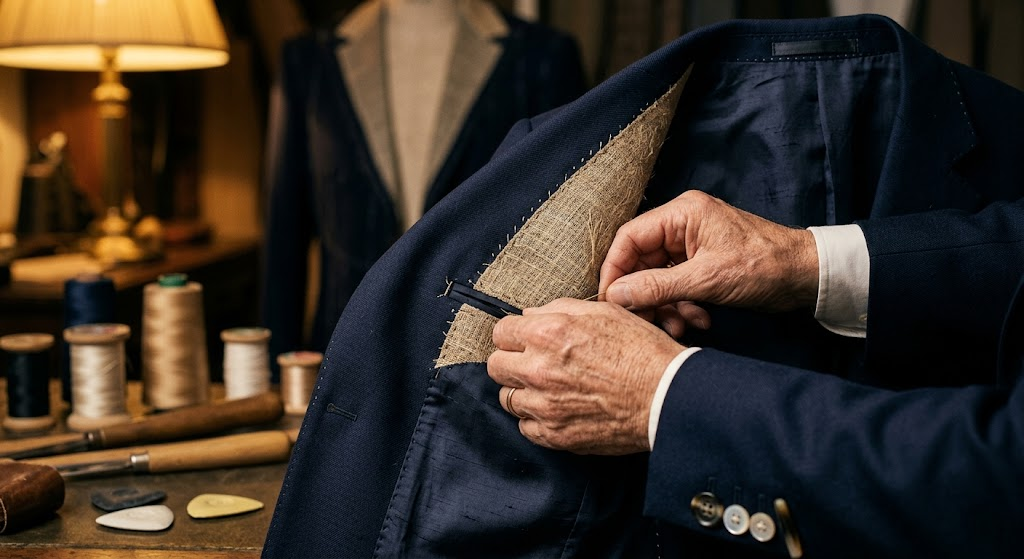
In cheap suiting, the outer shell is chemically bonded (fused) to an inner polyester lining using heat-activated glue. Over time, friction and dry cleaning degrade the adhesive, resulting in unsightly bubbling across the lapels and chest that cannot be reversed.
True luxury tailoring utilizes a floating canvas cut from natural horsehair and wool. This canvas floats between the fabric layers, slowly molding to your unique bodily contours through natural body heat. It maintains its rolling lapel roll and dimensional chest shape indefinitely.
2. Generous Inlay and Alteration Allowances
Our bodies shift over the course of life. A fast-fashion or poorly engineered designer garment trims internal seam allowances to the bare millimeter to cut industrial fabric costs, rendering future adjustments impossible.
A well-crafted heirloom garment leaves generous excess fabric (inlays) along the back seam, trousers seat, and hem allowances. This allows an expert tailor to let a garment out by one or two full sizes decades down the line.
3. High-Stress Reinforcement
Examine the interior pockets, armpit gussets, and vent splits. Premium tailoring includes bar-tacks (reinforcement stitching), small interior button reinforcements, and interior sweat shields to absorb perspiration and protect the primary suiting fabric.
Defining the Capsule: The Core Pillars of an Enduring Collection
When building a wardrobe intended to cost the earth nothing, curation must replace accumulation. The core philosophy rests upon assembling high-utility “anchor pieces”—garments characterized by structural neutrality, flawless proportion, and effortless cross-pollination.
                    ┌─────────────────────────┐
                    │    THE CAPSULE ENGINE   │
                    │  Neutral Foundation Core│
                    └────────────┬────────────┘
                                 │
         ┌───────────────────────┼───────────────────────┐
         ▼                       ▼                       ▼
┌──────────────────┐   ┌──────────────────┐   ┌──────────────────┐
│  Primary Anchor  │   │ Secondary Anchor │   │ Accent Layering  │
│ - Charcoal Suit  │   │ - White Poplin   │   │ - Fine Knitwear  │
│ - Trench Coat    │   │ - Heavy Denim    │   │ - Silk Scarves   │
│ - Goodyear Boots │   │ - Loafers        │   │ - Minimal Belts  │
└──────────────────┘   └──────────────────┘   └──────────────────┘
Let us examine the indispensable foundational pillars that form the nucleus of a transcendent personal wardrobe:
The Architectural Overcoat
Whether rendered as a double-breasted camel wool coat, a navy melton wool car coat, or a timeless raglan-sleeve gabardine trench, an exceptional piece of outerwear sets the tone for your entire wardrobe. It is the outer shell that the world sees first.
What to look for: Look for 100% natural fibers with a substantial fabric weight (at least 450 to 600 grams per meter for winter wools). Avoid blends that introduce more than 10% synthetic content. Ensure the shoulder line drops cleanly over your natural posture without excessive shoulder padding unless intentional tailoring demands it.
The Bespoke or Master-Tailored Suit
A two-piece suit in dark navy, mid-grey, or deep charcoal serves as a versatile toolkit. Deconstructed, the jacket doubles as a smart blazer over selvedge denim or relaxed trousers, while the trousers pair with knitwear, crisp shirting, or fine linen tees.
What to look for: Dual vents for movement, horn buttons, a medium-width notch or peak lapel (avoid hyper-skinny or extreme 70s peak widths which date quickly), and mid-rise trousers with classic front pleats or a clean flat front.
The Perfect White and Sky-Blue Shirting
The foundation of everyday elegance rests on the collar line. A well-cut shirt in a two-ply 100s or 120s cotton poplin or crisp oxford cloth elevates casual looks and anchors formal tailoring.
What to look for: Semi-spread collars that work with or without a tie, split back yokes that allow your shoulder blades uninhibited range of motion, and mother-of-pearl buttons that resist chipping under laundering.
Heavyweight Selvedge or Straight-Leg Denim
Denim was historically built for manual labor, engineered to survive punishing conditions. Modern fast-fashion jeans incorporate elastane, causing them to sag, lose elasticity, and wear through the inner thigh within twelve months.
What to look for: 100% cotton raw or rinsed selvedge denim woven on traditional shuttle looms (typically 12.5oz to 14.5oz). Shuttle-loom weaving creates a tighter, more resilient weave with finished edges that can be repaired cleanly through darning for decades.
Fine Gauge Cashmere and Merino Crew/Roll Necks
Knits bridge the gap between formal tailoring and relaxed living. A midnight navy, oat, or charcoal grey roll-neck knit in 2-ply long-staple cashmere provides thermal protection without bulk.
What to look for: Fully fashioned knitting—where panels are shaped directly on the knitting machine rather than cut from flat fabric and serged together. Fully fashioned seams are identifiable by tiny stitch reductions near the armhole, providing structural integrity that prevents seam twisting after laundering.
Footwear Architecture: Why Goodyear Welting and Handcrafting Matter
Footwear represents the literal foundation of personal style. It is also the item subjected to the most physical wear and tear. Millions of pairs of glued, cement-lasted designer sneakers and shoes are discarded annually because their construction makes resoling impossible once the thin rubber outer sole wears down.
       CEMENTED CONSTRUCTION vs. GOODYEAR WELTED CONSTRUCTION

       [Cemented]                                [Goodyear Welted]
  +-------------------+                     +--------------------------+
  |    Upper Leather  |                     |      Upper Leather       |
  +---------+---------+                     +-------------+------------+
            | (Glue)                                      |
  +---------v---------+                     +-------------v------------+
  | Cheap Foam Sole   |                     | Leather Welt + Gemming   |
  +-------------------+                     +-------------+------------+
  (Wears down -> Trash)                     | Cork Insole Cavity Bed   |
                                            +-------------+------------+
                                            | Replaceable Leather Sole |
                                            +--------------------------+
                                            (Resoleable 5-10+ times)
Investing in sustainable, high-end footwear requires an appreciation for classic shoemaking methods:
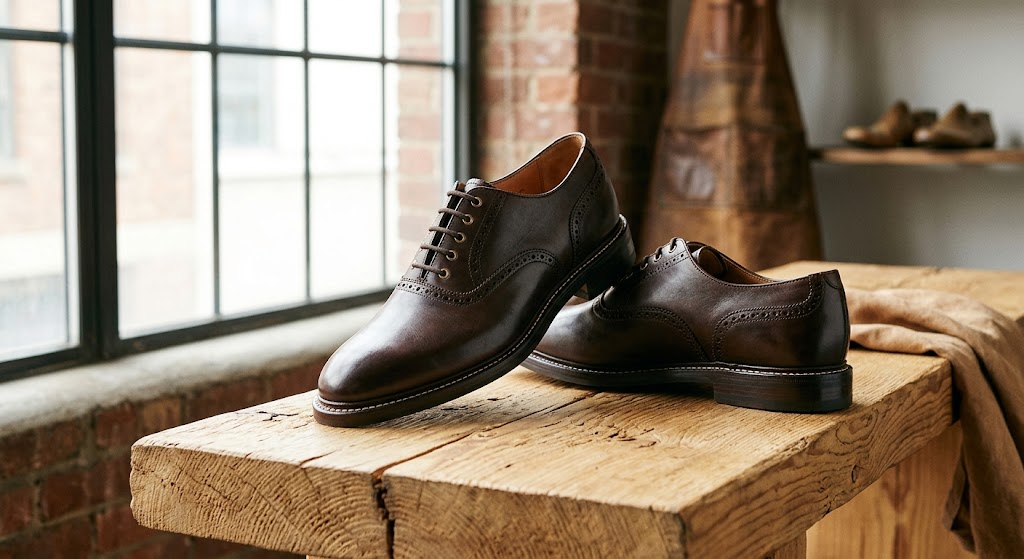
Goodyear Welting
Developed in the late 19th century, the Goodyear welting method stitches a strip of leather (the welt) directly to both the upper leather and the internal insole rib. A secondary stitch then joins the welt to the heavy outer sole.
The hollow cavity between the insole and outsole is filled with granulated cork mixed with resin, which molds over time to the unique shape of your foot, creating a custom orthotic footprint. When the bottom sole inevitably wears thin, an artisan cobbler cuts the welt stitch, removes the old sole, and attaches a new one without compromising the leather upper. A pair of Goodyear-welted oxfords, derbies, or Chelsea boots from historic shoemakers can easily last thirty to forty years when resoled every four to seven years.
Blake Stitching and Hand-Welted Craft
Popular in Italian shoemaking, Blake stitching passes a single thread directly through the insole, upper, and outsole. While slightly less moisture-resistant than a Goodyear welt, Blake stitching provides a sleeker, lighter silhouette with immediate out-of-the-box flexibility. High-end Blake-stitched loafers can also be resoled multiple times by qualified craftsmen.
Leather Quality: Full-Grain vs. Corrected Grain
Always inspect the leather surface. Genuine high-end shoemaking utilizes full-grain calfskin from historic European tanneries.
Avoid: Corrected-grain or “bookbinder” leathers, which are buffed down to hide animal skin imperfections and coated in a high-gloss plastic finish. Corrected grain will crack over time, and these cracks cannot be repaired with conditioning creams. Full-grain leather, by contrast, absorbs natural oils and shoe waxes, developing a rich, dimensional patina that grows more attractive with age.
The Economics of Style: Cost-Per-Wear vs. Initial Price Tag
One of the greatest misconceptions in modern consumerism is that purchasing affordable, trend-driven clothing saves money. In reality, the traditional fast-fashion cycle functions as an ongoing consumption tax, demanding repeated capital outlay for items that lose structural and aesthetic viability within a single season.
Let us run a mathematical comparison between disposable buying and high-end timeless curation:
+------------------------------------+------------------------------------+
| The Fast-Fashion Trend Approach    | The High-End Timeless Approach     |
+------------------------------------+------------------------------------+
| 1 Fast Suit / Jacket: $200         | 1 Fully Canvased Wool Suit: $1,600 |
| Lifespan: 1 Year (Bubbling/Pilling)| Lifespan: 15 Years (Maintained)    |
| Total Wears: 25 times              | Total Wears: 300 times             |
| Cost Per Wear: $8.00               | Cost Per Wear: $5.33               |
| Resale/Residual Value: $0          | Resale/Residual Value: $400 - $600 |
| Environmental Cost: Massive        | Environmental Cost: Minimal        |
+------------------------------------+------------------------------------+
As demonstrated above, while the initial capital requirement for high-end tailoring is higher, the amortized cost-per-wear over the garment’s operational lifespan is significantly lower.
Furthermore, high-end garments retain substantial equity on the luxury secondary market. A bespoke or heritage blazer made from pure Loro Piana or Fox Brothers wool retains an enduring asset value. If your sizing shifts or you choose to refresh your rotation, the piece can be consigned, recouping a significant portion of your initial outlay. Disposable garments, conversely, drop to zero residual value the moment the tags are removed.
The Secondary Luxury Matrix: Mastering Vintage, Archives, and Consignment
Building a museum-grade wardrobe that leaves zero production footprint on the earth is made vastly easier by the secondary luxury market. By acquiring pre-owned, archival, or deadstock pieces, you bypass the industrial manufacturing phase altogether—demanding zero additional water consumption, zero agricultural pesticide use, and zero factory carbon emissions.
Navigating high-end resale platforms, estate sales, and vintage purveyors requires an analytical mindset. Here is how expert collectors separate investment-grade treasures from overhyped, over-polished castoffs.
       VINTAGE & ARCHIVAL ACQUISITION PROTOCOL

       [Step 1: Fiber Analysis]  ---> Check internal care tag for 100% natural composition
                  │
       [Step 2: Stress Points]   ---> Inspect crotch, armpit linings, and collar folds
                  │
       [Step 3: Hardware Check]  ---> Verify Riri/Lampo zippers, solid brass/horn details
                  │
       [Step 4: Silhouette Test] ---> Does the cut hold integrity beyond its launch era?
                  │
       [Step 5: Restoration]     ---> Factor in tailoring, deep ozone cleaning, or resoling
1. Identify Golden Era Manufacturing
Many luxury fashion houses shifted their manufacturing strategies between the late 1990s and mid-2000s, transitioning from localized artisanal workshops to high-volume contract factories. Consequently, a vintage blazer or leather handbag produced in France or Italy during the 1980s or 1990s often features significantly superior leather, heavier hand-stitching, and thicker hardware than its modern boutique equivalent.
When scouting vintage tailoring, look for heritage labels that have maintained rigorous construction practices:
- Old-label Hermès leather goods and silk twill
- Pre-2000s Burberry gabardine trench coats made in Castleford, England
- Vintage Saint Laurent (Rive Gauche era) tailoring
- Traditional Savile Row houses (Huntsman, Anderson & Sheppard, Henry Poole)
- Japanese denim manufactured during the Osaka Five movement
2. Inspecting Hidden Vulnerabilities
When purchasing pre-owned luxury garments online or in boutique salons, evaluate the physical stress zones that photos frequently gloss over:
- The Inner Collar Fold: On jackets and overcoats, look closely for fabric thinning, friction discoloration, or fraying along the upper neck fold.
- The Trousers Crotch and Thigh Junction: Look for friction thinning or blowout repairs. Check if the fabric has worn down to a translucent sheen.
- Lining Degradation: A torn lining is easily replaced by an expert tailor, but shredded armhole linings can sometimes indicate internal canvas structural damage caused by improper storage or moisture exposure.
- Moth Nips: Hold vintage wool garments up to backlight. Tiny pinprick holes indicate past moth activity. If a garment has superficial moth grazes that haven’t pierced the weave, an artisan invisible mender can reweave the area using loose threads harvested from the internal hem inlay.
The Art of Maintenance: Caring for Garments so They Outlive You
The most sustainable garment is the one you already own. Yet modern garment care is riddled with destructive habits. Industrial dry cleaning, harsh chemical detergents, plastic hangers, and aggressive heat cycles can destroy fine textiles in a fraction of their natural lifespan.
To preserve a high-end wardrobe over decades, implement an intentional care regimen modeled on archival textile preservation.
+-------------------+------------------------------------+------------------------------------+
| Garment Type      | Destructive Common Practice        | Archival Preservation Standard     |
+-------------------+------------------------------------+------------------------------------+
| Wool Tailoring    | Frequent chemical dry cleaning     | Steam refreshing & boar-bristle brush |
| Cashmere Knits    | Machine wash / Hanging on hangers  | Cold hand-wash & flat cedar drying |
| Leather Footwear  | Worn consecutively on bare wood    | Cedar shoe trees + 24-hr rest cycle |
| Fine Cotton Shirts| High-heat tumble drying            | Line dry + medium steam ironing    |
| Luxury Denim      | Frequent hot machine washing       | Spot cleaning + fresh-air hanging  |
+-------------------+------------------------------------+------------------------------------+
1. The Power of the Natural Boar-Bristle Clothes Brush
Tailored wool jackets and coats should rarely visit the dry cleaner. The harsh solvents used in commercial dry cleaning (such as perchloroethylene) strip natural lanolin oils from wool fibers, leaving the textile brittle, lifeless, and prone to tearing.
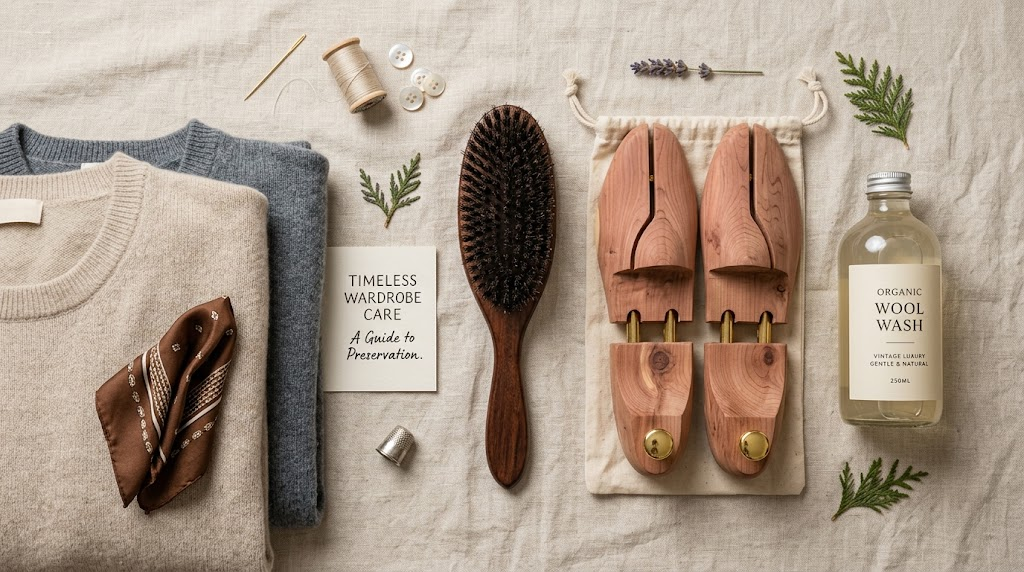
Instead, invest in a genuine boar-bristle clothes brush. After every wear, spend sixty seconds brushing your woolens downwards. The stiff natural bristles lift trapped road dirt, dead skin cells, and urban dust from deep within the weave before they can bind with ambient humidity and abrade the fibers. Hang the garment in a well-ventilated space overnight to air out before returning it to the closet.
2. The Cedar Shoe Tree Rule
Leather is an organic, porous skin. Throughout a day of wear, your feet produce significant moisture, which saturates the interior lining and upper leather. If left to dry without structural support, the leather contracts unevenly, creating permanent curling at the toe box and deep, irreversible leather cracking across the vamp.
Insert raw, unvarnished Western Red Cedar shoe trees into your footwear the moment you step out of them. Unvarnished cedar actively wicks interior moisture, neutralizes bacteria, and smooths out the leather upper as it cools. Most importantly, never wear the same pair of fine leather shoes two days in a row; give them a minimum of 24 to 48 hours of rest on shoe trees between wears.
       LEATHER RECOVERY TIMELINE

       [0 Hours: Worn All Day]  ---> High moisture, warm leather, stress creasing
                  │
       [+5 Minutes]             ---> Insert unvarnished cedar shoe tree
                  │
       [+24 Hours Rest]         ---> Moisture wicked away, leather stabilized
                  │
       [+48 Hours Rest]         ---> Core fibers dried flat; ready for next wear cycle
3. Proper Seasonal Storage
When transitioning your wardrobe across seasons, improper storage can ruin luxury fibers:
- Never Use Dry Cleaner Plastic Sheaths: Plastic bags trap atmospheric humidity and emit chemical gases as they age, causing delicate silk and white cotton to yellow permanently.
- Use Breathable Cotton Garment Bags: Fine woolens and tailoring should always hang inside 100% natural unbleached cotton garment bags, allowing air circulation while keeping dust away.
- Cedar Wood Blocks Over Chemical Mothballs: Chemical mothballs leave toxic, pervasive chemical odors. Use natural aromatic red cedar blocks or dried lavender sachets to naturally deter insects. Sand the cedar blocks lightly with fine sandpaper every twelve months to refresh their natural insect-repelling oils.
Cultivating Aesthetic Discipline: Curing the Novelty Addiction
A high-end wardrobe cannot survive on material quality alone; it requires an unwavering personal aesthetic philosophy. The reason many well-funded closets remain chaotic is not a lack of resources, but an absence of aesthetic discipline.
When luxury fashion houses launch marketing campaigns designed to induce seasonal insecurity, the disciplined dresser relies on a distinct set of foundational filters:
                  THE SARTORIAL PURCHASE FILTER

                  [Prospective Garment]
                            │
                            ▼
          [Rule 1: Does it match 3 core items?]
                  │ YES               │ NO
                  │                   └───► REJECT
                  ▼
          [Rule 2: Is it cut from noble fibers?]
                  │ YES               │ NO
                  │                   └───► REJECT
                  ▼
          [Rule 3: Can it be tailored/repaired?]
                  │ YES               │ NO
                  │                   └───► REJECT
                  ▼
          [Rule 4: Would you wear it in 10 years?]
                  │ YES               │ NO
                  │                   └───► REJECT
                  ▼
              [PROCEED TO ACQUISITION]
1. The Three-Look Rule
Never introduce a new piece to your wardrobe unless you can mentally construct at least three distinct, complete outfits using items you already own. If a prospective jacket requires you to purchase new shoes, a specific style of trousers, and a new shirt to make it functional, it is not a foundational asset; it is an aesthetic parasite that destabilizes your entire rotation.
2. Define Your Signature Silhouette
Trends fluctuate wildly between extremes—from ultra-skinny cuts to billowing oversized cuts. A timeless wardrobe ignores these exaggerated swings in favor of classical balance.
Understand your unique physical proportions:
- Identify the trouser rise that complements your torso length.
- Find the jacket length that bisects your frame harmoniously (classically, a tailored jacket should terminate near the base of the thumb or cover the glutes).
- Select collar heights that balance your jawline and neck profile.
Once you have identified the structural proportions that work for your body, commit to them regardless of what retail storefronts are promoting.
3. Embrace the Charm of Patina and Visible Repair
One of the most elevated attitudes in high-end lifestyle culture is the appreciation of patina. In Japanese philosophy, this aligns with wabi-sabi—finding beauty in the honest markers of age, use, and repair.
A buttery leather briefcase with decades of softened edges, a tailored tweed jacket with suede elbow patches, or selvedge denim neatly darned with matching indigo thread conveys effortless confidence. It shows that you do not simply buy luxury; you live in it, master it, and allow it to evolve alongside you.
Modern Digital Innovation in Wardrobe Management
While timeless fashion draws inspiration from artisanal heritage, contemporary technology provides exceptional tools for optimizing our relationship with our clothes. A sustainable personal wardrobe is greatly enhanced when organized with digital clarity.
+----------------------------+-------------------------------------------------------+
| Digital Tool / Platform    | Practical Wardrobe Application                        |
+----------------------------+-------------------------------------------------------+
| Digital Wardrobe Indexing  | Photographing assets to track wear frequency and CPW  |
| Tailoring Spec Databases   | Storing bespoke measurements and alteration records   |
| Archival Resale Platforms  | Monitoring secondary market valuations for curation   |
| Direct-to-Artisan Portals  | Sourcing bespoke garments made to order (zero waste)  |
+----------------------------+-------------------------------------------------------+
1. Digital Wardrobe Indexing
Modern wardrobe cataloging applications allow you to photograph and categorize every garment in your possession. By logging daily outfits, you generate real-time metrics on your wear frequency.
This reveals patterns: which silhouettes you instinctively reach for, which colors remain untouched, and the true cost-per-wear of your garments. These insights eliminate emotional impulse shopping, allowing you to invest exclusively in areas where your wardrobe actually needs reinforcement.
2. Made-to-Order and On-Demand Craftsmanship
Technology is also transforming luxury production. Instead of speculative mass production, a growing movement of luxury houses is adopting digital made-to-order (MTO) models.
You submit your measurements digitally, and the garment is woven and hand-assembled specifically for you. This entirely eliminates deadstock waste, overproduction warehousing, and retail markups, directing your investment capital into pure textile grade and artisan labor.
Mastering the Palette: The Chemistry of Cohesive Dressing
A timeless luxury collection avoids loud, hyper-saturated seasonal prints in favor of a cohesive color architecture. When your color palette is harmoniously aligned, getting dressed requires zero cognitive friction, because virtually every top pairs seamlessly with every bottom and piece of outerwear.
       THE TIMELESS LUXURY CHROMATIC WHEEL

                  [ Deep Navy ]
                 /             \
        [ Charcoal ]         [ Warm Oat / Camel ]
             |                      |
        [ Pure White ]       [ Dark Chocolate ]
                 \             /
                  [ Olive / Sage ]
1. The Core Monochromes and Neutrals
- Midnight Navy: Navy possesses a soft sophistication that black often lacks in broad daylight. It complements nearly every skin tone and pairs naturally with rich leathers.
- Charcoal and Mid-Grey: The ultimate neutral for tailoring, flannel trousers, and heavy knitwear. Grey creates a crisp, clear backdrop that lets other textures shine.
- Camel, Ecru, and Warm Oat: Earthy, organic tones inject warmth and luxury into casual outerwear, linen shirting, and winter cashmere.
- Crisp Chalk White and Light Sky Blue: The gold standards for foundational shirting and t-shirts, delivering sharp contrast against structured tailoring.
2. Controlled Accent Hues
If you wish to introduce color, pull from nature’s muted spectrum rather than artificial neon dyes. Consider deep forest green, weathered olive, dark burgundy, rich terracotta, and dusty slate blue. These shades behave almost like neutrals, introducing depth and visual interest without dating your wardrobe to a specific seasonal cycle.
Tailoring as an Art Form: Building a Lifelong Partnership with Your Artisan
No off-the-rack garment, regardless of its designer prestige or four-figure price tag, is finished until it has passed through the hands of a master tailor. Human bodies are three-dimensional, asymmetrical, and unique. Off-the-rack patterns are engineered to an industrialized average.
Establishing a personal relationship with an exceptional local tailor is the final bridge to achieving a timeless aesthetic that costs the earth nothing.
       THE ALTERATION ROADMAP FOR TIMELESS DRAPE

       [Off-The-Rack Acquisition]
                  │
                  ├───► 1. Sleeve Pitch & Length (Expose 1-1.5cm of shirt cuff)
                  │
                  ├───► 2. Collar Hug (Eliminate collar gap behind the neck)
                  │
                  ├───► 3. Waist Suppression (Shape the silhouette cleanly)
                  │
                  ├───► 4. Trouser Rise & Taper (Balance thigh and leg opening)
                  │
                  └───► 5. Hem Break (Zero-to-slight break for clean shoe contact)
When you understand how garments can be altered, your perspective on vintage and pre-owned luxury expands dramatically. You no longer walk past an estate-sale overcoat simply because the sleeves are an inch too long or the waist lacks suppression.
You see the structural potential of the raw textile, confident that your tailor can transform a diamond in the rough into a bespoke-fitting masterpiece for a fraction of boutique retail costs.
Actionable Blueprint: Your 12-Month Wardrobe Transition Plan
Transitioning from trend-driven consumption to a permanent, high-end collection requires a structured, step-by-step strategy. Do not rush into your closet and discard everything overnight. Systematic transformation demands patience, reflection, and precise execution.
+-----------+-----------------------+--------------------------------------------------------+
| Phase     | Timeframe             | Core Action Items                                      |
+-----------+-----------------------+--------------------------------------------------------+
| Phase 1   | Months 1 to 3         | The Wardrobe Audit: Purge synthetics and catalogue.    |
| Phase 2   | Months 4 to 6         | Repair and Tailor: Bring existing core assets to life. |
| Phase 3   | Months 7 to 9         | Footwear and Outerwear Foundation: Invest in anchors.  |
| Phase 4   | Months 10 to 12       | Archival and Secondary Sourcing: Fill specific gaps.   |
+-----------+-----------------------+--------------------------------------------------------+
Phase 1: The Wardrobe Audit (Months 1–3)
- Empty your wardrobe completely. Inspect every garment under good lighting.
- Categorize pieces based on composition. Separate 100% natural, noble-fiber items from synthetic micro-trend garments.
- Consign or donate pieces that do not fit your silhouette, do not pair with three other items, or have passed their aesthetic prime.
- Photograph your remaining core foundation to create your personal digital wardrobe database.
Phase 2: Repair and Tailor (Months 4–6)
- Take all ill-fitting foundational items (trousers with poor breaks, boxy jackets, shirts with drooping sleeves) to an experienced tailor.
- Bring worn footwear to an artisan cobbler for fresh heels, edge dressings, and leather conditioning.
- Purchase boar-bristle garment brushes, aromatic red cedar shoe trees, and breathable cotton storage bags.
Phase 3: Footwear and Outerwear Foundations (Months 7–9)
- Invest in your primary structural anchors. Settle your footwear rotation with at least two pairs of Goodyear-welted shoes in classic full-grain leather or suede.
- Acquire a single, transcendent outerwear piece—such as an unblended 100% wool or cashmere overcoat or a dense cotton gabardine trench—that anchors your seasonal styling.
Phase 4: Archival and Secondary Sourcing (Months 10–12)
- With your foundational anchors in place, identify remaining gaps (such as heavy knitwear, archival accessories, or tailored eveningwear).
- Source these missing elements exclusively through luxury vintage purveyors, curated archival auctions, or high-end consignment boutiques, prioritizing vintage pieces with superior craftsmanship.
Final Summary and Core Takeaways
Transforming your personal presentation through timeless luxury is an ongoing commitment to personal clarity, environmental stewardship, and refined taste. By embracing high-grade craftsmanship over seasonal novelties, you cultivate a visual legacy that commands genuine respect.
THE CORE MANIFESTO:
1. Prioritize noble, single-origin natural fibers (Wool, Silk, Long-Staple Cotton, Linen).
2. Demand reparable construction (Full Horsehair Canvas, Goodyear Welting, Generous Inlays).
3. Buy once, tailor precisely, maintain with archival care, and wear for decades.
When your wardrobe is built upon these principles, you no longer chase fashion—you embody style. At Royal Fashion Tech, we champion this intersection of sartorial heritage, conscious curation, and digital wardrobe intelligence, proving that true elegance leaves a lasting impression on culture while costing the earth nothing.
Frequently Asked Questions
What does “building a wardrobe that costs the earth nothing” mean?
It refers to curating a personal clothing collection that minimizes environmental harm through durable, repairable, and sustainably sourced natural garments, while eliminating the continuous financial waste of chasing fast-fashion trends.
How can I tell if a suit jacket is fully canvased or fused?
Perform the pinch test: gently pinch the fabric on the jacket’s chest just below the collarbone, pulling the front fabric away from the internal lining. If you can feel a separate, floating third layer moving freely between the outer and inner fabric, the jacket features a floating canvas. If the fabric feels thick, stiff, and glued together as a single sheet, it is fused.
Why are natural fibers more sustainable than recycled polyester?
Natural fibers like wool, silk, linen, and organic cotton are fully biodegradable, renewable, and do not shed microplastics during wash cycles. Recycled polyester still sheds synthetic microplastics into waterways and is extremely difficult to recycle a second time.
How often should high-end wool suits and overcoats be dry-cleaned?
Only once or twice a year at most, unless visibly stained. Routine maintenance should rely on brushing with a natural boar-bristle brush, airing out after wear, and gentle hanging steaming. Over-dry-cleaning strips natural oils and damages wool fibers.
What is the most versatile footwear construction for longevity?
Goodyear-welted construction is widely considered the gold standard for longevity. It allows cobblers to repeatedly replace worn-out soles without cutting into the upper leather, extending the functional lifespan of the footwear across decades.
Is buying vintage and pre-owned luxury truly hygienic?
Yes. Quality natural textiles can be professionally wet-cleaned, spot-treated, or ozone-cleaned to eradicate bacteria, odors, and dust mites without degrading the structural integrity of the garment.
How do I stop my knitwear from pilling?
Avoid friction-heavy synthetic blends and look for knitwear spun from dense, 2-ply long-staple fibers. Use a manual cashmere comb or fabric shaver gently on surface friction zones, and store knitwear folded flat with cedar blocks rather than hanging on coat hangers.
What is the single best investment piece for a capsule wardrobe?
A tailored, single-breasted wool or cashmere overcoat in midnight navy, camel, or charcoal. It serves as your primary visual calling card during cooler months and instantly elevates everything worn beneath it.