Introduction
There was a time, not all that long ago, when luxury was loud. It arrived draped in unmistakable monograms, flashing hardware, and seasonal logos that screamed utility-driven status from across a crowded room. To wear luxury was to broadcast purchasing power; a quick glance at a stamped canvas or a ubiquitous hardware buckle told the entire story of who you were, or at least who you wanted the world to think you were. But the cultural landscape of affluence has quietly, radically shifted. Today, the most powerful people in the room are no longer shouting with their wardrobes. They are whispering.
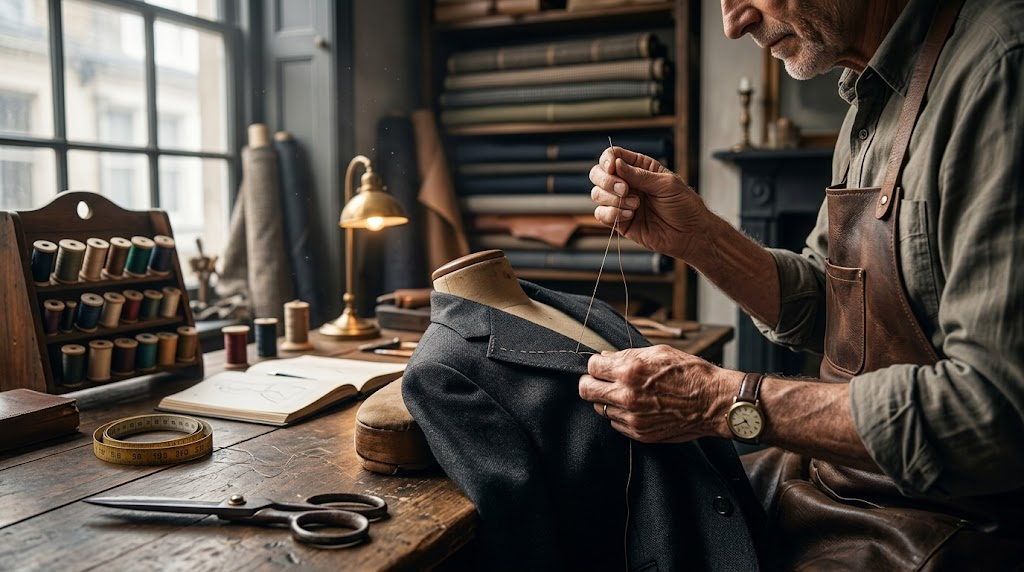
If you step into the private dining rooms of Mayfair, the architectural havens of Kyoto, or the creative design studios of Milan, you will notice a profound change in how wealth and taste manifest. The logos have receded, replaced by an appreciation for the invisible markers of excellence: the weight of hand-spun vicuña, the distinct, perfectly imperfect grain of vegetable-tanned saddle leather, or the subtle hand-stitched pick-stitching along the lapel of an unlined jacket that took a master tailor three full days to complete. This quiet pivot represents a massive cultural evolution. We are witnessing the birth of conscious craftsmanship as the ultimate, indisputable status symbol of our era.
Why has this happened? Because excess has become entirely common. In an age where digital hyper-production can instantly replicate trends and mass-market fast fashion can mimic the surface look of a luxury runway within forty-eight hours, sheer abundance has lost its allure. When anyone with a credit card can buy a trending handbag, ownership alone ceases to be exclusive. True exclusivity is no longer about what you can buy; it is about how it was made, who made it, and why it deserves to exist in a world already drowning in material goods.
In this comprehensive editorial exploration brought to you by Royal Fashion Tech, we will unpack why conscious craftsmanship has dethroned flash-in-the-pan consumerism. We will examine how heritage houses and independent artisans are redefining luxury, what it takes to curate a modern prestige wardrobe grounded in intention, and how you can separate genuine heritage from clever greenwashed marketing. Whether you are building a capsule wardrobe of lifelong investments or simply looking to understand the psychology behind modern high style, this guide will change how you look at every single thread in your closet.
The Death of Loud Luxury and the Rise of Intentional Design
To understand why conscious craftsmanship sits at the pinnacle of modern status, we must first look at the fatigue surrounding hyper-commercialized luxury. Over the past two decades, legacy fashion houses scaled up exponentially, chasing volume, mass appeal, and the lucrative millennial and Gen-Z markets through accessible entry-point goods like logo-heavy canvas accessories, perfumes, and sneakers. While this business model generated billions, it fundamentally diluted the magic of prestige. When a luxury item becomes ubiquitous on public transit or feeds algorithmic social media feeds, it ceases to feel like a treasure. It feels like a uniform of aspiration rather than a mark of distinction.
Enter the counter-movement: a quiet rebellion characterized by discernment, longevity, and deep respect for the human hand. People are waking up to the ecological and cultural toll of rapid-fire fashion cycles. We have collectively realized that buying ten poorly made items a year is not only environmentally devastating, it is deeply unstylish.
Conscious craftsmanship bridges the gap between ethical responsibility and elite aesthetic excellence. It is not about rough-hewn, rustic sustainability that sacrifices beauty for utility; rather, it is the uncompromising pursuit of perfection using materials and methods that respect both the maker and the earth. When you buy a coat crafted from regenerative wool, woven on antique shuttle looms in Scotland, and finished by hand, you are participating in a living tradition. You are acquiring an artifact with a narrative.
+-----------------------------------------------------------------+
                 THE EVOLUTION OF LUXURY STATUS
+-----------------------------------+-----------------------------+
| OLD LUXURY (Flash & Frequency)    | NEW PRESTIGE (Conscious)    |
+-----------------------------------+-----------------------------+
| Logo-driven, highly visible       | Unbranded, subtle details   |
| Mass-market seasonal trends       | Timeless, archival design   |
| Synthetic blends, rapid turnover  | Natural, traceable fibers   |
| Anonymous factory production      | Traceable artisan ateliers  |
| Replacement culture               | Repair and heritage culture |
+-----------------------------------+-----------------------------+
The Anatomy of True Value: Beyond the Price Tag
When experienced collectors evaluate a luxury garment today, they do not look at the hangtag first. They look at the hem, the seams, the drape, and the fiber content. They look for the fingerprints of human labor.
Consider the difference between a mass-produced designer blazer and one tailored by an independent house using traditional canvas construction. A cheap or mid-tier jacket uses a fused fusible interlining—essentially glued plastic mesh—to give the lapel its shape. Over time, with dry cleaning and body heat, that glue breaks down, causing bubbling and a stiff, unnatural posture. A master-crafted jacket, conversely, utilizes a floating horsehair canvas stitched entirely by hand between the outer fabric and the lining. Over weeks of wear, this canvas molds directly to the unique contours of your body, creating a second skin that gets more comfortable and personal with every passing year.
This is where true prestige lies: in performance over time. Conscious craftsmanship values garments that age gracefully rather than degrade quickly. It embraces patina—the rich, beautiful wear patterns that develop on full-grain leather, raw Japanese selvedge denim, or heavy cashmere over decades of active life. In a culture obsessed with looking brand-new forever, choosing pieces that look better worn-in is the ultimate luxury flex.
The Material Renaissance: Sourcing with Soul
You cannot talk about conscious craftsmanship without addressing the raw materials. The modern luxury consumer is increasingly literate about provenance. We want to know where the fibers came from, how the animals were treated, and whether the dyers used harsh chemical runoff or natural botanicals.
The material renaissance has elevated obscure, hyper-specialized regional fibers to the top of the luxury hierarchy. While standard merino wool is lovely, connoisseurs now seek out specific regional yields like Shetland wool spun in mills that have operated beside the same rushing river for 150 years. We see a massive resurgence in alpaca, organic linen, peace silk, and regenerative cashmere.
- Traceability as Currency: The ability to trace a cashmere sweater back to the exact nomadic herding cooperative in Mongolia or Inner Mongolia is becoming more valuable than any designer monogram.
- The Rejection of Synthetics: High-end wardrobes are purging polyester and acrylic, recognizing that plastic-based textiles shed microfibers into our oceans and fail to breathe properly against the skin.
- Natural Dyes and Botanical Alchemy: Artisans are returning to plant-based indigo, madder root, and walnut hulls, creating rich, complex tones that chemical dyes simply cannot replicate.
The Artisan Economy and the Preservation of Endangered Skills
Behind every master-crafted garment is a human being whose skills represent generations of accumulated knowledge. Unfortunately, many of these artisanal trades—hand-embroidery in Lucknow, bespoke shoemaking in Northampton, glove-making in Naples, and intricate lace-making in Burano—are critically endangered. Industrialization and cheap labor overseas nearly choked these trades out of existence.
Supporting conscious craftsmanship is an act of cultural preservation. When luxury buyers demand hand-welted shoes or hand-blocked prints, they are directly funding apprenticeship programs that keep these vital techniques alive.
“When you purchase a piece made by a master artisan, you aren’t just buying an object to wear; you are purchasing a fraction of human history and ensuring that skill survives into the next century.”
This creates a deeply emotional connection to our wardrobes. It is difficult to throw away a coat when you know the name of the artisan who hand-felled its lining. This emotional durability is the most powerful antidote to disposable consumer culture. It naturally curtails overconsumption because once you own a wardrobe built on such profound human effort, you simply stop wanting mediocre things.
Navigating the Landscape: How to Spot Genuine Craftsmanship vs. Greenwashing
As conscious craftsmanship becomes the dominant aesthetic of luxury, the market has inevitably been flooded with imposters. Brands that built their fortunes on polyester-heavy mass production are suddenly releasing “conscious capsules” or marketing basic cotton t-shirts as artisanal because they feature a slightly raw hem or an earthy beige color palette.
As a discerning reader and modern fashion enthusiast, you need a reliable mental framework to separate authentic heritage from marketing smoke and mirrors. Here is how to look beneath the surface:
- Examine the Seams and Finishing: Turn the garment inside out. Look at the stitching density. Are the stitches tight, even, and consistent? Are raw edges cleanly bound with bias tape, or are they left to fray on an overlock machine? High-end tailoring almost always features hand-finished details like pick-stitching or AMF stitching along the edges, which require immense skill to execute uniformly.
- Scrutinize the Fiber Composition Label: If a brand claims to be sustainable and luxury, check the blend. True luxury favors single-origin natural fibers. Be wary of ambiguous terms like “eco-friendly synthetic” or “recycled polyester blend” unless the brand provides concrete transparency about recycling loops and microplastic filtration.
- Research the Supply Chain Transparency: A truly conscious brand is proud of its makers. Look at their website. Do they name the factories, workshops, or artisan cooperatives they partner with? If the “About Us” page features generic stock photography of smiling workers in unspecified locations, proceed with caution.
- Evaluate the Product Range and Drop Frequency: Fast-fashion brands drop hundreds of new items every week. True artisan houses operate on cycles of patience—often just two collections a year, or made-to-order models that eliminate deadstock waste entirely.
Building a Prestige Capsule: The Core Pillars of a Conscious Wardrobe
Transitioning to a wardrobe grounded in conscious craftsmanship does not mean you need to discard everything you own and start from scratch tomorrow. In fact, that would contradict the entire ethos of sustainability. Instead, it requires a strategic, intentional approach to curation. Every new addition should solve a specific functional need while elevating the overall quality of your personal style.
Let us break down the core pillars of an elite, consciously crafted wardrobe across key categories:
- Outerwear: This is your highest-impact investment. Look for unlined or half-canvas wool coats from independent heritage mills, waxed cotton jackets with lifetime repair guarantees, or shearling pieces sourced from ethical, traceable tanneries. Outerwear should protect you from the elements while acting as the architectural anchor of your look.
- Tailoring and Separates: Invest in unstructured linen or cotton blazers for summer, and heavy flannel or tweed for winter. Prioritize tailors who offer local alterations and bespoke fittings. A mediocre suit that fits impeccably will always look better than a luxury suit that hangs poorly.
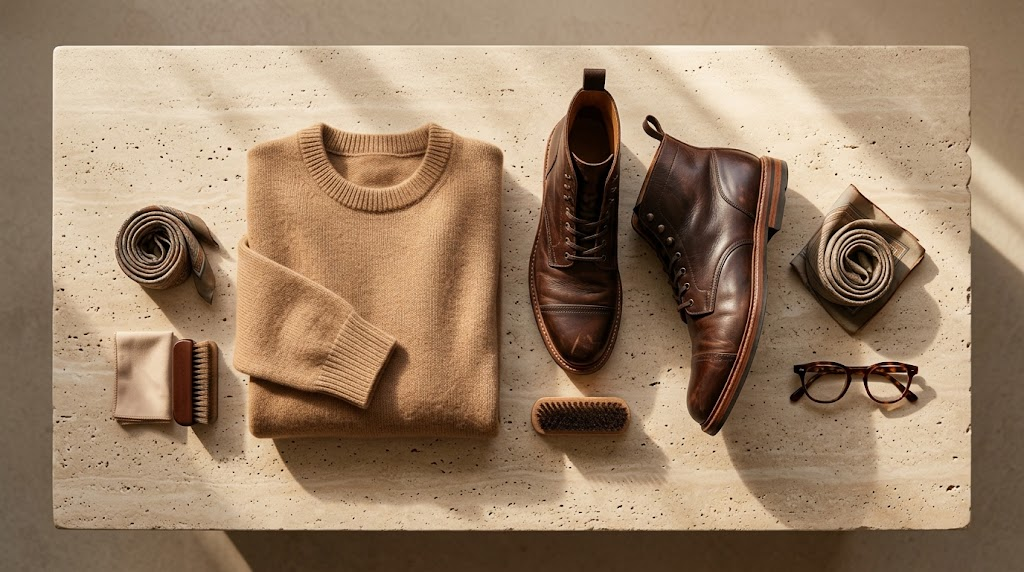
- Footwear: Skip the trend-driven sneakers glued together in massive automated complexes. Look for Goodyear-welted or Blake-stitched leather shoes and boots that can be resoled repeatedly. A pair of well-maintained heritage boots will outlive twenty pairs of fast-fashion footwear.
- Knits and Baselines: Cashmere, lambswool, and heavy-gauge cotton. Feel the weight. A quality knit should feel dense, springy, and substantial, not wispy or transparent. Look for seamless or fully fashioned knitting techniques that reduce yarn waste.
The Maintenance Mindset: Extending the Life of Prestige Goods
In our disposable culture, we have largely forgotten how to care for our clothes. We throw everything into a washing machine on a standard cycle, tumble dry it on high heat, and wonder why it shrinks, pills, or falls apart after six months.
Conscious craftsmanship demands a maintenance mindset. Treating your garments with respect is part of the ritual of luxury.
- Embrace Rest and Airing: Fine wools and cashmeres possess natural lanolin that repels odors and dirt. Often, hanging a wool coat or sweater in a well-ventilated space overnight is all it takes to refresh it, eliminating the need for harsh chemical dry cleaning that degrades natural fibers.
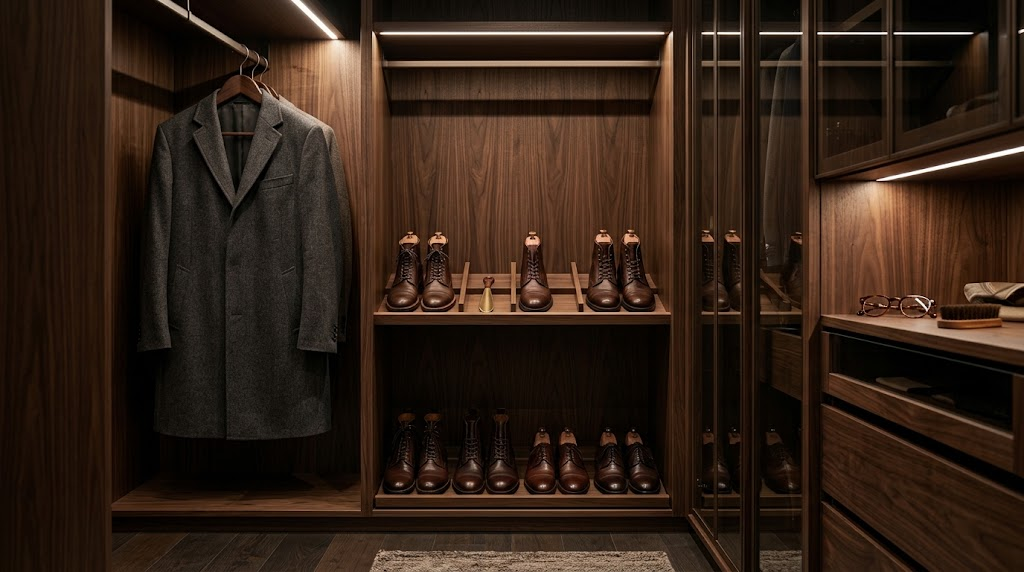
- Invest in Proper Tools: Buy cedar shoe trees to maintain the shape of your leather footwear and absorb moisture. Use a high-quality cashmere comb to gently remove pills without cutting the yarn. Invest in heavy wooden or contoured velvet hangers that support the shoulders of jackets properly, preventing unsightly puckering.
- Repair, Don’t Replace: Cultivate a relationship with a local cobbler, tailor, and re-weaving specialist. A moth hole in a vintage cashmere sweater is not a death sentence; it can be repaired using traditional invisible mending techniques or celebrated through visible mending styles like Japanese sashiko.
Common Pitfalls and Stylistic Mistakes to Avoid
Even seasoned fashion enthusiasts can stumble when navigating the world of conscious luxury. Here are some common traps to avoid as you refine your personal style:
- The Minimalism Trap: Many people assume that conscious craftsmanship means dressing exclusively in muted beige, grey, and black. While neutral minimalism is timeless, true style allows for texture, pattern, and rich color palettes. Do not confuse ethical fashion with boring fashion. Hand-blocked Indian madras, rich botanical indigos, and vibrant hand-knitted Fair Isle patterns all have a rightful place in a conscious wardrobe.
- Over-Collecting “Sustainable” Items: Buying twenty eco-friendly t-shirts defeats the entire purpose of sustainability. Conscious consumption starts with buying less. If you already own a functional garment, wearing it out is always more sustainable than buying a new “green” alternative.
- Ignoring Fit for the Sake of Pedigree: Just because a jacket was hand-stitched by a master tailor in Naples does not mean it will look good on your specific frame if the proportions are wrong. Fit remains the absolute king of style. Always prioritize silhouette and tailoring over brand heritage alone.
Conclusion
We have traveled a long way from the loud, logo-stamped excesses of twentieth-century consumerism into the quiet, nuanced landscape of modern prestige. As we have explored throughout this guide, conscious craftsmanship is much more than a fleeting fashion trend or an environmental checkbox; it is a profound philosophical shift in how we relate to the material world. It teaches us that true luxury is defined by human touch, transparent provenance, generational skill, and uncompromising longevity.
When you choose a consciously crafted wardrobe, you are voting with your wallet for a slower, more deliberate, and infinitely more beautiful world. You are trading the hollow thrill of endless micro-trends for the deep, lasting satisfaction of owning fewer, better things—artifacts that carry a story, age with grace, and honor the artisans who brought them to life.
At Royal Fashion Tech, we believe that the future of style belongs to those who look deeper—those who value the soul of the stitch just as much as the silhouette. As you curate your own collection, remember that your wardrobe is your silent ambassador. Let it speak of discernment, respect, and timeless elegance.
Frequently Asked Questions
1. What exactly defines conscious craftsmanship in luxury fashion? Conscious craftsmanship refers to the creation of garments and accessories using sustainable, ethically sourced materials combined with traditional, human-led artisan techniques that prioritize durability, fair labor, and minimal environmental impact over mass production.
2. Is conscious craftsmanship always more expensive than fast fashion? Upfront, yes. However, when calculated on a cost-per-wear basis over years or decades—factoring in that these items can be repaired rather than replaced—conscious pieces are frequently much more economical and vastly superior in value.
3. How can I tell if a luxury brand is genuinely ethical or just greenwashing? Look for deep supply chain transparency (named artisan partners, traceable fiber origins), single-origin natural material composition, timeless design cycles rather than weekly fast-drops, and independent third-party certifications.
4. What are the best entry-level items to buy when starting a conscious wardrobe? High-impact foundational pieces include Goodyear-welted leather boots, a heavy-gauge wool or cashmere sweater from a traceable mill, an unlined structured blazer, and a classic organic cotton button-down shirt.
5. How do I properly care for luxury natural fibers like cashmere and wool? Minimize washing by airing garments out regularly. When washing is necessary, hand-wash gently in cold water with specialized wool detergent, never wring them out, and dry them flat in their natural shape. Store with cedar blocks to deter moths.
6. Can conscious fashion still be trendy and expressive? Absolutely. Conscious style is not restricted to minimalist neutral basics. It embraces rich textures, heritage patterns like houndstooth and tartans, botanical block prints, and unique artisan color palettes.
7. Why are logos losing their status appeal among affluent consumers? Logo fatigue has set in because mass-market production and counterfeit culture have made visible branding common. Wealthy consumers now prefer subtle, unbranded markers of quality that can only be recognized by those with an educated eye.
8. What is the role of repair in a luxury wardrobe? Repair is central to conscious fashion. Maintaining, resoling, mending, and tailoring garments transforms clothing from disposable commodities into enduring personal heirlooms with rich patinas and individual histories.