There is an unmistakable sensory memory associated with entering an artisanal leather workshop in Florence, Milan, or the East End of London. It is the deep, earthy perfume of vegetable-tanned hides, the subtle creak of heavy full-grain skins draped across cutting tables, and the visual symphony of raw edges being hand-beveled by craftspeople who measure their professional lineage in generations rather than fashion seasons. In an era dominated by hyper-accelerated micro-trends, disposable synthetic textiles, and garments designed with built-in obsolescence, authentic leather stands as a defiant monument to permanence.
The philosophy of conscious wardrobe curation is not about ascetic minimalism or depriving oneself of aesthetic pleasure; it is about intentionality. When you invest in pieces that mature alongside you, your relationship with getting dressed fundamentally changes. Leather is one of the rare materials on Earth that does not merely resist decay under proper care—it actively improves with age. Every crease tells the story of an evening walk through the rain; every soft highlight along a collar or lapel records the gentle friction of daily life, transforming an off-the-rack item into an intimate, bespoke artifact of your personal journey.
Understanding how to construct an enduring wardrobe around timeless leather goods requires an appreciation for material science, construction heritage, anatomical drape, and nuanced styling. Whether navigating high-stakes boardroom negotiations, stepping out for weekend gallery openings, or traveling across continents, having the right foundational leather staples eliminates the friction of dressing well. Throughout this comprehensive masterclass, we will explore the tangible history, selection criteria, artisanal craftsmanship, and lifetime curation of the definitive five essential leather pieces every wardrobe needs.
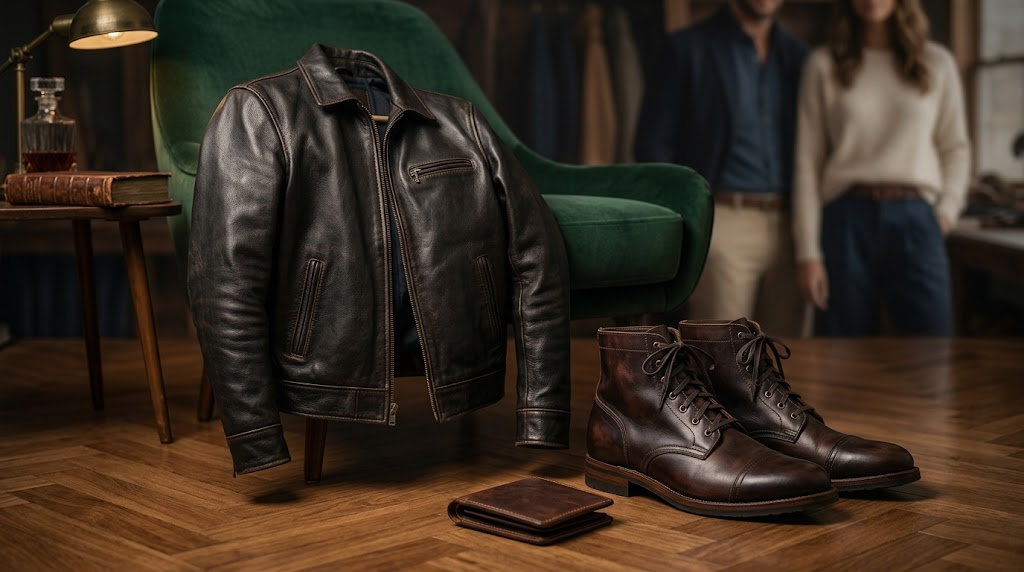
The Alchemy of Hide: Understanding What Makes Leather Truly Enduring
Before committing capital to luxury leather goods, one must master the language of the tanyard. The modern luxury market is inundated with ambiguous marketing terminology designed to elevate mediocre products. Terms like “genuine leather” or “vegan leather” are frequently deployed to disguise heavily corrected, chemically coated, or entirely petroleum-based plastic materials as artisanal luxury. To build a collection that will outlast trends and endure for decades, your baseline understanding must begin with the biology and chemistry of animal hide.
+-------------------+---------------------------------------------------------+
| Leather Grade     | Distinguishing Structural & Aesthetic Characteristics   |
+-------------------+---------------------------------------------------------+
| Full-Grain        | Unaltered epidermis; highest tensile strength; natural  |
|                   | pores intact; develops a rich, complex patina over time.|
+-------------------+---------------------------------------------------------+
| Top-Grain         | Sanded/buffed top layer to remove blemishes; coated     |
|                   | finish; uniform texture; moderate patina potential.     |
+-------------------+---------------------------------------------------------+
| Corrected-Grain   | Heavily buffed and embossed with artificial grain print;|
|                   | plastic-like coating; prone to surface cracking over time.|
+-------------------+---------------------------------------------------------+
| Split / Suede     | Fibrous underlayer split from grain; exceptional nap and |
|                   | drape; requires dedicated moisture and stain protection.|
+-------------------+---------------------------------------------------------+
Full-Grain vs. The Marketing Illusions
The outermost layer of an animal hide—the epidermis—contains the tightest, most densely interwoven collagen fiber network. When a tannery leaves this top surface entirely un-sanded, un-buffed, and uncorrected, the resulting material is classified as full-grain leather.
Because full-grain leather retains the natural grain surface, it displays every subtle variation of the hide: natural grain breaks, faint marbling, and delicate pore patterns. It does not hide behind heavy pigments or synthetic polyurethane sealants. Most importantly, because the dense cellular structure remains uninterrupted, full-grain leather possesses supreme tensile strength, natural water resistance, and the unique biological capability to absorb ambient oils and oxidation over decades, producing the coveted phenomenon known as patina.
In stark contrast, top-grain leather undergoes mechanical sanding to buff away surface scars and insect bites. While this produces a clean, hyper-uniform surface that appeals to mass-market commercial brands, it shaves away the strongest collagen layers. The hide is subsequently coated with a pigmented acrylic finish and stamped with an artificial grain pattern. It will look identical on day one hundred as it does on day one, but it will never develop the depth, character, and softness of full-grain hide.
Further down the hierarchy sits genuine leather—an industry term that simply means the product technically contains animal hide, often reconstituted from lower split layers (corium) glued together and lacquered with vinyl. Finally, synthetic alternatives frequently marketed under ethical banners—such as “vegan leather”—are overwhelmingly composed of polyurethane (PU) or polyvinyl chloride (PVC). These fossil-fuel-derived polymers lack natural breathability, crack along stress points within three to five years, and ultimately sit in landfills for centuries without decomposing.
Vegetable Tanning vs. Chrome Tanning: The Battle for Longevity
The method by which raw protein fibers are stabilized against organic decay determines the temper, aroma, longevity, and environmental footprint of your garment or accessory:
- Vegetable Tanning (The Heritage Method): This ancient artisanal process utilizes organic tannins extracted from tree bark, chestnut wood, quebracho, mimosa, and tara pods. The hides soak in progressive concentrations of organic tanning liquors in wooden drums or pits over an intensive period of four to twelve weeks. Vegetable-tanned leather emerges with a firm structure, a rich, woody fragrance, open pores that breathe effortlessly, and an extraordinary capacity to darken and polish with age. It is the gold standard for heirloom belts, artisanal boots, and structured luxury luggage.
- Chrome Tanning (The Modern Precision Approach): Invented in the late 19th century, chrome tanning uses chromium sulfate mineral salts to stabilize hides in mere hours. Chrome-tanned leather yields a soft, supple, drape-friendly material that is exceptionally uniform, highly resistant to water spotting, and receptive to vivid color dyes. The vast majority of luxury motorcycle jackets, bespoke gloves, and fine handbag linings rely on premium chrome tanning (or combination tanning) to achieve instantaneous fluidity and comfort against the skin.
Piece 1: The Iconic Leather Jacket (The Quintessential Outerwear Anchor)
No single garment in the modern sartorial canon commands the room quite like a perfectly executed leather jacket. It bridges subcultural rebellion and high-fashion refinement, equally at home layered over a crisp cashmere turtleneck in a private members’ club or worn over raw selvedge denim at an underground jazz lounge.
+---------------------+-----------------------+---------------------+-------------------------+
| Silhouette Style    | Historical Origin     | Ideal Body Alignment| Best Formal Pairing     |
+---------------------+-----------------------+---------------------+-------------------------+
| The Double Rider    | 1928 (Irving Schott)  | Athletic, Slender   | Cashmere knit, Chelsea  |
|                     |                       |                     | boots, tailored trousers|
+---------------------+-----------------------+---------------------+-------------------------+
| The Minimalist Cafe | 1960s British Racing  | Broad shoulders,    | Oxford button-down,     |
| Racer               |                       | Athletic, Average   | flannel trousers, oxfords|
+---------------------+-----------------------+---------------------+-------------------------+
| The Flight Bomber   | 1930s Military (A-2)  | All body profiles,  | Heavy knitwear, textured|
| (A-2 / G-1)         |                       | Muscular            | denim, service boots    |
+---------------------+-----------------------+---------------------+-------------------------+
Choosing Your Master Silhouette
The Double Rider (Asymmetric Biker)
Originally engineered by Irving Schott in 1928 as the “Perfecto,” the double rider features an asymmetrical front zipper designed to seal out wind when leaning over motorcycle handlebars, alongside broad lapels that snap flat against the chest. When executed in vegetable-tanned horsehide or heavyweight naked cowhide, it is unapologetically bold.
Style Tip: To elevate the double rider beyond rock-and-roll tropes, select hardware in brushed nickel or antique brass rather than mirror-polished chrome. Pair it with charcoal wool-flannel trousers, a fine-gauge black merino crewneck, and clean leather footwear to let the jacket act as an architectural centerpiece.
The Minimalist Café Racer (Single Rider)
Born in the post-war British motorcycle scene among riders modifying their bikes to race between roadside cafés, the café racer represents the absolute pinnacle of minimalist tailoring. Featuring a centered main zip, a low mandarin or band collar with a single snap closure, and streamlined slash or zipped chest pockets, this silhouette eliminates visual clutter. In supple black or deep espresso lambskin or French calf, the café racer effortlessly slips into smart-casual corporate environments and sophisticated evening settings.
The Military Flight Bomber (A-2 / G-1 / MA-1 Lineage)
Originally standard issue for military aviators operating in open or unheated cockpits, classic flight jackets emphasize comfort, insulation, and practical movement. Characterized by ribbed wool or leather cuffs, a ribbed waistband, front flap pockets, and occasionally a shearling-trimmed mouton collar (G-1 style), the flight bomber offers a relaxed drape through the chest and shoulders. It is the premier choice for layering over chunky textured knitwear, brushed cotton overshirts, and heavy twill chinos.
The Anatomy of Quality: Hardware, Lining, and Hide Selection
When appraising a luxury leather jacket on the rack or in an atelier, pay meticulous attention to details that mass manufacturers routinely cut corners on:
- Zippers and Fasteners: Look for substantial, smooth-operating hardware from world-class makers such as Riri (Switzerland), Excella by YKK (Japan), or Lampo (Italy). The teeth should be individually polished to prevent catching delicate knitwear, and the zipper pull should possess a reassuring, solid weight.
- Linings: Avoid cheap 100% polyester linings that trap sweat, create static electricity, and pill against inner layers. A garment built for a lifetime should be lined in natural, breathable fabrics—such as pure cupro (Bemberg), heavy cotton twill, or viscose—with smooth acetate or silk through the sleeves to facilitate effortless arm movement.
- Skin Uniformity and Panel Matching: Examine the back panel. Mass-market brands stitch together small, leftover scrap pieces of hide, resulting in excessive, visually jarring patchwork seams across the back and shoulders. A true luxury jacket utilizes expansive, single-cut panels of clear, pristine hide, requiring immense skill from master cutters who navigate around hide imperfections without wasting material.
Piece 2: The Goodyear-Welted Leather Boot (The Unshakable Foundation)
A person’s wardrobe is judged from the ground up. Fast-fashion footwear relies heavily on cement construction—gluing rubberized soles directly onto thin, corrected-grain uppers. While cemented shoes may feel flexible during a five-minute try-on in an air-conditioned boutique, they carry an inherent death date. Once the thin sole wears down or the adhesive degrades, the shoe must be thrown into the waste bin.
Investing in a proper Goodyear-welted leather boot is a transformative step toward sartorial maturity. It transforms footwear from a disposable consumable into an evolving asset that can be repaired, restored, and worn for thirty to forty years.
+-----------------------------------------------------------------------------------+
|               ANATOMY OF A GOODYEAR-WELTED LEATHER BOOT                           |
+-----------------------------------------------------------------------------------+
|  [UPPER LEATHER]       : Full-Grain Calfskin / Chromexcel / Shell Cordovan        |
|  [INSOLE]              : Heavy 4-5mm Vegetable-Tanned Leather Footbed             |
|  [GEMMING / RIB]       : Structural Canvas Rib Adhered to Insole Base             |
|  [WELT STRIP]          : Precision Leather Strip Stitched to Upper & Gemming      |
|  [CORK CAVITY FILL]    : Malleable Granulated Cork Matrix (Molds to Foot Profile) |
|  [STEEL/WOODEN SHANK]  : Arch Support Reinforcement Embedded Along Midfoot        |
|  [OUTSOLE]             : Oak-Bark Tanned Leather / Commando / Dainite Studded Sole|
|  [LOCKSTITCH SEAM]     : Heavy Gauge Welt-to-Outsole Structural Seam              |
+-----------------------------------------------------------------------------------+
The Architectural Superiority of the Goodyear Welt
Invented in 1869 by Charles Goodyear Jr., the Goodyear welting process is an intricate manufacturing method that mechanically locks the shoe together:
- A strip of resilient leather (the welt) is sewn directly to the upper leather and the internal structural canvas rib of the leather insole.
- The resulting cavity beneath the insole is filled with an organic mixture of granulated cork and natural adhesives, with a tempered steel or ribbed wooden shank embedded through the arch to distribute body weight evenly.
- The final heavy outsole is placed over the cork base and secured via a completely independent lockstitch run through the welt strip.
This construction yields two profound advantages. First, water cannot easily seep directly through the footbed because there are no interior-to-exterior puncture channels passing straight through the bottom of the insole.
Second, when the outsole eventually wears through after thousands of miles of pavement, cobblestones, or gravel, a master cobbler simply slices the exterior welt lockstitch, pulls away the worn outsole, replaces the compressed cork bedding, and stitches a brand-new outsole directly onto the existing welt without ever disturbing the broken-in, custom-molded upper.
Essential Boot Archetypes
To build a high-performance, versatile wardrobe, focus your attention on three enduring silhouettes:
The Cap-Toe Service Boot
Originating in mid-20th-century military standard-issue combat footwear, the service boot showcases clean, unpretentious proportions. Featuring an almond-shaped toe profile, subtle double-needle cap stitching, and exposed brass speed hooks, it effortlessly anchors casual denim, rugged corduroys, and waxed outerwear. When crafted from pull-up leathers like Horween Chromexcel, every brush against a surface releases rich internal oils, creating a dynamic color shift over time.
The Sleek Chelsea Boot
Characterized by elasticated side gussets and fabric pull tabs, the Chelsea boot dates back to the Victorian era but achieved legendary status along London’s King’s Road during the 1960s. A minimalist wholecut or clean two-piece Chelsea in polished box calfskin or rich snuff suede elevates casual and tailored outfits alike. Its smooth vamp slips cleanly beneath tailored suit trousers without catching the hem, providing an uninterrupted, clean leg line.
The Brogued Wingtip Dress Boot
Featuring decorative perforations (broguing) originally conceived in the Scottish and Irish marshes to allow water to drain from farmers’ shoes, the modern wingtip dress boot is the quintessence of country-estate elegance. Rendered in dark burgundy, scotch-grain leather, or rich cognac, it harmonizes naturally with tweed suits, heavy flannel trousers, and wool overcoats.
+-----------------------------------------------------------------------------------+
|                     LEATHER SELECTION MATRIX FOR FOOTWEAR                         |
+-------------------+-----------------------------+---------------------------------+
| Leather Type      | Unique Physical Properties  | Longevity & Maintenance Profile |
+-------------------+-----------------------------+---------------------------------+
| Shell Cordovan    | Dense equine membrane;      | Virtually indestructible;       |
|                   | rolls instead of creasing;  | requires minimal polishing;     |
|                   | natural mirror luster.      | exceptional lifetime asset.     |
+-------------------+-----------------------------+---------------------------------+
| Box Calfskin      | Fine, tight pore structure; | High elegance; requires cedar   |
|                   | firm temper; takes high     | shoe trees, cream conditioning, |
|                   | mirror shine (glacage).     | and regular brushing.           |
+-------------------+-----------------------------+---------------------------------+
| Oiled / Waxed     | Impregnated with hot tallow | Highly water-resistant; self-   |
| Roughout          | and waxes; rugged napped    | healing against scratches;      |
|                   | surface.                    | zero polish needed.             |
+-------------------+-----------------------------+---------------------------------+
Piece 3: The Structured Leather Briefcase or Weekender (The Modern Professional Portfolio)
Your luggage and professional carry pieces are an immediate visual proxy for your standard of excellence. Showing up to a strategic client presentation or checking into a five-star hotel with a frayed nylon backpack or an over-branded canvas bag undermines a carefully tailored aesthetic. A structured, vegetable-tanned leather briefcase or a generous leather holdall communicates authority, taste, and an appreciation for craftsmanship.
+-----------------------------------------------------------------------------------+
|                        HEIRLOOM BAG EVALUATION CHECKLIST                          |
+-----------------------------------------------------------------------------------+
| [X] Leather Thickness  : 1.8mm to 2.2mm full-grain vegetable-tanned bridle/calf   |
| [X] Edge Treatment     : Hand-burnished with beeswax or multi-coat edge enamel    |
| [X] Stress Points      : Double-stitched bar-tacks and copper/brass rivets        |
| [X] Hardware Integrity : Solid cast brass or forged stainless steel (no zamak/zinc)|
| [X] Thread Gauge       : Heavy bonded nylon or waxed linen thread (0.8mm - 1.0mm) |
| [X] Base Protection    : Reinforced double-thickness base with solid metal feet  |
+-----------------------------------------------------------------------------------+
The Hallmarks of Heirloom Leather Luggage
When assessing an executive briefcase, folio, or 48-hour weekender, look beyond the brand logo and inspect these critical structural parameters:
- English Bridle and Saddle Leathers: High-grade luggage must hold its form when empty. English bridle leather is intensely labor-treated with natural tallows, waxes, and vegetable extracts over several months, resulting in smooth, dense leather that resists sagging and surface abrasions while developing an opulent, glossy finish over decades.
- Solid Cast Brass Hardware vs. Zamak Die-Casting: Commercial luggage often utilizes cheap zinc-alloy metal (Zamak) electroplated with a micro-thin gold or silver wash. Over two or three years of airport security belts and luggage racks, the plating wears away, exposing porous, grey metal beneath. Luxury luggage utilizes solid forged brass or marine-grade stainless steel that will never peel, chip, or snap under load.
- Edge Finishing: The raw cut edges of the leather should never be left fuzzy or unsealed. High-end craftspeople finish edges using one of two techniques: hand-burnishing with bone folders and natural beeswax until the fibers melt together into a glassy, smooth edge; or applying multiple layers of flexible edge paint, with meticulous hand-sanding between each individual coat.
How to Select Between the Modern Attache and the 48-Hour Weekender
+-----------------------+-----------------------------+-----------------------------+
| Functional Dimension  | The Slim Executive Attache  | The 48-Hour Holdall         |
+-----------------------+-----------------------------+-----------------------------+
| Capacity Profile      | 14-16" Laptop, documents,   | 2 Suits/Outfits, dopp kit,  |
|                       | tech chargers, luxury pen   | second footwear pair, tech  |
+-----------------------+-----------------------------+-----------------------------+
| Formal Context        | Boardrooms, legal summits,  | First-class rail travel,    |
|                       | corporate advisory          | weekend retreats, flights   |
+-----------------------+-----------------------------+-----------------------------+
| Construction Balance  | Rigid, internal gussets,    | Semi-structured, reinforced |
|                       | firm top handle, structured | base, heavy dual zips,      |
|                       | perimeter frame             | detachable shoulder strap   |
+-----------------------+-----------------------------+-----------------------------+
A well-rounded wardrobe accommodates both needs seamlessly:
- For Daily Professional Life: A structured, single or double-gusset leather briefcase in burnished dark chocolate or British tan. It maintains a clean footprint beside your chair during lunch meetings, features a dedicated padded micro-suede tech sleeve, and includes interior leather organizer pockets for fountain pens and business cards.
- For Travel and Escapes: A duffle or holdall crafted from soft tumbled vegetable-tanned cowhide or French calf. Ensure the bag complies with IATA international carry-on dimensions while offering a wide-mouth doctor’s-bag opening or a full perimeter two-way zipper, allowing you to pack tailored suits flat without causing aggressive fabric creasing.
Piece 4: The Hand-Finished Dress & Casual Belt (The Unsung Harmonizer)
The leather belt is often treated as an afterthought—an item bought in haste from a revolving rack at a department store checkout. Yet, a poorly chosen belt instantly disrupts an otherwise impeccable outfit. A cracked, peeling, paper-thin belt with a cheap buckle cheapens the drape of custom-tailored trousers and interrupts the visual line of your body.
A masterfully crafted belt acts as a subtle, sophisticated bridge between your upper and lower body, echoing the color palette and texture of your footwear while securing the drape of your trousers.
+-----------------------------------------------------------------------------------+
|                        THE FORMAL VS. CASUAL BELT CONTINUUM                       |
+-----------------------+-----------------------------+-----------------------------+
| Attribute             | The Formal Dress Belt       | The Casual Artisan Belt     |
+-----------------------+-----------------------------+-----------------------------+
| Width Profile         | 1.1 to 1.25 inches (28-32mm)| 1.5 to 1.75 inches (38-44mm)|
+-----------------------+-----------------------------+-----------------------------+
| Structural Profile    | Feathered edge, tapered     | Flat-cut, raw burnished     |
|                       | domed center (bombé curve)  | edge, thick single-ply hide |
+-----------------------+-----------------------------+-----------------------------+
| Stitching Detail      | Ultra-fine tone-on-tone     | Heavy contrast saddle stitch|
|                       | perimeter stitching         | or raw edge minimal stitch  |
+-----------------------+-----------------------------+-----------------------------+
| Buckle Architecture   | Polished brass/palladium;   | Brushed nickel, antique     |
|                       | low-profile rectangular     | copper, solid roller buckle |
+-----------------------+-----------------------------+-----------------------------+
The Construction Secrets of Exceptional Belts
To distinguish a genuine lifetime belt from a cheap laminated counterfeit, look for these construction techniques:
- Single-Ply Full-Grain vs. Bonded Sandwiches: Cheap belts are made from three paper-thin layers glued around a cardboard or synthetic foam core. Within six months, the layers separate (delaminate) around the hole you use most often. A true casual belt should be cut from a single, continuous strip of heavy 9-to-11-ounce (3.5mm to 4.5mm) full-grain vegetable-tanned steer hide or harness leather.
- The Lined and Raised (Bombé) Dress Technique: A formal dress belt requires refined elegance. Master leatherworkers build a bombé belt by encasing a skived leather core between an ultra-fine calfskin exterior and a soft, sweat-resistant vegetable-tanned French calf lining. The edges are shaved, burnished, and sewn with high-density lockstitching (8 to 10 stitches per inch).
- Buckle Attachment: Pay attention to how the buckle is attached to the leather strap. Lower-grade belts rivet the buckle permanently or use cheap clamp teeth that rip through the hide fibers. High-grade artisanal belts secure the buckle via hand-stitched bar-tacks or removable solid brass Chicago screws, allowing you to swap hardware or shorten the strap from the buckle end without compromising the tip aesthetics.
The Nuances of Sizing and Proportions
One of the most frequent styling mistakes involves incorrect sizing and awkward width selection:
- Rule of True Sizing: Always purchase a belt exactly two inches larger than your actual trouser waist size. If you wear a size 34 tailored trouser, your belt size is a 36. This guarantees that when the buckle prong sits securely in the middle hole (the third hole of five), the remaining tail extends cleanly through the first trouser belt loop without flapping awkwardly.
- Width Harmony: Never thread a wide 1.5-inch casual belt through narrow dress-pant loops; it crowds the waistband and pulls the fabric out of alignment. Conversely, never thread a delicate 1.1-inch dress belt through heavy denim or utility chinos, as it will look visually insubstantial and fail to anchor the dense fabric.
Piece 5: The Heirloom Small Leather Good (Wallets, Folios, and Watch Straps)
While jackets and footwear project your style across a room, Small Leather Goods (SLGs) are experienced in close, tactile proximity. You interact with your wallet, cardholder, passport jacket, or watch strap multiple times a day. These items represent personal luxury in its purest form—objects designed to bring daily satisfaction through their feel, precision, and craftsmanship.
+-----------------------------------------------------------------------------------+
|                     THE SPECTRUM OF SMALL LEATHER GOODS (SLGs)                    |
+-------------------+-----------------------------+---------------------------------+
| Item Profile      | Functional Advantage        | Optimal Leather Selection       |
+-------------------+-----------------------------+---------------------------------+
| The Bifold Wallet | Carries folded cash notes,  | French Box Calf exterior with   |
|                   | multiple cards, receipts    | Chèvre (Goatskin) interior      |
+-------------------+-----------------------------+---------------------------------+
| The Card Sleeve   | Ultra-slim front-pocket     | Shell Cordovan or Epsom leather |
|                   | footprint; anti-bulk line   | for structural tension          |
+-------------------+-----------------------------+---------------------------------+
| The Travel Folio  | Secures passport, boarding  | Vegetable-tanned harness leather|
|                   | passes, foreign currencies  | with suede-lined slip pockets   |
+-------------------+-----------------------------+---------------------------------+
| The Watch Strap   | Direct skin contact; molds  | Louisiana Alligator, Epsom,     |
|                   | to wrist temperature        | or vintage Barenia calfskin     |
+-------------------+-----------------------------+---------------------------------+
The Art of Hand Saddle Stitching vs. Machine Lockstitching
In mass factory production, small leather goods are sewn on automated industrial lockstitch sewing machines. A machine utilizes two separate spools: an upper needle thread and a lower bobbin thread that interlock in the middle of the leather. If a single point of a machine stitch is abraded, cut, or snapped, the entire row of thread quickly unravels under normal tension.
                  THE SADDLE STITCH DIFFERENCE (HERMÈS HERITAGE)

  Thread A: ====================/====================\====================
                               X                      X   (Two independent needles
  Thread B: ====================\====================/==================== cross through one hole)

  * Result: If one thread breaks, the opposing thread remains locked in place.
The gold standard of luxury leather goods—championed for centuries by venerable houses like Hermès—is the traditional two-needle hand saddle stitch. A single length of waxed French linen thread (such as Fil Au Chinois) is threaded with a blunt harness needle at each end.
The artisan uses an awl to pierce the leather at a precise 45-degree angle through a pricking-iron mark, passing both needles through the exact same hole in opposite directions to form an interlocking figure-eight knot inside the hide:
- If a hand saddle stitch is cut or worn through from decades of pocket wear, the stitch will not unravel because the opposing thread maintains its independent structural loop.
- The angled, slanted aesthetic of a true hand saddle stitch gives small leather goods a distinctive, refined appearance that no mechanized needle can fully replicate.
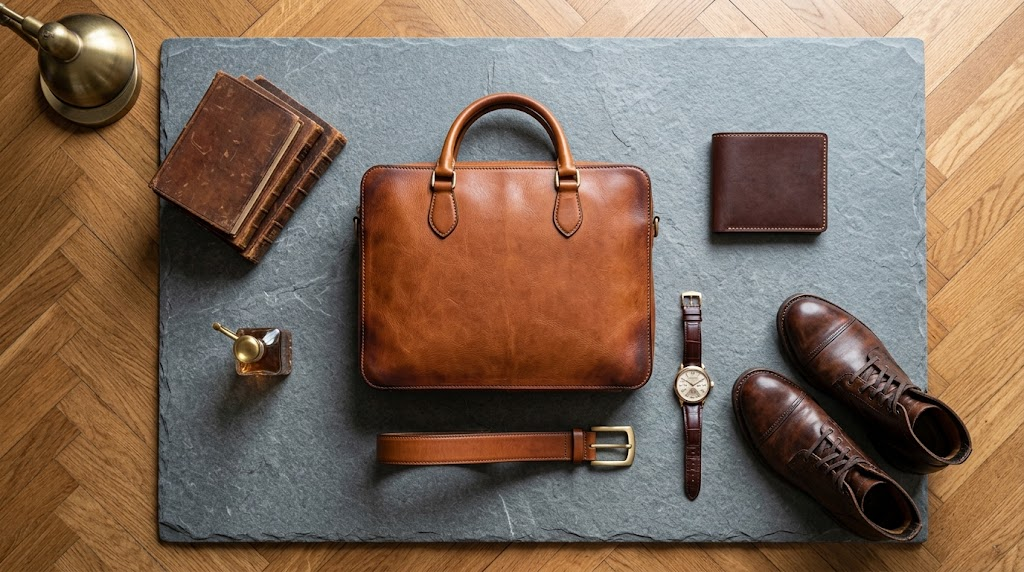
Choosing Your Core Daily Carry
To curate a lean, highly efficient small-leather-good collection:
- For Minimalist Daily Routine: Adopt a 4-to-6 pocket cardholder with a central cash slot. When crafted from vegetable-tanned French calf or resilient Chevre (goatskin), it slips invisibly into the breast pocket of an unstructured tailored blazer without creating an unsightly, bulging silhouette.
- For Traditional Utility: Select a classic 6-card bifold wallet featuring folded, hand-turned edges (rembordé) and silk-faille lining. Ensure the card slots are skived thin at the base to prevent the leather from stacking into a bulky brick once fully loaded.
- For Horological Expression: Swap generic metal bracelets or factory watch straps for custom, hand-stitched straps in natural Epsom, matte Alligator, or vintage Barenia calf. A strap crafted from Barenia—a rare, double-tanned luxury calfskin saturated with natural oils—will rapidly patina around your wrist, transforming a luxury timepiece into an intimate personal heirloom.
+-----------------------------------------------------------------------------------+
|               FIVE ESSENTIAL PIECES: LIFETIME INVESTMENT SUMMARY                  |
+-------------------+-------------------------+------------------+------------------+
| Essential Piece   | Primary Function        | Core Material    | Lifespan Expectancy|
+-------------------+-------------------------+------------------+------------------+
| 1. Leather Jacket | Sartorial Anchor        | Full-Grain Cow / | 25 to 50+ Years  |
|                   |                         | Lamb / Horsehide |                  |
+-------------------+-------------------------+------------------+------------------+
| 2. Goodyear Boot  | Architectural Footwear  | Box Calf / Shell | 15 to 40+ Years  |
|                   |                         | Cordovan / Suede | (Resolable)      |
+-------------------+-------------------------+------------------+------------------+
| 3. Luggage / Bag  | Professional Utility    | English Bridle / | 20 to 50+ Years  |
|                   |                         | Harness Leather  |                  |
+-------------------+-------------------------+------------------+------------------+
| 4. Belt           | Silhouette Bridge       | Heavy Steerhide /| 10 to 25+ Years  |
|                   |                         | French Lined Calf|                  |
+-------------------+-------------------------+------------------+------------------+
| 5. SLG Portfolio  | Tactile Daily Carry     | Box Calf / Epsom | 10 to 30+ Years  |
|                   |                         | / Chèvre Goat    |                  |
+-------------------+-------------------------+------------------+------------------+
With these five foundational leather essentials defined, we have established the structural pillars of a world-class collection. In the second half of this guide, we will explore advanced styling formulas across diverse dress codes, step-by-step restoration and preservation protocols, common purchasing mistakes to avoid, and the future of sustainable luxury leather craft.
PART 2
The Sartorial Dial: Styling Your Leather Essentials Across Dress Codes
Owning the five essential leather pieces is only the first step; the true artistry lies in knowing how to harmonize them across diverse social and professional settings. High-grade leather possesses an innate visual gravity. Because of its distinct texture, light absorption, and structural presence, a leather piece often becomes the focal point of an ensemble. Understanding how to balance this intensity against other fabrics—such as cashmere, worsted wool, raw denim, and crisp poplin—allows you to effortlessly navigate everything from black-tie-adjacent gallery galas to relaxed weekend travel.
+-----------------------------------------------------------------------------------+
|                     THE SARTORIAL SPECTRUM: FABRIC PAIRINGS                       |
+-------------------+-----------------------------+---------------------------------+
| Leather Element   | High-Contrast Texture Pair  | Harmonious Color Synergy        |
+-------------------+-----------------------------+---------------------------------+
| Biker / Bomber    | 12-gauge Merino Wool,       | Matte Black over Oatmeal,       |
| Jacket            | Brushed Flannel, Raw Denim  | Deep Espresso over Heather Grey |
+-------------------+-----------------------------+---------------------------------+
| Goodyear-Welted   | Heavy Donegal Tweed,        | Snuff Suede with Navy Serge,    |
| Chelsea / Service | Cotton Cavalry Twill        | Burgundy Shell with Olive Drab  |
+-------------------+-----------------------------+---------------------------------+
| Structured        | Worsted Wool Suiting (120s),| British Tan with Mid-Grey Flannel|
| Briefcase         | Crisp Sea Island Cotton     | Ebony Box Calf with Charcoal    |
+-------------------+-----------------------------+---------------------------------+
The Smart-Casual Executive Formula
In modern workplaces where traditional suits are rarely required, high-end leather pieces can bring structure and polish to more relaxed attire. The goal is to introduce tailored precision without appearing overly rigid:
- The Look: Pair a minimalist café racer jacket in supple, dark brown lambskin over an ivory or charcoal fine-gauge cashmere crewneck sweater.
- The Lower Half: Opt for high-waisted, single-pleated trousers crafted from mid-grey tropical wool or heavy flannel, cut with a clean break that rests comfortably over burnished dark brown Chelsea boots.
- The Carry: Carry a structured single-gusset vegetable-tanned briefcase in rich mahogany that complements your footwear without matching it too rigidly.
- Why It Works: The clean lines of the café racer replace the traditional blazer, providing structure through the shoulders while the fine knitwear and pleated trousers maintain classic executive polish.
                      SMART CASUAL LAYER HIERARCHY

    +-------------------------------------------------------+
    | [OUTER] Supple Dark Brown Café Racer (Clean Band Collar)
    +-------------------------------------------------------+
        +---------------------------------------------------+
        | [MID] Charcoal Fine-Gauge Merino Crewneck Knit
        +---------------------------------------------------+
            +-----------------------------------------------+
            | [BASE] Pima Cotton Undershirt (Hidden Placket)
            +-----------------------------------------------+
    =========================================================
    | [TROUSER] Single-Pleated Mid-Grey Flannel (Clean Break)
    =========================================================
        +---------------------------------------------------+
        | [FOOTWEAR] Hand-Burnished Espresso Chelsea Boots
        +---------------------------------------------------+
The Elevated Weekend & Leisure Aesthetic
Weekend dressing often defaults to shapeless athleisure. By substituting synthetic outerwear and sneakers with timeless leather staples, you immediately achieve an effortless, worldly elegance suitable for vineyard visits, international flights, or relaxed lunches:
- The Foundation: Combine an A-2 military-inspired flight bomber jacket in textured goat suede or oiled lambskin with an indigo selvedge denim shirt (or an ecru thermal waffle knit).
- The Trousers: Wear tailored olive or camel cotton cavalry twill chinos with a substantial 1.5-inch single-ply harness leather casual belt secured by a brushed brass buckle.
- The Footwear: Step into cap-toe service boots in rich Chromexcel or oiled roughout leather. Finish with a spacious, patinated 48-hour leather weekender bag slung over your shoulder.
- The Effect: This balance of rugged utility and refined proportions creates an aesthetic of quiet confidence and effortless capability.
The Formal Evening Interplay
Integrating leather into formal evening wear requires precision and restraint. The objective is to introduce rich texture without disrupting the refined lines of tailored suiting:
- The Footwear: Anchor a dark navy or midnight-blue two-piece suit with sleek, mirror-shined box calfskin wholecut oxfords or minimalist black dress Chelseas featuring single-leather leather soles.
- The Accessories: Thread a slim, 1.1-inch feathered-edge bombé black calfskin dress belt with a polished palladium buckle through your trouser loops.
- The Details: Pull out a hand-saddle-stitched black box calf card sleeve edged with clean French enamel, and ensure your dress watch is paired with a matching black alligator or smooth calf strap.
- The Result: Every accessory speaks the same language of understated elegance, reinforcing your attention to detail without competing for attention.
The Leather Care Bible: Preserving Your Investment for Generations
Leather is fundamentally a biological structure. When an animal is alive, its natural biological systems continuously replenish the cellular moisture and oils within the dermal matrix. Once the hide is tanned and fashioned into a luxury garment or pair of shoes, it relies entirely on you to maintain its internal moisture equilibrium. Neglect leads to desiccation, cellular shrinkage, and irreversible surface cracking; over-conditioning clogs the pores, rots internal structural stitching, and causes the leather to become spongy and misshapen.
+-----------------------------------------------------------------------------------+
|                        SEASONAL LEATHER PRESERVATION CALENDAR                     |
+-------------------+---------------------------------------------------------------+
| Frequency         | Action Items & Essential Protocols                            |
+-------------------+---------------------------------------------------------------+
| Every Wear        | Dry-wipe with horsehair brush; insert raw cedar shoe trees;   |
|                   | hang jackets on broad contoured wooden coat hangers.          |
+-------------------+---------------------------------------------------------------+
| Monthly / Bi-Mo   | Apply light conditioning cream (Saphir Renovateur); gently    |
|                   | clean surface dust with a damp microfiber cloth.              |
+-------------------+---------------------------------------------------------------+
| Biannually        | Deep clean with pH-balanced saddle soap (only if heavily      |
|                   | soiled); replenish with natural plant/mink oils or dubbin.    |
+-------------------+---------------------------------------------------------------+
| Annually          | Professional inspection; check welt stitching on boots; edge- |
|                   | paint touch-ups on luggage straps; hardware lubrication.      |
+-------------------+---------------------------------------------------------------+
The Three Cardinal Sins of Leather Maintenance
- Synthetic Silicone Waterproofing Sprays: Cheap aerosol waterproofing sprays coat the hide with an impermeable silicone film. While this keeps water out in the short term, it suffocates the open pores of vegetable-tanned and calfskin leathers, trapping residual humidity inside while permanently preventing conditioning creams from penetrating the collagen fibers.
- Direct Radiant Heat Exposure: If your leather jacket or boots get soaked in a sudden downpour, never place them near a radiator, electric heater, or hair dryer. Direct heat rapidly bakes the natural moisture out of the leather, causing the protein structure to curl, shrink, and crack irreversibly. Always allow wet leather to dry naturally at room temperature in a well-ventilated space, supported by absorbent cedar trees or unprinted acid-free tissue paper.
- Petroleum-Based Conditioners: Avoid industrial leather oils packed with mineral spirits and liquid paraffin. These petroleum distillates dissolve natural collagen glues, weaken linen stitching over time, and leave a sticky residue that attracts airborne dust and dirt.
Step-by-Step Conditioning and Restoration Protocol
To maintain full-grain jackets, luggage, and footwear in peak condition, follow this professional conservation method:
  STEP 1: MECHANICAL DEBRIS REMOVAL
  Use a 100% natural horsehair brush in brisk, circular motions to lift away
  microscopic grit, street dust, and dried mud from grain crevices and welt seams.
                                  │
                                  ▼
  STEP 2: GENTLE CLEANSING (WHEN REQUIRED)
  Wipe the surface with a lint-free cotton cloth dampened with distilled water.
  For heavy dirt build-up, apply a foamed, pH-neutral saddle soap sparingly;
  wipe clean immediately with a dry cloth and let rest for 30 minutes.
                                  │
                                  ▼
  STEP 3: DEEP NOURISHMENT (CONDITIONING)
  Apply a hazelnut-sized portion of high-grade conditioning cream (e.g., Saphir
  Médaille d'Or Renovateur or Bickmore Bick 4) across the leather using your fingers
  or a soft chamois cloth. Massage into the pores using small circular motions.
                                  │
                                  ▼
  STEP 4: REST AND ABSORPTION
  Allow the leather to absorb the natural wax and oil emulsions undisturbed
  for a minimum of 45 to 60 minutes in a dry, room-temperature environment.
                                  │
                                  ▼
  STEP 5: FINAL BUFFING
  Take a clean, dry horsehair brush and buff the surface vigorously.
  The friction warms the natural carnauba and beeswax, yielding a deep, glowing luster.
7 Critical Mistakes to Avoid When Investing in Leather
Navigating the luxury retail market requires a sharp, critical eye. Fashion marketing frequently uses grand brand narratives to distract buyers from cost-cutting measures in materials and construction. Keep an eye out for these seven common pitfalls before investing:
+-----------------------------------------------------------------------------------+
|                        THE LUXURY BUYER'S HAZARD MAP                              |
+-------------------------+---------------------------------------------------------+
| Critical Mistake        | Structural Consequence & The Reality                    |
+-------------------------+---------------------------------------------------------+
| 1. Falling for "Genuine | The hide is often reconstituted split-suede covered in  |
|    Leather" Labels      | polyurethane, offering zero long-term durability.       |
+-------------------------+---------------------------------------------------------+
| 2. Choosing Cemented    | Glued soles cannot be easily replaced by a cobbler;     |
|    Shoe Construction    | once the sole wears through, the entire shoe is wasted. |
+-------------------------+---------------------------------------------------------+
| 3. Overlooking Low-Grade| Thin zinc hardware snaps under load; cheap zipper teeth |
|    Zippers & Hardware   | catch, tear surrounding leather, and quickly jam.       |
+-------------------------+---------------------------------------------------------+
| 4. Buying Unyielding    | Poor patterns with low armholes restrict movement,      |
|    Jackets with Poor Fit| causing the jacket to pull uncomfortably across the back.|
+-------------------------+---------------------------------------------------------+
| 5. Neglecting Suede     | Suede lacks an epidermis; without regular waterproofing |
|    Moisture Protection  | and brushing, water spots and grease cause deep stains. |
+-------------------------+---------------------------------------------------------+
| 6. Buying Heavily       | Extreme artificial distressing weakens hide fibers and   |
|    Distressed Leather   | robs you of the natural, personalized patina process.   |
+-------------------------+---------------------------------------------------------+
| 7. Using Wire / Thin    | Narrow hangers create permanent shoulder dimples and    |
|    Plastic Hangers      | deform the silhouette under the jacket's own weight.    |
+-------------------------+---------------------------------------------------------+
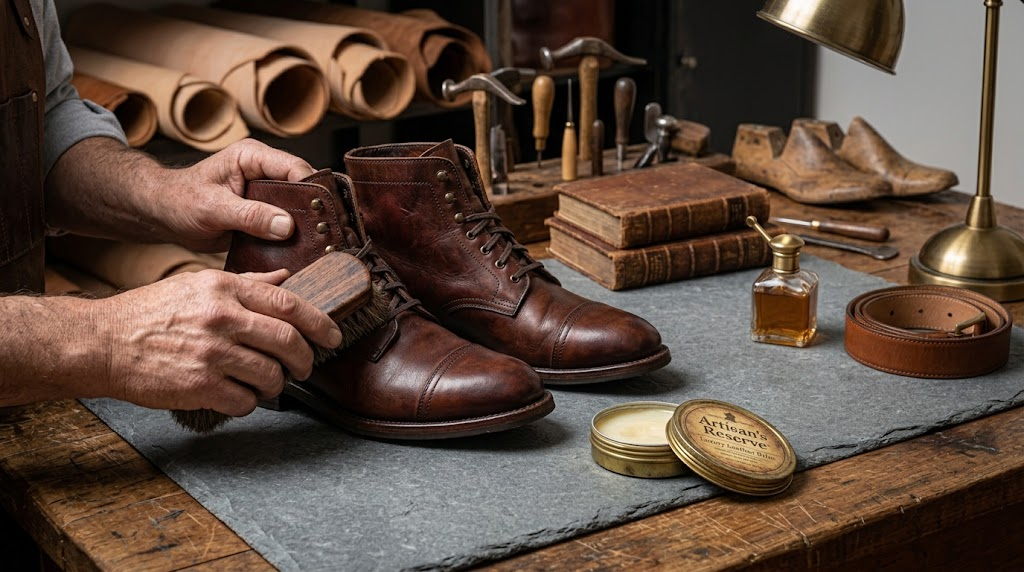
1. Falling for the “Genuine Leather” Label
As established in Part 1, treating the phrase “Genuine Leather” as a mark of luxury is a common trap. When a brand produces an exceptional full-grain item, it will proudly state “Full-Grain Calfskin,” “Vegetable-Tanned Steerhide,” or “Shell Cordovan.” If a product simply uses the vague umbrella term “Genuine Leather,” you are almost certainly looking at low-tier split hides coated with artificial resins.
2. Settling for Cemented Footwear
A pair of designer boots may carry a four-figure price tag purely because of runway hype, yet feature a glued, cemented sole. Always inspect the outsole: look for clean, visible welt stitching, check for a Goodyear or Blake-rapid channel, and ensure the edge profile reveals genuine stacked leather rather than painted rubber.
3. Ignoring Zippers, Buckles, and Fasteners
A leather jacket is only as durable as its zipper; a briefcase is only as reliable as its handle rings. If a luxury brand pairs a five-hundred-dollar hide with an unbranded, lightweight zinc zipper that snags on day one, look elsewhere. Demand hardware crafted from solid cast brass, stainless steel, or titanium, supplied by specialized manufacturers like Riri, Excella, or Lampo.
4. Choosing the Wrong Fit Based on “Anticipated Stretch”
A common myth claims that a tight leather jacket will stretch out significantly to fit your frame. While leather will naturally soften and yield by roughly a fraction of an inch across high-pressure points (such as the elbows or across the ball of the foot in boots), it will never expand by an entire size. If a jacket constricts your shoulder blades or pulls tightly across your armpits in the fitting room, it will always feel uncomfortable. Choose a fit that accommodates a mid-weight sweater comfortably from day one.
5. Leaving Suede Unprotected
Suede and roughout leathers offer exceptional drape, texture, and understated luxury, but their exposed fiber nap makes them more vulnerable to stains and moisture. Avoid wearing untreated suede in heavy rain, and protect it with a specialized fluoropolymer-free suede protector spray. Use a crepe brush to lift surface dust and keep the nap looking fresh.
                          SMOOTH CALF VS. SUEDE CARE MATRIX

  Smooth Full-Grain Calfskin:
  [Horsehair Brush] ──► [Conditioning Cream] ──► [Buff with Chamois]

  Napped Suede / Nubuck:
  [Brass / Crepe Brush] ──► [Suede Eraser on Spots] ──► [Nano-Suede Protector Spray]
  *(NEVER apply conditioning creams or hard polishing waxes directly onto suede nap)*
6. Purchasing Artificially Distressed Goods
Pre-distressed jackets that feature faux-vintage sanded spots, artificial chemical creasing, and painted-on scuffs may catch the eye in a department store, but they rob you of creating your own authentic patina. Worse, the industrial chemical washing and mechanical sanding processes used to create fake aging significantly degrade the structural integrity of the hide fibers. Buy crisp, raw, uncompromised leather, wear it consistently through wind and weather, and earn your wear marks naturally.
7. Hanging Leather Outerwear on Thin Wire Hangers
Never store a heavy leather jacket on a standard wire or thin plastic hanger. The weight of the hide pulling downward against a narrow surface creates unsightly dimples in the shoulder padding and stretches the neck line out of shape. Always invest in wide, contoured wooden coat hangers (at least 1.75 to 2 inches wide across the shoulder ends) that properly support the jacket’s structure in your wardrobe.
The Economic and Environmental Value of Lifetime Leather
When building an intentional wardrobe, price tags should always be evaluated through the lens of long-term value rather than immediate upfront cost. The fast-fashion economic model relies on continuous, low-cost micro-transactions that produce garments designed to fall apart within months, fueling an unsustainable cycle of waste.
+-----------------------------------------------------------------------------------+
|               COST-PER-WEAR (CPW) ECONOMIC BREAKDOWN: 10-YEAR LIFESPAN            |
+-------------------+-----------------------------+---------------------------------+
| Economic Factor   | Disposable Fashion Boot     | Goodyear-Welted Heritage Boot   |
+-------------------+-----------------------------+---------------------------------+
| Initial Purchase  | $110                        | $650                            |
+-------------------+-----------------------------+---------------------------------+
| Maintenance Costs | $0 (Non-resolable; trashed) | $180 (Two professional resoled  |
| (Over 10 Years)   |                             | applications + basic creams)    |
+-------------------+-----------------------------+---------------------------------+
| Replacements Req. | 5 pairs (Lifespan ~2 years) | 0 pairs (Lifespan: 25+ years)   |
+-------------------+-----------------------------+---------------------------------+
| Total 10-Yr Cost  | $550                        | $830 (Retains real asset value) |
+-------------------+-----------------------------+---------------------------------+
| Total Days Worn   | 700 Days                    | 1,400 Days                      |
+-------------------+-----------------------------+---------------------------------+
| True Cost-Per-Wear| $0.78 / Wear                | $0.59 / Wear (Drops lower every |
|                   |                             | subsequent decade of ownership) |
+-------------------+-----------------------------+---------------------------------+
Beyond the clear financial advantages, vegetable-tanned, ethically sourced leather carries an environmental balance that synthetic alternatives cannot match. High-grade leather is fundamentally an upcycled byproduct of the global agricultural food industry; utilizing these hides keeps millions of tons of biological material out of landfills each year.
Furthermore, when tanned using organic tree barks and finished without toxic synthetic coatings, a full-grain leather piece is fully biodegradable at the end of its multi-decade lifecycle. Polyurethane “pleather,” by contrast, sheds microplastics with every wash and wear, resists natural biodegradation for centuries, and requires regular replacement, making it an unsustainable choice over the long term.
                      THE CIRCULAR LIFECYCLE OF HERITAGE LEATHER

  [Agricultural Byproduct Hide] ──► [Artisanal Vegetable Tanning (Natural Barks)]
               ▲                                              │
               │                                              ▼
  [Biodegrades Organically]                     [Decades of Daily Wear & Care]
               ▲                                              │
               │                                              ▼
  [Natural End of Life (50+ Yrs)] ◄── [Resoling, Repairs & Hardware Restoration]
Curating Your Definitive Lifetime Leather Roster
Building a world-class collection of leather essentials does not require purchasing all five items at once. In fact, a thoughtful wardrobe is best assembled gradually over several years. This measured approach gives you time to find pieces with the exact fit, leather temper, and craftsmanship you appreciate, while allowing each item to naturally integrate into your daily life.
+-----------------------------------------------------------------------------------+
|                     THE 3-STAGE WARDROBE ACQUISITION ROADMAP                      |
+-------------------+-----------------------------------+---------------------------+
| Stage Tier        | Target Leather Staple             | Core Objective            |
+-------------------+-----------------------------------+---------------------------+
| Phase 1: Foundational| Goodyear-Welted Boot & Dress Belt | Instantly elevate your    |
| (Months 1 - 6)    | in matching tones (Black or Dark  | daily sartorial base with |
|                   | Espresso)                         | long-lasting footwear.    |
+-------------------+-----------------------------------+---------------------------+
| Phase 2: Statement| The Iconic Leather Jacket         | Establish a defining      |
| (Months 6 - 18)   | (Café Racer or Double Rider in    | personal silhouette and   |
|                   | Full-Grain Horsehide/Lamb)        | versatile outer layer.    |
+-------------------+-----------------------------------+---------------------------+
| Phase 3: Lifestyle| Structured Business Briefcase &   | Complete your carry roster|
| (Months 18 - 36)  | Hand-Stitched SLG Portfolio       | with heirloom-grade daily |
|                   |                                   | and travel pieces.        |
+-------------------+-----------------------------------+---------------------------+
When you step into a garment cut from authentic full-grain hide, pull on a pair of resolable boots crafted with care, and secure a vegetable-tanned belt around your waist, you are participating in a tradition of fine craftsmanship that spans generations. You are rejecting the disposable, fast-fashion cycle in favor of items made with integrity, purpose, and lasting value.
Choose your leather pieces carefully, care for them with intention, and wear them through every chapter of your journey. They are built for a lifetime—and designed to tell your story every step of the way.
Conclusion
Curating a luxury wardrobe is an exercise in discerning what is transient and what is permanent. Trends will always arrive with immense fanfare and fade within seasons, but the five essential leather pieces explored in this masterclass—the iconic jacket, the Goodyear-welted boot, the structured briefcase or weekender, the hand-finished belt, and the heirloom small leather good—stand outside the whims of passing fads. They are the foundational anchors of a timeless, confident aesthetic.
By prioritizing authentic materials like full-grain hides, traditional vegetable tanning, hand saddle-stitching, and resolable welted construction, you invest in pieces that grow richer and more personal with each passing year. At Royal Fashion Tech, the philosophy is rooted in this intersection of artisanal heritage, thoughtful consumption, and timeless personal style. When you choose quality over quantity and care for your garments with intention, you create a collection of heirloom-worthy essentials that will serve you faithfully for decades to come.
Frequently Asked Questions
1. What is the single most important factor to look for when buying a luxury leather jacket?
The most critical factor is the quality of the hide itself, specifically demanding uncorrected full-grain leather with balanced panel cutting. Ensure the jacket uses large, continuous cuts of hide rather than small patchwork pieces, and confirm that the hardware is crafted from solid metals like Riri or Excella zippers. Finally, choose a silhouette that complements your body frame while leaving comfortable room for a light knitwear layer.
2. Can a Goodyear-welted boot really last a lifetime?
Yes, provided the upper leather is conditioned regularly and kept on cedar shoe trees. Because a Goodyear welt attaches the sole via an exterior leather welt strip rather than direct adhesive, a cobbler can slice the exterior lockstitch, clear away the worn sole, replenish the granulated cork bedding, and stitch on an entirely new outsole without compromising the broken-in upper leather. High-grade boots can easily undergo four to six resole operations over several decades.
3. How do I prevent my leather shoes and jackets from molding or drying out during seasonal storage?
Store leather in a climate-controlled room away from direct sunlight and damp environments. Always use broad wooden coat hangers for jackets and raw, unvarnished aromatic cedar shoe trees for footwear to absorb moisture. Never store leather goods inside airtight plastic dry-cleaning bags, as this traps humidity and promotes mold growth. Instead, use breathable, unbleached 100% cotton garment bags.
4. Is vegetable-tanned leather better than chrome-tanned leather?
Neither is universally “better”; they serve different functions. Vegetable-tanned leather utilizes natural plant extracts, resulting in a firmer structure, an earthy scent, and an extraordinary capacity to develop a dark, rich patina over decades. It is the premier choice for heritage boots, belts, and structured luggage. Chrome-tanned leather uses mineral salts to create an exceptionally soft, pliable, and water-resistant hide, making it ideal for supple motorcycle jackets, fine gloves, and soft linings.
5. Why does my leather belt keep cracking near the holes?
Cracking and peeling along the belt holes is a classic sign of low-grade “genuine leather” or laminated bonded leather, where thin split hides are glued around a cheap synthetic core. Under the tension of daily wear, the glue fails and the thin polyurethane-coated surface cracks. To prevent this, invest in a casual belt made from a single-ply, full-grain vegetable-tanned steerhide (9 to 11 oz), or a formal belt with a genuine skived leather core and full-grain French calf lining.
6. How can I tell if a piece of leather is full-grain or corrected-grain in a store?
Inspect the surface under bright, natural light with a magnifying loupe or close visual focus. Full-grain leather reveals subtle variations in grain texture, tiny pore openings, and natural characteristics of the hide. Corrected-grain leather looks unnaturally uniform, has a slick or plastic-like texture, lacks visible pores, and is often stamped with an artificial pebble-grain pattern that feels stiff to the touch.
7. What should I do immediately if my luxury leather jacket gets soaked in heavy rain?
Take the jacket off immediately and gently blot surface water using a clean, dry cotton towel. Hang the jacket on a wide, contoured wooden hanger and let it air-dry naturally at room temperature in a well-ventilated space. Never place the wet jacket near a radiator, fireplace, or hair dryer. Once the leather is completely dry, apply a light coat of a neutral conditioning cream (such as Saphir Renovateur or Bick 4) to replenish the natural oils washed away by the rain.
8. Is “vegan leather” a sustainable and durable alternative to real leather?
Almost all commercial “vegan leather” is composed of fossil-fuel-derived polymers like polyurethane (PU) or polyvinyl chloride (PVC). These synthetic materials do not breathe, crack and peel along stress points within three to five years, cannot be conditioned or resoled, and do not biodegrade in landfills. High-grade, vegetable-tanned animal hide is a durable byproduct of the agricultural industry that can last for decades and eventually biodegrades naturally, making it a more enduring and sustainable choice.
9. What is the difference between a hand saddle stitch and a machine lockstitch?
A machine lockstitch uses two separate spools of thread that interlock in the middle of the hide; if one point of the stitch breaks, the entire row can quickly unravel. A hand saddle stitch uses a single length of waxed linen thread with a needle at each end, passing in opposite directions through every hole to form an interlocking knot. If a saddle stitch is severed, the opposing thread holds firm, ensuring the seam will not unravel.
10. How many leather pieces do I need to build a versatile capsule wardrobe?
By curating the five foundational pieces detailed in this guide—an iconic leather jacket, Goodyear-welted boots, a structured briefcase or weekender, a versatile casual/dress belt, and a high-grade cardholder or wallet—you will have a complete, cohesive leather foundation that effortlessly covers every dress code from casual weekends to formal business travel.