There is a quiet, undeniable magic in watching a beautifully made object refuse to surrender to the passage of days. In a modern consumer landscape dominated by rapid micro-trends, disposable synthetic fibers, and planned obsolescence, luxury has often been misunderstood as something perpetually brand new—glossy, untouchable, and pristine straight out of the box. Yet, anyone who has ever inherited a buttery, honey-toned saddle bag from a stylish grandparent or slipped their foot into a decades-old pair of cordovan boots knows a deeper truth: real luxury is not static. True luxury lives, breathes, and matures.
This transformative quality is precisely why discerning collectors and thoughtful dressers gravitate toward investment leather goods. Unlike synthetic alternatives or heavily plasticized fashion items that begin deteriorating the exact moment they leave the boutique shelf, high-grade organic leather possesses an innate biological alchemy. Through daily handling, natural friction, exposure to ambient sunlight, and the subtle transfer of natural skin oils, exceptional hides embark on a gradual evolutionary journey known as the development of patina. The piece does not merely survive the rigors of everyday use; it absorbs them, deepening in character, softening in hand-feel, and acquiring a rich, lustrous sheen that cannot be synthesized in a factory or rushed by artificial means.
Understanding why certain leather pieces appreciate in aesthetic and emotional value while others crack, peel, and end up discarded requires looking beyond surface-level branding. It demands an appreciation for the chemistry of heritage tanning, the architectural integrity of artisan stitching, the nuances of grain selection, and the disciplined daily care that allows an organic material to flourish over twenty, forty, or even sixty years. Whether you are contemplating your very first serious designer briefcase, curating a capsule wardrobe anchored by heirloom travel pieces, or seeking to understand why vintage Hermès, Valextra, or bespoke benchmade footwear command such reverence on the secondary market, this comprehensive guide will unpack the anatomy, craftsmanship, styling power, and preservation of leather that truly stands the test of time.
The Alchemy of Aging: Decoding the Cult of Patina
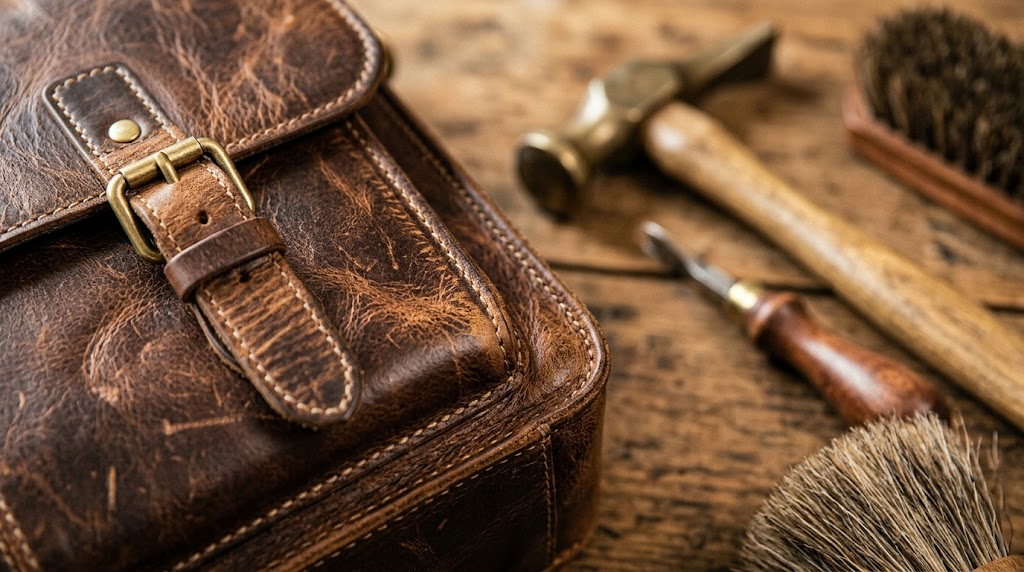
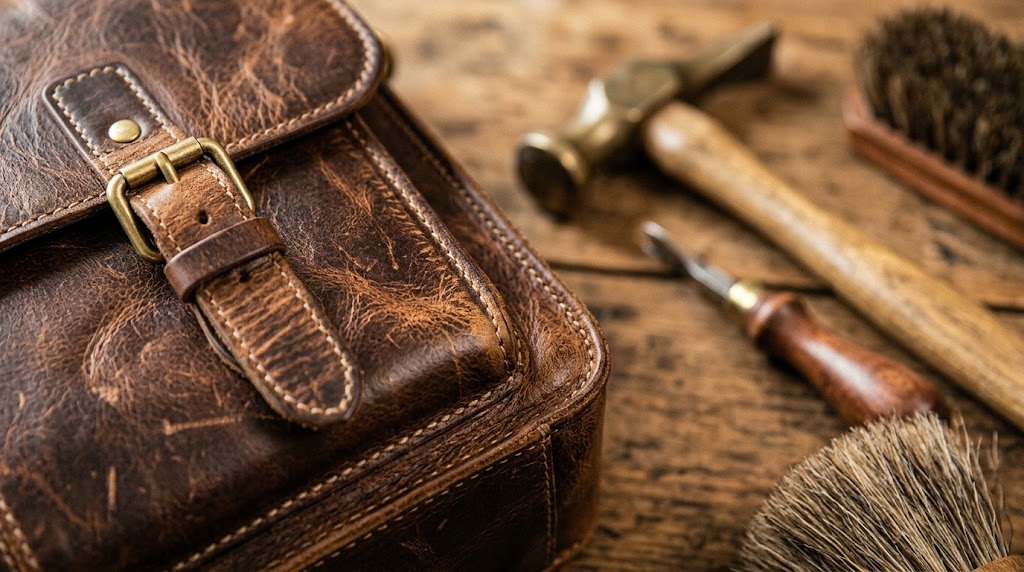
To appreciate why fine leather gains prestige with age, one must first deconstruct the phenomenon of patina. In the world of decorative arts and horology, patina refers to the gentle oxidation and surface transformation that signals authenticity, age, and exposure to the elements. In fine leatherwork, patina is the physical chronicle of your life stamped into the grain of the hide.
When an uncorrected, premium hide is processed through traditional botanical methods, its open pores remain receptive to its environment. Every morning you lift your briefcase by its burnished handle, the natural oils from your palms transfer into the fibers. Every afternoon sunbeam filtering through a café window gently warms the organic vegetable tannins, darkening the base pigment from a pale biscuit or light chestnut into a deep, multidimensional amber. Raindrops that dry naturally leave microscopic textural variations that eventually blend into a warm, marbled sheen.
This aging process is fundamentally different from wear and tear. Wear and tear implies structural degradation—the unraveling of threads, the flaking of synthetic topcoats, or the splitting of brittle fibers. Patina, by contrast, is a cosmetic and tactile enhancement that occurs precisely because the underlying fiber matrix is dense, robust, and supple enough to remain structurally sound while its surface evolves. A cheap polyurethane or vinyl bag will scuff, peel, and reveal unsightly gray backing cloth after twelve months of commuting. An untreated vegetable-tanned duffle will pick up minor scuffs in its first month, only for those marks to blend, soften, and melt into a lustrous, golden-brown glow by year five.
The emotional resonance of this transformation cannot be overstated. In an era where digital perfection and algorithmic symmetry dominate our visual diet, an object that proudly wears the marks of lived experience feels grounded, authentic, and undeniably sophisticated. It communicates that the wearer does not simply purchase luxury to display wealth for a fleeting season, but rather lives with their belongings in an intimate, enduring partnership.
THE LIFE CYCLE OF LEATHER: SYNTHETIC VS. HEIRLOOM GRADE
┌─────────────────────────────────────────────────────────────────────────┐
│ YEAR 1:                                                                 │
│ • Synthetic / Fast Fashion : Flawless surface gloss, rigid drape.      │
│ • Full-Grain Veg-Tan       : Clean, pale/matte, slightly stiff hand.   │
├─────────────────────────────────────────────────────────────────────────┤
│ YEAR 3:                                                                 │
│ • Synthetic / Fast Fashion : Edge paint cracks, synthetic layer peels.  │
│ • Full-Grain Veg-Tan       : Deepening color, softer temper, glow.     │
├─────────────────────────────────────────────────────────────────────────┤
│ YEAR 10+:                                                               │
│ • Synthetic / Fast Fashion : Landfill waste; unrepairable breakdown.    │
│ • Full-Grain Veg-Tan       : Rich heritage patina, structural mastery.  │
└─────────────────────────────────────────────────────────────────────────┘
The Anatomy of Hide Selection: Why Full-Grain Reigns Supreme
Not all leather possesses the biological capability to age gracefully. In fact, the vast majority of consumer leather goods sold today are chemically engineered to look uniform on a retail shelf at the direct expense of their long-term longevity. To make an intelligent acquisition, one must understand how tanneries grade and slice an animal hide.
Cross-Section of an Animal Hide
┌───────────────────────────────────────────────────────────┐  ◄── Epidermis / Hair (Removed)
│  FULL-GRAIN (Dense vertical fiber bundles; never sanded) │  ◄── Highest durability & patina
├───────────────────────────────────────────────────────────┤
│  TOP-GRAIN  (Surface sanded/buffed; faux grain stamped)  │  ◄── Moderate durability
├───────────────────────────────────────────────────────────┤
│  GENUINE / SPLIT LEATHER (Loose, horizontal fibers)       │  ◄── Low strength; often coated
└───────────────────────────────────────────────────────────┘
1. Full-Grain Leather: The Gold Standard
Full-grain leather utilizes the outermost layer of the hide directly below the hair. This region features the densest, tightest, and most vertically integrated network of natural collagen fibers. Because the surface is left completely unbuffed, unsanded, and uncorrected, it retains all the natural grain, subtle neck wrinkles, micro-pores, and individual characteristics of the animal. Because the grain layer is intact:
- It offers exceptional tensile strength and water resistance.
- Its breathable pores allow natural oils, balms, and ambient humidity to circulate freely.
- It is the only leather cut capable of developing an authentic, multi-layered heritage patina over decades.
2. Top-Grain (Corrected-Grain) Leather
When a raw hide exhibits too many surface scars, insect bites, or uneven markings, industrial tanneries sand off the uppermost full-grain layer. They then apply a heavy synthetic resin or pigment topcoat and run the hide through an embossing press to stamp a uniform, artificial grain pattern (such as Saffiano, Epsom, or pebble grain) onto the surface.
- The Advantage: Highly resistant to immediate scratches and easy to wipe clean.
- The Drawback: Sanding removes the strongest fiber layer. Furthermore, the thick layer of acrylic or polyurethane seals the pores completely. As a consequence, top-grain leather cannot absorb natural conditioning oils or ambient light, meaning it will never develop a true patina—it simply looks static until the plastic coating eventually chips or cracks.
3. Split (“Genuine”) Leather and Bonded Scraps
The lower layer left behind after the top grain is split off is known as the corium or split suede. Devoid of any natural grain structure, its fibers are loose, horizontal, and structurally weak. When commercial brands label an item “Genuine Leather,” they often refer to split leather backed by plastic or bonded leather made from pulverized leather shavings glued together with polyurethane. These materials possess virtually zero tensile resilience and deteriorate rapidly under everyday mechanical stress.
Tanning Methodologies: The Chemistry Behind Longevity
A raw hide is an organic, perishable protein. Tanning is the chemical and physical process that permanently alters the protein structure of the skin, arresting decay and turning it into a stable, durable material. The method of tanning chosen by an artisan or fashion house dictates how that leather will interact with time, light, and friction.
VEGETABLE TANNING VS. CHROME TANNING
┌────────────────────────┬───────────────────────────────┬───────────────────────────────┐
│ METRIC                 │ VEGETABLE TANNING             │ CHROME TANNING                │
├────────────────────────┼───────────────────────────────┼───────────────────────────────┤
│ Active Tannins         │ Tree bark, mimosa, chestnut   │ Chromium III mineral salts    │
│ Production Time        │ 30 to 90 days in wooden vats  │ 24 to 48 hours in drums       │
│ Environmental Profile  │ Biodegradable, organic sludge │ Chemical waste management     │
│ Scent Profile          │ Sweet, earthy, woody aroma    │ Chemical or neutral odor      │
│ Structural Temper      │ Firm, structured, moldable    │ Soft, supple, drape-friendly  │
│ Patina Capability      │ Exceptional, dramatic aging   │ Minimal (holds factory color) │
└────────────────────────┴───────────────────────────────┴───────────────────────────────┘
Traditional Vegetable Tanning
Dating back thousands of years to ancient artisanal guilds in Tuscany and Britain, vegetable tanning relies exclusively on naturally occurring polyphenol tannins extracted from tree bark, wood, fruit husks, and leaves—most notably chestnut, quebracho, mimosa, and valonea oak.
- The hides soak in progressively concentrated baths of organic tannins for up to three months.
- The tannins bind gently with the collagen matrix, creating a dense, firm leather with an unmistakable earthy, sweet fragrance.
- Because the vegetable tannins remain biologically active within the hide, they continue to oxidize and react to sunlight and body heat throughout the product’s lifespan, driving the rich, golden-brown darkening that defines collector-grade leather goods.
Mineral Chrome Tanning
Invented during the Industrial Revolution in the mid-nineteenth century, chrome tanning utilizes chromium sulfate salts to complete the tanning process in a matter of hours.
- Chrome tanning accounts for approximately 80–90% of all commercial leather goods today.
- It produces a remarkably soft, flexible, and colorfast leather that can be dyed in vibrant, pastel, or neon shades that do not shift when exposed to UV light.
- While ideal for slouchy designer hobo bags, lightweight garment leather, or water-resistant automobile seating, chrome-tanned leather does not develop the deep, burnished patina characteristic of vegetable-tanned hides. It maintains its factory appearance until structural wear forces its retirement.
Combination Tanning: The Best of Both Worlds
Certain heritage tanneries—such as the famed Horween Leather Company in Chicago with their legendary Chromexcel formula—employ a proprietary combination tannage. The hide undergoes an initial mineral chrome bath for softness and tensile durability, followed by an intensive vegetable re-tanning process utilizing natural tree barks and heavy waxes. The result is a leather that provides the supple, break-in comfort of chrome leather alongside the rich pull-up characteristics and dramatic patina potential of vegetable tannage.
The Architecture of Durability: Stitching, Hardware, and Edges
A piece of leather may be cut from the finest French calfskin, but if its construction geometry is flawed, it cannot survive long enough to age gracefully. Discerning buyers look beyond the surface leather to inspect the architectural foundation of the piece: the stitching, the edge treatment, and the hardware engineering.
THE SADDLE STITCH DIFFERENCE (Cross-Section of Failure)
Machine Lockstitch (Single thread break causes entire seam to unravel):
─── Top Thread ─────▲───────▲───────▲───────▲───
                    │       │  [X]  │       │   ◄── Thread snaps here
─── Bottom Thread ──▼───────▼───────▼───────▼─── (Remaining seam pulls free)

Artisan Saddle Stitch (Two independent threads; one break leaves the seam locked):
─── Thread A ───────\───────/───────\───────/───
                     \     /   [X]   \     /    ◄── Thread snaps here
─── Thread B ────────/─────\───────/─────\─── (Opposing loop holds integrity)
1. Machine Lockstitch vs. Traditional Saddle Stitch
Most luxury leather goods produced on an industrial scale use sewing machines that execute a standard lockstitch. A lockstitch uses two threads: an upper needle thread and a lower bobbin thread that interlock in the middle of the leather hole.
- The Flaw: If a single point of friction abrades and breaks the top thread of a lockstitch, the tension across the entire line collapses, causing the entire seam to unravel like a zipper.
- The Master Alternative: The traditional hand-sewn saddle stitch—practiced for over a century by master leather artisans—employs a single length of waxed linen thread with a blunt needle attached to each end. The artisan casts both needles through the exact same hand-awled hole in opposite directions, creating a figure-eight knot inside the leather. If one loop of a saddle stitch is severed through decades of abrasion, the opposing thread remains firmly locked in place by friction, preventing the seam from unraveling.
2. Hardware: Cast Brass, Solid Bronze, and Stainless Steel
The hardware on an investment piece must match the lifespan of the leather. In budget and mid-tier fashion goods, buckles, D-rings, and zippers are routinely crafted from lightweight zinc alloys (zamak) coated with a microscopically thin electroplated layer of gold or nickel. Within two to three years, the plating wears thin, revealing a dull, grayish base metal that pits and corrodes.
- True Luxury Standards: Look for solid, sand-cast brass, marine-grade stainless steel, or solid bronze hardware. Solid metals possess uniform composition throughout their entire volume; as they rub against the leather straps, they polish down naturally, developing their own rich, antique luster without ever flaking, chipping, or snapping under mechanical loads.
- Zipper Selection: Heavy-gauge, hand-polished brass zippers (such as those made by Raccagni or Excella) feature individually chamfered teeth that glide smoothly without cutting into the slider pull or chewing into the leather lining over thousands of open-and-close cycles.
3. Edge Finishing: Raw Burnishing vs. Edge Paint
Every cut edge of a leather panel must be sealed to protect the inner fibrous core from moisture absorption and fraying.
- Edge Paint: Modern production favor applying colored edge acrylic lacquer. While sleek and modern initially, thick edge paint is prone to drying out, cracking at flex points (such as strap hinges), and peeling away in rubbery ribbons after several seasons of temperature fluctuations.
- Beveled and Wax-Burnished Edges: The gold standard for vegetable-tanned goods is mechanical edge burnishing. The leather craftsman bevels the sharp 90-degree edge of the hide, applies natural beeswax, gum tragacanth, or Tokonole, and rapidly rubs the edge with a grooved hardwood slicker. The resulting frictional heat melts the natural waxes deep into the fiber ends, creating a glass-smooth, permanently fused edge that cannot peel or delaminate because it is made of the leather’s own consolidated fibers.
Iconic Hides: A Comparative Guide for the Connoisseur
Every animal hide possesses distinct physical characteristics, grain patterns, pore structures, and flex points. Choosing the right leather for your lifestyle requires understanding how these hides behave under stress and how their aesthetic personality evolves over decades.
LUXURY LEATHER CHARACTERISTICS MATRIX
┌──────────────────────┬──────────────────────┬─────────────────────┬───────────────────────┐
│ HIDE VARIETY         │ PRIMARY STRENGTH     │ TACTILE TEMPER      │ RESILIENCE / LIFESPAN │
├──────────────────────┼──────────────────────┼─────────────────────┼───────────────────────┤
│ Full-Grain Calfskin  │ Ultra-fine, smooth   │ Supple yet dense    │ High (Classic formal) │
│ English Bridle       │ Extreme tensile load │ Heavy, stiff, waxy  │ Exceptional (Decades) │
│ Shell Cordovan       │ Poreless, non-crease │ Glassy, firm, rich  │ Multi-generational    │
│ French Box Calf      │ Sharp micro-creasing │ Formal, firm temper │ Very High (Heirloom)  │
│ Clemence / Togo      │ Scratch resistance   │ Slouchy, textured   │ High (Daily casual)   │
│ Vegetable Vachetta   │ Raw, deep patina     │ Dry, pale to amber  │ High (Needs moisture) │
└──────────────────────┴──────────────────────┴─────────────────────┴───────────────────────┘
Full-Grain French and Italian Calfskin
Calfskin harvested from younger cattle features an extraordinarily tight, fine pore structure with minimal surface imperfections. It strikes a sublime balance between refined elegance and structural resilience. When processed using traditional box tanning or gentle mineral-veg combination methods, calfskin develops a soft, glowing, micro-crystalline luster that drapes elegantly while resisting sagging.
English Bridle Leather
Originally formulated for equestrian saddlery where human life depended on leather strength, English Bridle is an extraordinarily dense, vegetable-tanned steerhide. During the finishing process at historic tanneries, the hides are deeply stuffed with tallow, natural grease, and beeswax through a labor-intensive process called “currying.”
- Aging Behavior: Bridle leather is stiff when new, often exhibiting a white, cloudy powder on its surface known as “bloom” (the natural tallows migrating to the surface).
- As you handle and brush the leather, these waxes melt back into the grain, developing a mirror-smooth, deep color saturation capable of withstanding heavy daily abuse in briefcases, luggage straps, and utility belts.
Genuine Shell Cordovan
Not technically a leather derived from the skin, Shell Cordovan is an internal equine membrane (the subcutaneous muscle layer found beneath the hide of a horse’s rump). Horween in North America and Shinki Hikaku in Japan spend six full months tanning, shaving, hand-currying, and hand-glazing each individual oval shell.
- The Non-Creasing Marvel: Because Shell Cordovan is composed purely of tightly bundled non-directional collagen fibers without a distinct grain layer, it never micro-wrinkles or creases like ordinary leather. Instead, under repeated flexions (such as the vamp of a dress shoe), it ripples into elegant, undulating rolls.
- Shell Cordovan is naturally dense, exceptionally water-resistant due to its heavy oil stuffing, and can be buffed back to a brilliant, glassy sheen with a simple horsehair brush for half a century.
Untreated Vegetable-Tanned Vachetta
Renowned for its use in luxury luggage trims and heritage satchels, Vachetta is a completely unpigmented, naked vegetable-tanned cowhide.
- When purchased, it possesses a delicate, pale ivory or light peach coloration that is hypersensitive to moisture, hand oils, and UV light.
- Over the course of twelve to twenty-four months of honest daily carry, Vachetta undergoes the most dramatic visual transformation in the entire leather universe, darkening into a breathtaking, glossy, honey-caramel shade that serves as an unmistakable signature of authentic vintage pedigree.
The Economics of Enduring Luxury: Cost-per-Wear and Vintage Capital
When entering the world of heritage leather goods, retail price tags can produce immediate sticker shock. An artisan vegetable-tanned leather briefcase from an independent workshop might demand $1,200 to $2,500; an iconic luxury shoulder bag from an established house can easily surpass $6,000 to $10,000; and a pair of hand-welted Shell Cordovan dress shoes routinely retails above $900.
To evaluate these figures through a mature sartorial lens, one must abandon the short-sighted metric of upfront retail price and instead calculate the authentic mathematical reality of Cost-per-Wear (CPW) alongside Residual Asset Value.
THE 10-YEAR FINANCIAL HORIZON: FAST FASHION VS. INVESTMENT LEATHER
┌───────────────────────────────────────┬───────────────────────────────────────┐
│ FAST FASHION / SYNTHETIC BRIEFCASE    │ HEIRLOOM FULL-GRAIN LEATHER BRIEFCASE │
├───────────────────────────────────────┼───────────────────────────────────────┤
│ Initial Purchase Price: $180          │ Initial Purchase Price: $1,400        │
│ Replacement Rate: Every 1.5 Years     │ Replacement Rate: Never (Lasts 25+ yrs│
│ Total Units Purchased in 10 Yrs: 7    │ Total Units Purchased in 10 Yrs: 1    │
│ Total Spend Over 10 Yrs: $1,260       │ Total Spend Over 10 Yrs: $1,400       │
│ Maintenance / Care Spend: $0          │ Maintenance / Care Spend: $75         │
│ Cumulative Financial Outlay: $1,260   │ Cumulative Financial Outlay: $1,475   │
│ Condition at Year 10: Discarded trash │ Condition at Year 10: Pristine Patina │
│ Resale / Residual Value: $0           │ Resale / Residual Value: $800–$1,200  │
│ NET REAL COST OVER 10 YEARS: $1,260   │ NET REAL COST OVER 10 YEARS: $350–675 │
└───────────────────────────────────────┴───────────────────────────────────────┘
When you purchase a cheaply manufactured bag made from bonded leather or low-grade top-grain with synthetic edge coatings, you are buying a depreciating liability designed to expire. After eighteen months of daily commuting, the friction against your clothing rubs off the thin polyurethane film, revealing the fibrous backing; the zipper teeth misalign; the shoulder strap anchor tears away from its cheap cardboard reinforcement. You are forced to throw it away and purchase another. Over a decade, you spend a comparable sum of money, but at every single point in that timeline, you are carrying a compromised, visibly worn-out accessory that imparts zero personal elegance.
Conversely, an investment in a full-grain, vegetable-tanned masterpiece reverses this dynamic:
- The Depreciation Floor: While ordinary consumer goods drop in value to zero, iconic leather pieces from reputable makers (who use uncorrected hides, saddle-stitched stress points, and repairable hardware) retain significant residual value on secondary markets such as Vestiaire Collective, The RealReal, and specialized luxury auctions.
- The Vintage Premium: Certain pieces—particularly clean, well-cared-for items featuring rare leathers, discontinued colorways, or iconic silhouettes with exceptional natural patina—frequently trade above their original historical retail prices. Collectors actively pay a premium for a piece that has already undergone five to ten years of careful, even patina development, sparing them the initial pale, break-in stage.
- True Cost-per-Wear: If you carry a $1,400 briefcase 220 workdays a year for fifteen years, your baseline cost is roughly 42 cents per day. Factor in the residual value if passed to an heir or sold to a collector, and the net cost drops to pennies per wear. You enjoy a superior tactile experience, elevate your daily personal style, and eliminate the cycle of consumer waste.
Styling the Passage of Time: Integrating Aged Leather Across Wardrobe Codes
One of the most profound aesthetic advantages of aged leather is its unmatched versatility. Brand-new, ultra-glossy accessories can sometimes feel sterile, intimidating, or overly formal. A rich, patinated leather good, however, introduces a textural warmth and relaxed gravitas that bridges the gap between disparate style aesthetics.
                  THE SARTORIAL SPECTRUM OF AGED LEATHER
Formal Tailoring ◄──────────────────────────────────────► Casual Raw Denim
       │                                                       │
  [Polished Calf]          [Honey-Aged Bridle]          [Roughout / Pull-Up]
  • Sharp Worsted Suing    • Navy Blazer & Flannels     • Selvedge Denim & Twill
  • Hand-Glazed Patina     • Cashmere Overcoats         • Heavy Knitwear & Boots
1. Anchoring Sharp Business Tailoring
In formal business and legal environments, head-to-toe perfection can easily read as rigid or insecure. Pairing a crisp, bespoke charcoal worsted wool suit or a sharp navy double-breasted blazer with an excessively shiny, plasticized briefcase feels commercial.
Introduce a twenty-year-old English bridle attache case or a hand-burnished vegetable-tanned French calf document portfolio with softened, amber edges. The visual contrast immediately communicates quiet confidence, legacy, and established authority. The slight variations in the leather’s color tell a subtle story of long-term competence and refined taste that no off-the-rack status symbol can emulate.
2. Elevating Casual and Heritage Workwear
Aged leather is the natural soulmate of tactile, organic textiles:
- Denim & Heavy Twills: A raw indigo Japanese selvedge denim jacket or heavyweight chino trouser gains balance when anchored by a pair of 8-year-old pull-up leather service boots or a patinated saddle leather utility belt. The fading whiskers of the denim complement the honeyed highlights across the leather’s stress points.
- Knitwear & Outerwear: Heavy Donegal tweed coats, chunky ribbed fisherman sweaters in undyed wool, and rugged waxed cotton field jackets naturally demand accessories with equivalent visual weight. A delicate, pristine designer bag looks out of place against rugged wool; a thick, vegetable-tanned leather messenger bag with burnished brass hardware completes the ensemble seamlessly.
3. The Art of Modern High-Low Dressing
One of the most elevated styling techniques practiced by contemporary fashion editors is the deliberate juxtaposition of ultra-modern, clean-lined garments with deeply aged, character-rich leather goods:
- The Look: A minimalist, monochromatic ivory silk shirt and tailored black wide-leg trousers, styled with a vintage, caramel-patinated 1970s Hermès Kelly or an archival Céline box bag.
- The Effect: The vintage leather prevents the minimalist silhouette from feeling cold or clinical, while the modern clothing keeps the aged bag feeling contemporary rather than like a museum costume. The tension between the pristine textile and the historic hide creates pure, effortless personal style.
Master Restoration & Maintenance: Preserving Hides for Generations
Leather does not require obsessive, daily babying; in fact, over-conditioning and excessive chemical intervention are among the leading causes of premature leather ruin. What leather demands is disciplined, minimal, and correct structural care. Think of fine leather as an extension of skin: it requires cleansing, breathable hydration, protection from extreme environments, and occasional rest.
THE COMPREHENSIVE LEATHER CARE CYCLE
┌──────────────────────┬─────────────────────────────┬──────────────────────────────┐
│ FREQUENCY            │ MAINTENANCE ACTION          │ PURPOSE / TOOL               │
├──────────────────────┼─────────────────────────────┼──────────────────────────────┤
│ After Every Heavy Use│ Dry Horsehair Buffing       │ Dislodge surface dust & grit │
│ Every 3–6 Months     │ Gentle Conditioning Balm    │ Restore internal lipid balance│
│ As Needed (Rain/Spill│ Clean Microfiber Dab & Dry  │ Prevent water spotting/mold  │
│ Bi-Annually          │ Hardware & Seam Check       │ Inspect thread tension & wax │
│ Off-Season Storage   │ Breathable Dust Bag + Form  │ Prevent creasing and mildew  │
└──────────────────────┴─────────────────────────────┴──────────────────────────────┘
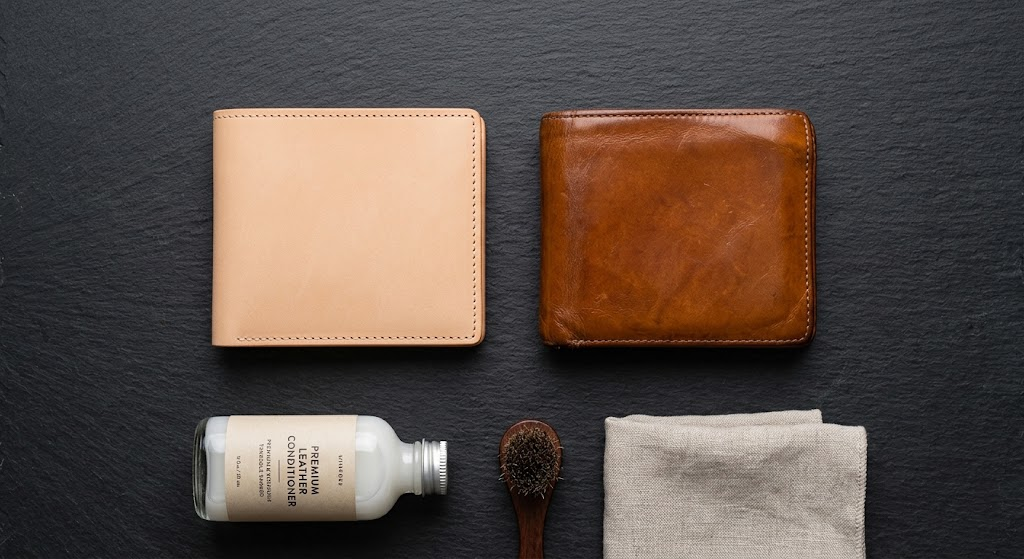
1. The Power of the 100% Horsehair Brush
The single most valuable tool in your leather care arsenal is a high-density, genuine horsehair brush. Dust, airborne particulate matter, and urban smog settle into the micro-pores of leather every time you take it outdoors. If left unattended, these tiny particles act like microscopic sandpaper, abrading the collagen fibers as the leather flexes during daily movement.
- The Routine: Spend sixty seconds vigorously brushing your leather goods with medium, back-and-forth strokes once a week. The frictional heat generated by the dense natural horsehair warms the surface waxes inside the hide, buffs out minor micro-scratches, redistributes trapped oils, and restores a natural, healthy glow without adding any chemical creams.
2. Hydration Chemistry: Conditioning Without Suffocation
Over time, environmental factors—particularly dry indoor central heating and air conditioning—evaporate the natural water and oil content within the leather’s fiber matrix. Left unchecked, the collagen fibers shrink, stiffen, and eventually snap under tension, causing irreparable surface cracking.
CONDITIONER COMPATIBILITY GUIDE
┌───────────────────────┬────────────────────────────────────────────────────────┐
│ PRODUCT TYPE          │ BEST APPLICATION / HAZARDS                             │
├───────────────────────┼────────────────────────────────────────────────────────┤
│ Pure Lanolin & Beeswax│ Ideal for fine calfskin and veg-tan; preserves temper. │
│ Saphir Médaille d'Or  │ Premium standard; solvent-free, pure shea/mink waxes.  │
│ Pure Neatsfoot Oil    │ Heavy bridle & boots ONLY; significantly darkens hide. │
│ Silicone Sprays / Oils│ AVOID. Clogs pores permanently; accelerates rot.      │
│ Mineral Petroleum Jelly│ AVOID. Breaks down organic tannins; creates sludge.    │
└───────────────────────┴────────────────────────────────────────────────────────┘
- The Process: Apply a dime-sized amount of premium conditioner (such as Saphir Renovateur or a specialized beeswax/lanolin balm) onto a clean microfiber cloth. Never pour conditioner directly onto the leather. Massage it in gentle, overlapping circular motions across the entire panel. Allow the hide to absorb the lipids for twenty minutes, then take your dry horsehair brush and buff the leather vigorously to remove any unabsorbed excess. The goal is a light, invisible nourishing coat, not a wet, saturated surface.
3. Managing Disasters: Rain, Scuffs, and Spills
- Rain and Water Droplets: If you are caught in a downpour, do not panic, and never place your soaked leather bag near a radiator, fireplace, or under a hair dryer. Forced artificial heat will cook the wet collagen fibers, causing them to shrink, warp, and turn permanently brittle. Instead, immediately dab the standing water with a clean, dry cotton towel, stuff the interior with undyed acid-free tissue paper or cedar shoe trees to hold its structural shape, and let it dry naturally at room temperature in a well-ventilated room over 24–48 hours.
- Ink Stains and Grease: Grease spots from food or hand creams should be lightly dusted with pure, unperfumed cornstarch or talcum powder and left untouched overnight. The fine powder will draw the lipid oils out of the porous leather. For deep pen ink marks on untreated leather, consult a professional leather artisan or heritage restoration cobbler rather than attempting harsh DIY internet remedies like alcohol or acetone, which will permanently strip the color dye and destroy the grain.
4. Archival Storage Practices
When placing leather goods into storage between seasons, avoid the catastrophic mistake of sealing them inside non-breathable plastic bins or synthetic garment bags. Leather requires continuous air circulation; trapped ambient humidity inside an airtight plastic container creates the ideal incubator for green and white mold spores (mildew) that feed on the organic fats within the hide.
- Always house your items inside breathable 100% cotton dust bags.
- Lightly stuff bags with unprinted, acid-free tissue paper to prevent permanent structural collapse and deep corner creasing.
- Keep your storage area at a steady humidity level between 45% and 55% and away from direct, continuous UV sunlight to prevent photobleaching and fiber dehydration.
The Connoisseur’s Checklist: What to Inspect Before Investing
Before parting with substantial capital for a new or vintage leather acquisition, execute this meticulous eight-point quality audit to ensure the piece has the structural pedigree required to age into perfection.
THE 8-POINT QUALITY AUDIT
[1] HIDE INTEGRITY       : Confirm full-grain surface; verify visible, unbuffed pores.
[2] SCENT VERIFICATION   : Scent must be sweet, woody, earthy (No sharp chemical smell).
[3] EDGE GEOMETRY        : Look for beveled, wax-burnished edges over heavy edge paint.
[4] STITCH ARCHITECTURE  : Check for slanted hand-saddle stitching; thick waxed thread.
[5] HARDWARE COMPOSITION : Verify solid sand-cast brass or stainless steel; no zamak.
[6] LINING PHILOSOPHY    : Demand full leather, suede, or heavy canvas linings (No poly).
[7] REPAIRABILITY        : Are handle attachments, strap D-rings, and zippers replaceable?
[8] TANNERY PEDIGREE     : Inquire about the source tannery (e.g., Haas, Horween, Badalassi).
- 1. Hide Surface Verification: Run your fingertips across the panel under bright, natural light. You should observe slight, natural variations in grain density, subtle growth marks, and open micro-pores. If the surface feels like cool plastic, looks unnaturally uniform across four square feet, or has no visible pore structure, it is a heavily corrected or synthetic-coated leather that will never patina.
- 2. Scent Profile Assessment: Bring the leather close to your nose. Genuine vegetable-tanned and heritage combination-tanned leathers emit a rich, warm, organic fragrance reminiscent of fresh woodchips, sweet earth, and natural beeswax. A sharp, pungent odor resembling nail polish remover, gasoline, or burnt plastic indicates low-grade industrial chemical processing.
- 3. Lining Composition: Open the interior compartments. The interior lining of a true heirloom piece is as robust as its exterior. Look for soft suede, unpigmented calf lining, or heavyweight 100% cotton sailcloth. Cheap synthetic polyester or nylon taffeta linings tear at the internal seam lines within a few years, leaving the bag structurally unusable even if the outer hide remains in good condition.
- 4. Repairability and Modularity: Examine how the wear points are assembled. Are the handle anchors stitched directly through reinforced leather tabs backed by copper rivets, or are they glued between thin layers? Can the main zipper be easily unpicked and replaced by a master cobbler in thirty years? The greatest heritage makers design their products with modular maintenance in mind, ensuring that high-wear contact points can be individually serviced and restored across generations.
Conclusion
In a world increasingly driven by digital abstractions, artificial textures, and the dizzying churn of seasonal trends, investment leather goods stand as a triumphant testament to permanence. They remind us that the items we invite into our daily routines should not be disposable tokens designed to be discarded at the first sign of age, but enduring companions capable of documenting our personal journeys.
When you invest in a piece of full-grain, vegetable-tanned leather, you are not merely purchasing an accessory; you are initiating a decades-long collaboration between master artisan craftsmanship, natural biology, and your own life. Every handling of a solid brass buckle, every commute through autumn rains, and every golden afternoon spent carrying an uncorrected hide leaves an indelible, poetic imprint upon its surface. The resulting patina is something money cannot buy directly off a boutique shelf—it is an aesthetic earned through time, utility, and shared experience.
As you build a more intentional, sustainable, and sophisticated personal wardrobe, embrace the pieces that are built to outlive the moment. Look for the authentic signatures of uncompromising craftsmanship: the density of full-grain hides, the strength of hand-waxed saddle stitching, the honesty of solid cast hardware, and the sweet, earthy aroma of traditional botanical tanning. Curate with patience, care with discipline, and take pride in watching your collection age gracefully into perfection. For in the end, true luxury is not about stopping time—it is about wearing it with unmistakable elegance.
Frequently Asked Questions
What exactly causes leather to develop a patina over time?
Patina is the result of a natural biochemical aging process that occurs primarily on full-grain, vegetable-tanned leathers. As the hide is used, it continuously absorbs natural oils from your hands, receives gentle frictional polishing from contact with your clothing, oxidizes through exposure to ambient oxygen, and darkens under natural ultraviolet (UV) sunlight. These combined factors create a rich, dimensional sheen and deep golden-brown undertones unique to each individual item and its usage patterns.
Can cheap or corrected-grain leather develop a patina?
No. Cheap, corrected-grain (“genuine”) or synthetic leathers (polyurethane, PVC) have their natural surface sanded away and are sealed under a thick layer of synthetic pigment, plastic, or acrylic resin. Because their pores are completely blocked and their fiber structure is compromised, they cannot absorb natural conditioning oils or react organically to sunlight. Instead of developing a patina, these materials simply crack, peel, and degrade over time.
How do I know if a leather bag is vegetable-tanned or chrome-tanned?
Vegetable-tanned leather generally has a firmer structural temper, a rich, earthy, sweet woody scent, and natural, unpainted edges that can be wax-burnished to a smooth finish. Chrome-tanned leather is noticeably softer, cooler, and more drape-like to the touch right out of the box, smells neutral or faintly chemical, comes in a vast array of bright, uniform colors, and usually features painted or folded edge treatments.
How often should I condition high-end leather goods?
For standard daily-use accessories (such as briefcases, totes, and wallets), a gentle conditioning treatment once every three to six months is ideal. In dry winter climates or heavily air-conditioned environments, you may apply a light conditioner every three months to prevent fiber dehydration. If the leather feels soft, cool, and supple to the touch, it does not need conditioning; over-saturating leather can weaken its fiber matrix and attract dirt.
What should I do immediately if my investment leather bag gets caught in the rain?
Do not panic, and never use artificial heat sources such as hair dryers, radiators, or direct sunlight to dry it. Immediately blot away standing water droplets with a dry, clean microfiber or cotton towel. Stuff the interior with unprinted, acid-free tissue paper to maintain its structural form and absorb internal moisture, then allow the piece to air-dry naturally at room temperature in a well-ventilated space over 24 to 48 hours before brushing with a horsehair brush.
Why is full-grain leather considered superior to top-grain leather?
Full-grain leather preserves the outermost layer of the animal hide, where the collagen fibers are naturally woven at their highest density and strength. It is never sanded or buffed, leaving its natural breathability and grain pattern intact. Top-grain leather has its strongest outermost layer sanded off to eliminate surface blemishes, which compromises its tensile resilience, removes its natural micro-pores, and prevents authentic patina development.
Is hand saddle-stitching really stronger than machine sewing?
Yes, significantly. Machine sewing utilizes a lockstitch system with two independent threads looping around each other; if the thread breaks at any single wear point, the entire seam can quickly unravel under tension. Hand saddle-stitching uses a single length of waxed thread passed through each hole from opposite directions in a figure-eight knot. If a saddle stitch thread is severed through friction, the remaining loop stays locked in place, maintaining seam integrity.
How should I store my leather goods when not in use for extended periods?
Always store leather goods in breathable, 100% cotton dust bags inside a temperature-controlled environment with moderate humidity (around 50%). Never store leather in plastic bins, vinyl garment bags, or damp basements, as lack of air circulation and excess moisture induce harmful mold and mildew growth. Lightly stuff bags with acid-free tissue paper to prevent collapse and corner creasing, and keep them out of direct, continuous sunlight.