There is an unmistakable weight to true luxury. When you run your fingers across a flawlessly tailored blazer or a heavy silk gown, your senses immediately register the quality. For decades, that sensory confirmation was inextricably linked to traditional extravagance: ultra-fine cashmere, virgin vicuña, heavy mulberry silk, and conventional leathers harvested from rare origins. We were taught to equate exclusivity with extraction—the rarer the material, the higher its status.
Yet, the upper echelons of style are undergoing a profound cultural and material metamorphosis. If you walk through the ateliers of Milan, Paris, and London today, you will notice a quiet revolution brewing beneath the polished surface. High-end fashion is no longer looking exclusively backward into historical archives for its definition of prestige. Instead, it is looking forward, engineering a new paradigm where ethics, science, and uncompromising aesthetics converge.
This transformation is not born out of mere compliance or superficial trend-chasing; it is driven by a sophisticated clientele that demands more from their wardrobes. Modern luxury consumers—informed, discerning, and deeply aware of their ecological footprints—no longer accept the false dichotomy between looking exceptional and acting responsibly. They want garments that tell a story of innovation, heritage, and environmental stewardship without sacrificing an ounce of tactile opulence.
In this comprehensive editorial journey, we will explore the five eco-friendly fabrics that are completely redefining high-end fashion. We will dissect how these materials are changing the landscape of designer wear, what experienced buyers look for when investing in them, how to style them with effortless grace, and why sustainability has officially become the ultimate marker of modern elegance. Welcome to the future of conscious couture, brought to you by Royal Fashion Tech.
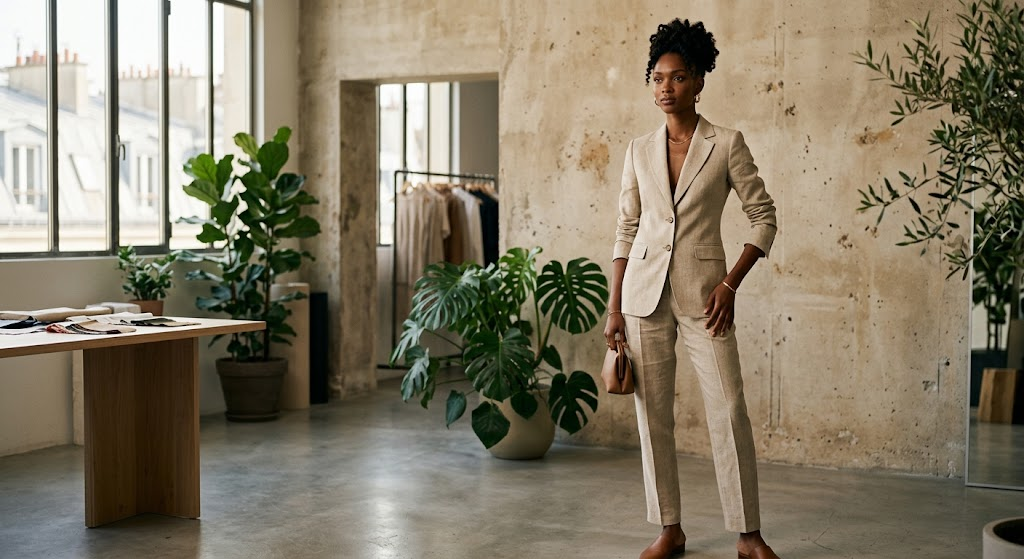
The Evolution of Exclusivity: Why High-End Fashion Had to Rethink Its Foundations
To understand why sustainable textiles are currently commanding the runways of top-tier design houses, we must first confront the historical contradiction of luxury. Historically, luxury fashion celebrated excess. The status symbol was often rooted in resource depletion—the more exclusive, rare, and difficult a material was to source, the more coveted it became. However, true luxury has always been synonymous with timelessness, durability, and a deep respect for craftsmanship.
As environmental science caught up with global manufacturing, the cracks in the traditional luxury model became impossible to ignore. Conscientious consumers began asking uncomfortable questions about supply chains, water usage, chemical treatments, and carbon emissions. They realized that a garment crafted from conventionally produced materials carrying a four-figure price tag lost its allure if its production left a trail of ecological degradation.
The industry’s response was not to compromise on quality, but to elevate science to the level of art. Textile innovators and forward-thinking luxury brands realized that the future of high-end fashion lay in bio-fabrication, regenerative agriculture, and advanced recycling technologies. They began treating sustainable materials not as a compromise or a budget alternative, but as superior alternatives that offer unique textures, lighter environmental footprints, and narratives rich in innovation.
When you invest in a luxury piece today, you are paying for time, skill, and narrative. The modern wardrobe investment is no longer just about longevity of wear; it is about the longevity of our planet’s ecosystems. By shifting away from virgin synthetics and environmentally taxing conventional farming, high-end designers are proving that ecological responsibility is the highest form of sophistication.
Fabric One: Peace Silk and Regenerative Mulberry Silk — The Fluidity of Conscience
Silk has long been the crown jewel of evening wear and foundational luxury layering. Its natural protein structure gives it a drape, sheen, and thermal regulation capacity that synthetic fibers can only attempt to mimic. However, conventional silk production has historically faced ethical hurdles, primarily due to the traditional harvesting process, which involves boiling silkworms inside their cocoons to preserve continuous filament fibers.
Enter the renaissance of conscious silk production, spearheaded by peace silk (Ahimsa silk) and regenerative silk initiatives.
Understanding the Craft Behind Peace Silk
Peace silk allows the silkworm to complete its metamorphosis and emerge from the cocoon as a moth before the fibers are harvested. While this process results in broken filaments that require a slightly different spinning technique—often yielding a texture with a subtle, rustic, linen-like character rather than a glassy sheen—it has captured the imagination of ethical couturiers.
Concurrently, regenerative mulberry silk farms are transforming how raw silk is cultivated. By prioritizing soil health, eliminating synthetic pesticides, and fostering biodiversity around mulberry groves, these farms ensure that the land heals rather than depletes during production.
What Experienced Buyers Look For
When assessing high-end silk garments today, experienced buyers look beyond the superficial gloss. They examine the weight (measured in momme), the hand-feel, and the weave density. Sustainable silk often features a softer, more organic matte luster that speaks of understated elegance rather than flashy synthetic shine. Look for certifications like GOTS (Global Organic Textile Standard) or cruelty-free verification to ensure integrity.
Styling the Modern Silk Wardrobe
- The Evening Slip Dress: Pair a fluid peace-silk slip dress with structured, heavy wool outerwear to create a masterclass in textural contrast.
- The Oversized Button-Down: Tuck a relaxed-fit regenerative silk shirt into high-waisted tailored trousers for an effortlessly chic transitional look.
- Care Tip: Always hand-wash your luxury silks in lukewarm water using a pH-neutral detergent, or entrust them to an eco-conscious dry cleaner who avoids harsh perchloroethylene solvents.
Fabric Two: Innovative Plant-Based Leathers — Beyond Animal Hide and Plastic Synthetics
For decades, genuine leather was considered the non-negotiable benchmark of durability and prestige in luxury accessories, footwear, and outerwear. Yet, conventional leather tanning relies heavily on toxic heavy metals like chromium and requires massive inputs of land and water. On the flip side, early attempts at synthetic “vegan leathers” were largely petroleum-based plastics that lacked breathability, aged poorly, and contributed to microplastic pollution.
The high-end fashion world needed a structural breakthrough—and bio-based science delivered.
The Rise of Botanical Hides
Today, luxury houses are partnering with biotech labs to create plant-based leathers derived from agricultural waste, fungi, and fast-growing plants. Materials crafted from cactus leaves, apple peels, wine-making residue, and mycelium (mushroom root networks) are entering the luxury market with staggering sophistication.
Mycelium-based leather, in particular, has stunned fashion critics. Grown in controlled environments within days, mycelium can be embossed, tanned, and finished to mimic the exact grain, suppleness, and tensile strength of the finest calfskin.
Common Mistakes to Avoid When Buying Alternative Leathers
- Mistake One: Assuming all plant-based leathers are 100% plastic-free. Always check the backing material; some botanical leathers still use a minor percentage of polyurethane binding. True luxury innovations are pushing toward fully biodegradable matrices.
- Mistake Two: Treating them like cheap vinyl. High-end plant leathers require proper conditioning and care, just like traditional leather, to maintain their suppleness and luster over years of wear.
How to Style Botanical Leather in Luxury Outerwear
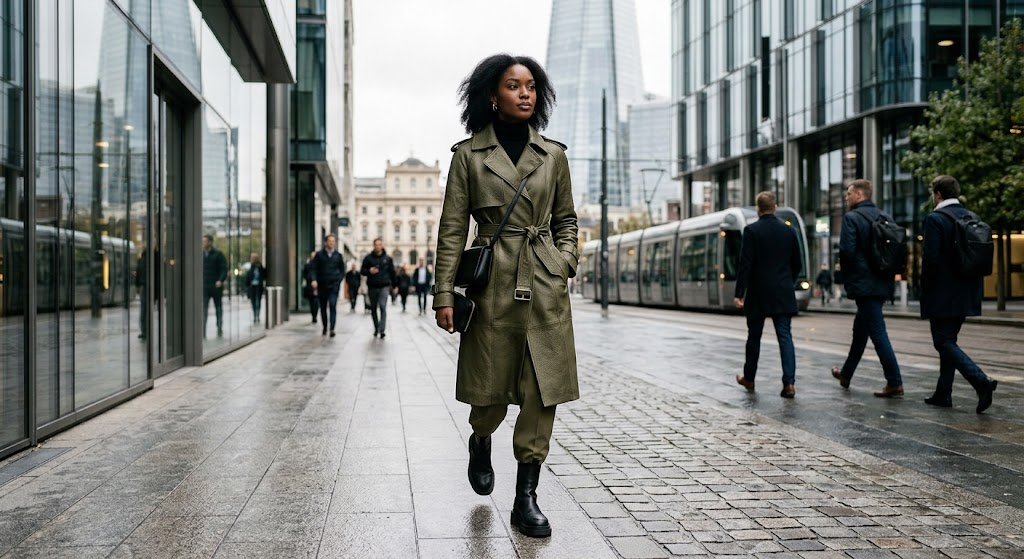
A structured trench coat or a minimalist blazer crafted from cactus or mushroom leather instantly elevates an outfit. Pair it with fine cashmere knitwear and tailored trousers. The juxtaposition of a futuristic, ethically engineered fabric with classic tailoring communicates a sharp, forward-thinking aesthetic that commands respect in any boardroom or gallery opening.
Fabric Three: Recycled Cashmere and Regenerative Wool — The Warmth of Circular Heritage
There is perhaps nothing quite as comforting as wrapping oneself in high-grade cashmere during the bitter chill of winter. It is an investment piece par excellence—a garment that, if cared for properly, can last for decades, passing down through generations. However, conventional cashmere grazing has placed severe ecological stress on grasslands, leading to desertification in regions like Inner Mongolia.
To preserve the tactile joy of wool and cashmere without expanding the ecological footprint, luxury fashion has embraced circularity through mechanical and chemical recycling, alongside regenerative herding practices.
The Engineering of Recycled Cashmere
Recycled cashmere takes post-consumer or pre-consumer cashmere garments and yarn scraps, breaks them down meticulously, and spins them into brand-new, ultra-soft yarn. While purists once argued that recycled fibers lost their structural integrity, modern spinning technology has bridged the gap entirely. High-end recycled cashmere retains the signature loft, thermal efficiency, and cloud-like softness of virgin fibers.
+-------------------------------------------------------------+
|              THE LUXURY CIRCULAR CASHMERE PIPELINE          |
+-------------------------------------------------------------+
| 1. Sourcing: Post-consumer garments & high-grade remnants   |
| 2. Sorting: Color separation by shade (minimizing dyeing)   |
| 3. Teasing & Carding: Breaking down fibers gently           |
| 4. Spinning: Creating resilient, ultra-soft luxury yarn     |
| 5. Crafting: Weaving timeless, long-lasting knitwear        |
+-------------------------------------------------------------+
Why Regenerative Wool Matters
Alongside recycling, regenerative agriculture is revolutionizing wool production. Brands work directly with farmers who practice holistic planned grazing. In this system, sheep mimic migratory herds, naturally fertilizing the soil, stimulating root growth, and actively capturing carbon back into the earth. The resulting wool is not just sustainable; it is climate-positive.
Essential Buying Checklist for Luxury Knitwear
- Check the Ply: Look for 2-ply or 3-ply weaves, which offer superior durability and prevent pilling compared to flimsy single-ply knits.
- Examine the Stitch Density: Hold the knitwear up to the light; a tight, even stitch indicates high-quality construction that will hold its shape.
- Feel the Halo: A subtle, soft fuzz (the halo) indicates high-grade fibers, but excessive shedding right out of the box can signal short, low-quality staple lengths.
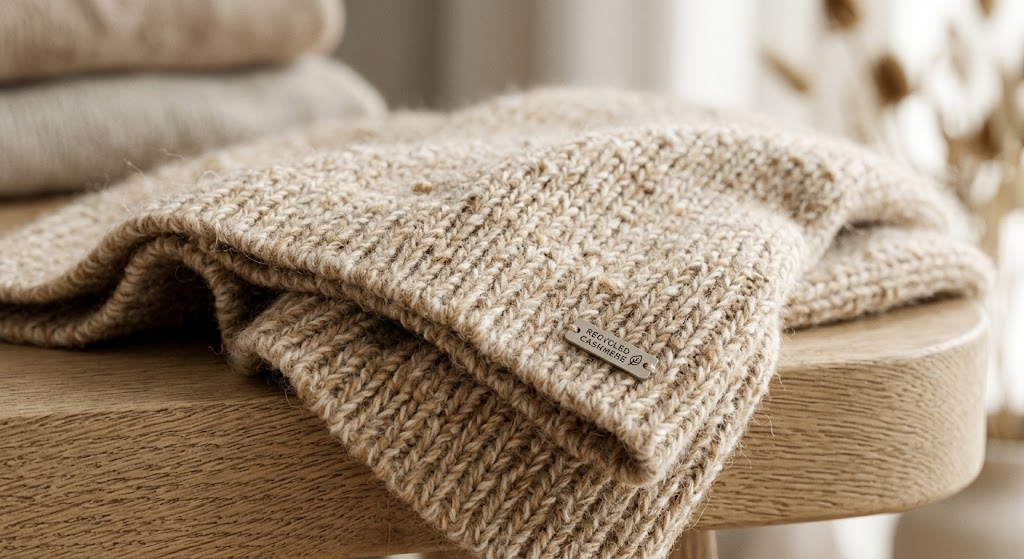
Fabric Four: Botanical Tencel and Modal — The Drape of Modern Architectural Elegance
As we venture further into the modern luxury wardrobe, the conversation naturally shifts from heavy winter layering to fluid, trans-seasonal tailoring and draping. This is where botanical cellulose fibers—specifically high-grade Tencel (lyocell) and modal derived from sustainably managed eucalyptus and beechwood forests—take center stage.
Closed-Loop Manufacturing Explained
What separates industrial rayon of the past from the high-end botanical fibers used in modern couture is the manufacturing process. Premium Tencel is produced in a closed-loop system. This means that over 99% of the non-toxic organic solvents and water used to dissolve the wood pulp and spin it into fibers are captured and recycled continuously in a closed loop. Nothing is dumped into local waterways.
The result is a textile that feels remarkably silky against the skin, breathes exceptionally well, and holds rich, deep dye saturation that rivals the finest silk satins.
Architectural Tailoring and Fluidity
High-end designers love Tencel and modal because they offer a unique dual personality: they possess enough weight and structure to hold sharp knife-pleats and architectural silhouettes, yet they retain a liquid drape that moves gracefully with the human body.
When you wear a trench dress or a wide-leg trouser cut from high-grade modal-blend twill, you experience a sense of ease that rigid synthetic fabrics simply cannot replicate. It is garments like these that make conscious luxury feel effortless rather than restrictive.
Comparing Traditional Synthetics vs. Botanical Cellulose
| Feature | Traditional Polyester / Nylon | High-End Tencel / Modal |
| Origin | Petroleum-based (fossil fuels) | Sustainable wood pulp (Eucalyptus/Beech) |
| Breathability | Low; traps heat and odor | High; natural moisture management |
| Environmental Impact | Sheds microplastics into oceans; non-biodegradable | Biodegradable; produced in closed-loop systems |
| Drape & Hand-Feel | Often stiff, plastic, or overly slick | Luxurious, fluid, silk-like softness |
| Luxury Standing | Increasingly viewed as outdated in premium lines | Embraced by top-tier contemporary couturiers |
Fabric Five: Organic European Linen and Hemp — The Textural Crown of Quiet Luxury
If cashmere represents the zenith of winter comfort, linen and hemp represent the unmitigated triumph of summer sophistication. For too long, linen was pigeonholed as a casual, wrinkle-prone fabric reserved strictly for casual beach getaways. However, high-end fashion has reclaimed linen and hemp, elevating them into the realm of “quiet luxury” and resort-ready high fashion.
The Ancient Pedigree and Modern Revival of Hemp
Hemp is arguably one of the most remarkable agricultural plants on earth. It requires virtually no irrigation, grows rapidly without pesticides, naturally regenerates the soil it occupies, and yields fibers that are exceptionally strong, antimicrobial, and thermo-regulating.
When blended with organic European flax linen, hemp transforms. The fabric develops a rich, multi-dimensional texture that softens dramatically with every single wash while maintaining structural integrity. Unlike cotton, which requires immense water inputs, European flax relies almost entirely on rainwater.
Styling Hemp and Linen for the Elite Wardrobe
- The Structured Summer Suit: Invest in an unstructured, double-breasted linen-hemp blend suit in ecru, slate grey, or navy. The natural wrinkles that form throughout the day are not signs of dishevelment; in high-end circles, they are badges of relaxed, effortless sophistication.
- Layering for Cool Evenings: Pair a heavy-weight linen overshirt with fine gauge knitwear. The contrast between rustic, textured linen and smooth, refined knitwear is a hallmark of master-level styling.
Wardrobe Investment Strategy: How to Build a Sustainable Luxury Capsule
Transitioning your wardrobe toward eco-friendly luxury requires a strategic mindset. Impulse purchasing is the antithesis of sustainability, regardless of how green the fabric claims to be. To truly embrace “Luxury That Lasts,” you must adopt an architectural approach to your closet.
1. Audit Before You Acquire
Before bringing any new piece into your collection, catalog what you already own. Identify gaps in your foundational wardrobe—such as a reliable trench coat, a versatile evening dress, or premium knitwear—and prioritize sustainable upgrades only when an existing item reaches the end of its functional life.
2. Prioritize Cost-Per-Wear Over Initial Price Tag
A sustainably crafted organic silk blouse or a recycled cashmere sweater carries an investment-level price tag. However, when evaluated through the lens of cost-per-wear—divided across years of frequent use and superior durability—it frequently proves far more economical than buying multiple fast-fashion substitutes that degrade within a season.
3. Inspect the Finishing Details
True luxury is revealed in the invisible details. When purchasing eco-friendly garments, check for:
- Reinforced seams and bound edges.
- Natural mother-of-pearl or corozo buttons instead of cheap plastic.
- Generous seam allowances that allow for future tailoring adjustments as your body or style evolves.
The Future Horizon: What Awaits High-End Sustainable Fashion
As we look toward the horizon of luxury fashion, the boundary between laboratory science and artisanal craftsmanship will continue to dissolve. We are standing on the precipice of an era where garments may soon be fully compostable, dyed using bacteria-derived pigments that require zero water, and tracked transparently from farm to boutique via blockchain technology.
Brands that refuse to adapt to this ethical and material evolution risk losing their relevance among a new generation of elites who view environmental recklessness as the ultimate faux pas. At Royal Fashion Tech, we believe that the future belongs to those who honor heritage while embracing innovation. Luxury was never about waste; it was always about enduring beauty, uncompromising quality, and profound respect for the world we inhabit.
Conclusion
The redefining of high-end fashion through eco-friendly fabrics is not a fleeting seasonal trend—it is a permanent evolution in how we define prestige, elegance, and value. From the fluid grace of peace silk and the botanical brilliance of closed-loop Tencel to the circular warmth of recycled cashmere, the materials shaping the modern luxury landscape prove that conscience and couture are natural allies.
Investing in luxury that lasts means looking beyond the glossy surface label and understanding the complex, beautiful story woven into every thread. By curating a wardrobe built on durability, ethical production, and timeless design, you don’t just elevate your personal style; you participate in a movement that honors our planet’s future. True luxury has always spoken softly, and today, its clearest voice is sustainable.
Frequently Asked Questions
1. Are eco-friendly luxury fabrics as durable as traditional materials?
Yes, and in many cases, they surpass them. Modern textile engineering ensures that materials like recycled cashmere, botanical leathers, and peace silk meet or exceed the tensile strength, longevity, and performance of conventional luxury counterparts.
2. How can I verify if a designer brand’s sustainability claims are authentic?
Look for reputable third-party certifications such as GOTS (Global Organic Textile Standard), OEKO-TEX, Cradle to Cradle, or Fair Trade. Furthermore, transparent brands readily publish details about their supply chains and manufacturing partners.
3. Is peace silk truly cruelty-free?
Peace silk (Ahimsa silk) allows silkworms to complete their natural life cycle and emerge as moths before the cocoons are processed. While some silk fibers are broken during this natural emergence, the resulting fabric avoids the boiling process used in conventional silk production.
4. Why are eco-friendly luxury garments generally more expensive?
Sustainable luxury garments involve higher labor standards, ethical wages, innovative bio-fabrication technologies, and smaller-scale regenerative farming practices. You are paying for fair treatment of workers, environmental restoration, and superior craftsmanship.
5. How should I care for botanical and plant-based leathers?
Plant-based leathers (such as cactus or mushroom leather) should be cleaned gently with a damp microfiber cloth and mild soap. Avoid harsh chemical solvents and condition them periodically with specialized natural balms to maintain their suppleness.
6. Do recycled cashmere garments pill more easily than virgin cashmere?
High-grade recycled cashmere, spun with appropriate staple lengths and multi-ply twists, performs comparably to virgin cashmere. Pilling is a natural characteristic of fine animal hair, but it decreases significantly after the first few gentle washes and proper de-pilling maintenance.
7. Can Tencel and modal garments be worn for formal evening occasions?
Absolutely. High-grade Tencel and modal possess a liquid drape and rich dye absorption that allow them to mimic the elegance of fine silk satin, making them exceptionally popular for fluid evening gowns and architectural tailoring.
8. What is the single most important rule of building a sustainable luxury wardrobe?
Prioritize cost-per-wear and longevity. Buy fewer, better-crafted items that align with your personal style rather than chasing transient micro-trends.