When it comes to the world of Accessories & Footwear, nothing captures attention and holds its value quite like fine jewelry and diamonds. While a designer handbag or a pair of perfectly crafted stilettos can elevate an outfit, fine jewelry transcends fashion—it becomes a legacy.
Whether you are looking to make your first major diamond purchase, seeking to understand the nuances of fine jewelry, or wanting to learn how to perfectly pair your diamonds with your favorite footwear, this guide will illuminate everything you need to know.
The Anatomy of a Diamond: Mastering the 4 Cs
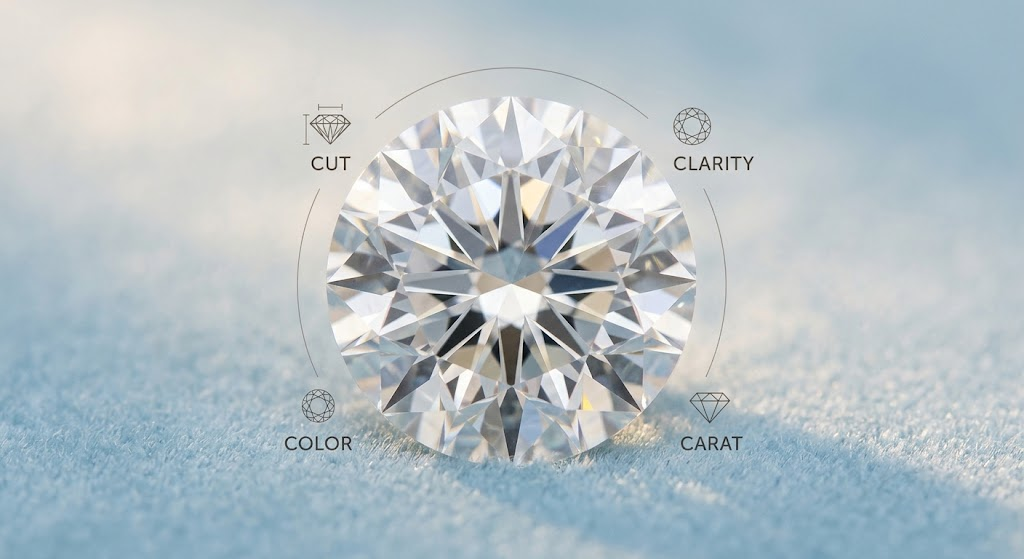
Before making any investment in diamond jewelry, understanding the universal standard for diamond grading is essential. The 4 Cs dictate a stone’s beauty, rarity, and price:
- Cut: Often considered the most critical factor, the cut determines how the diamond interacts with light. A well-cut diamond (like a Round Brilliant) will maximize sparkle, fire, and brilliance.
- Color: Counterintuitively, the best diamond color is no color at all. Graded on a scale from D (colorless) to Z (light yellow or brown), the less color a diamond has, the higher its value.
- Clarity: This refers to the absence of internal characteristics (inclusions) and surface defects (blemishes). Flawless diamonds are exceptionally rare, but many inclusions are completely invisible to the naked eye.
- Carat: The measure of a diamond’s physical weight, not its visual size. While larger carat weights are rarer, a smaller diamond with a superior cut and clarity often looks more impressive than a larger, poorly cut stone.
Must-Have Fine Jewelry Pieces for Every Collection
Building a fine jewelry wardrobe is a marathon, not a sprint. Focus on versatile, high-quality pieces that can easily transition from day to night.
- Diamond Stud Earrings: The ultimate staple. They bring a subtle glow to the face and pair just as effortlessly with a casual blazer as they do with a formal gown.
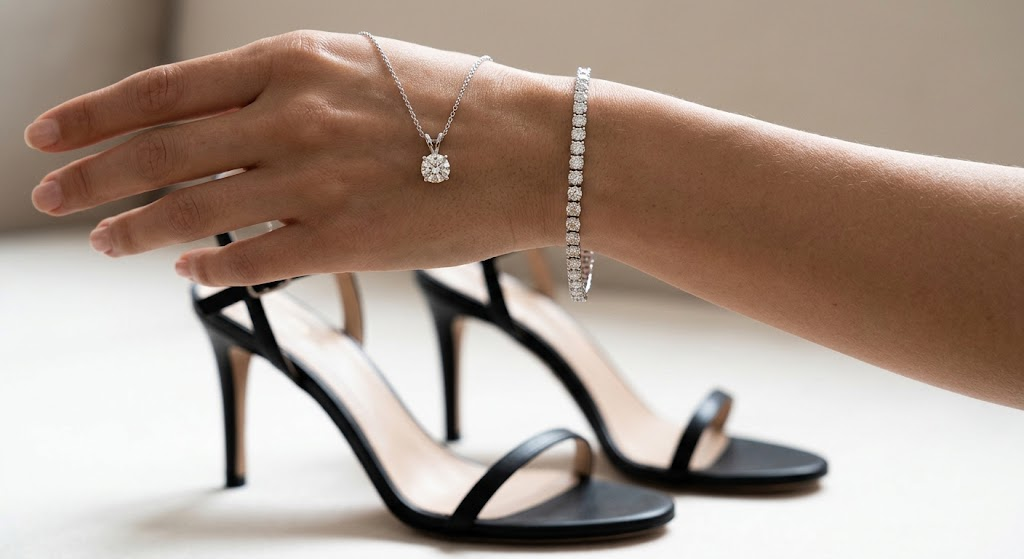
- The Tennis Bracelet: A continuous line of diamonds that offers 360 degrees of sparkle. It is the perfect balance of sporty elegance and high luxury.
- A Signature Pendant Necklace: A single diamond solitaire resting on a delicate gold or platinum chain draws the eye and adds a touch of refinement to any neckline.
- The Statement Ring: Whether it is an engagement ring, a cocktail ring, or a right-hand diamond band, a standout ring is a testament to personal style.
Styling Fine Jewelry with Your Footwear
While jewelry and shoes might seem like opposite ends of your wardrobe, coordinating them creates a harmonious, polished look.
- Strappy Evening Heels & Diamond Anklets: The resurgence of the diamond anklet (often a miniature tennis chain) pairs perfectly with minimalist, barely-there stiletto sandals, drawing attention to elegant footwear.
- Classic Pumps & Tennis Bracelets: The structured, timeless silhouette of a pointed-toe pump mirrors the classic, unbroken line of a diamond tennis bracelet.
- Chunky Loafers & Layered Gold: If you are wearing trendy, heavy footwear like lug-sole loafers, balance the look with bolder fine jewelry, such as layered chunky gold chains featuring bezel-set diamonds.
Investment and Care: Protecting Your Sparkle
Fine jewelry is meant to be worn, but it also requires mindful care to maintain its brilliance over generations.
- Routine Cleaning: Soak your diamond pieces in a gentle solution of warm water and mild dish soap. Use a soft-bristled toothbrush to gently dislodge lotions or oils trapped behind the stone.
- Professional Maintenance: Visit your jeweler annually to check for loose prongs or weakened clasps.
- Safe Storage: Diamonds are the hardest material on earth, which means they can easily scratch your other jewelry. Store diamond pieces individually in soft cloth pouches or lined jewelry boxes.
Here is Part 2 of your comprehensive web post on Fine Jewelry and Diamonds. This section dives deeper into the metals that hold these stones, the evolution of diamond shapes, and the modern landscape of ethical sourcing—all crucial topics for a high-ranking, in-depth SEO article.
The Foundation of Brilliance: Choosing the Right Precious Metal
A diamond may be the star of the show, but the precious metal you choose serves as the stage. In fine jewelry, the metal not only dictates the durability of the piece but also profoundly influences how the diamond’s color is perceived.
1. Platinum: The Pinnacle of Purity and Strength
Platinum is the premier choice for fine jewelry. It is naturally white, incredibly durable, and hypoallergenic. Unlike white gold, platinum does not require rhodium plating to maintain its bright white finish. Because of its density, platinum holds diamonds more securely than any other metal, making it the top recommendation for heirloom pieces and engagement rings.
2. Gold: The Timeless Standard
Gold is measured in karats, with 24K being pure gold. However, pure gold is too soft for diamond jewelry. It is typically alloyed with other metals to create 18K (75% gold) or 14K (58.3% gold) pieces.
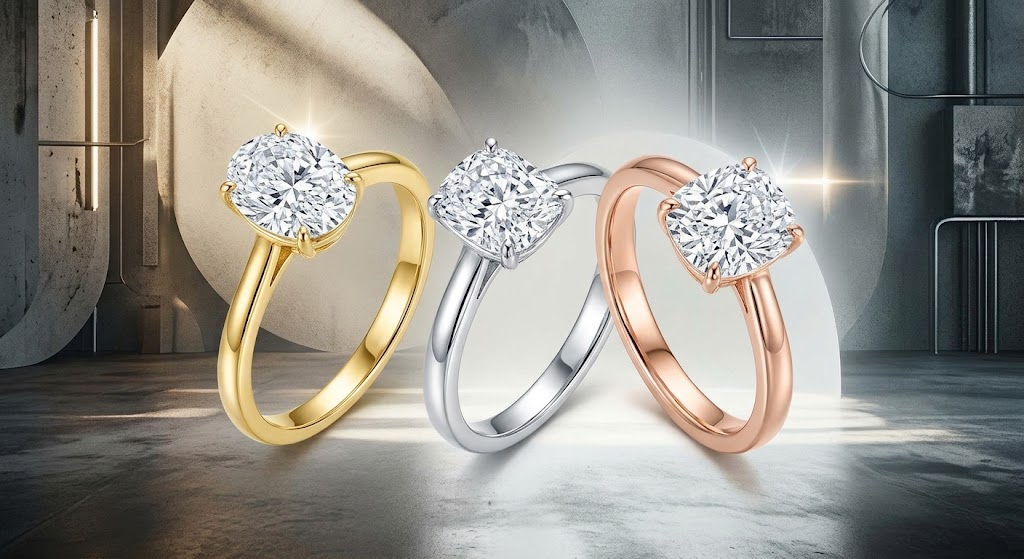
- White Gold: Created by mixing yellow gold with white metals like nickel or palladium, and finished with a rhodium plating. It offers the sleek look of platinum at a more accessible price point, though it requires occasional re-plating to maintain its icy white appearance.
- Yellow Gold: The traditional classic. Yellow gold is making a massive resurgence in modern fine jewelry. Pro-Tip: Setting a slightly lower-color diamond (like an I or J grade) in yellow gold can actually make the diamond appear whiter by contrast.
- Rose Gold: A romantic, warm metal created by alloying gold with copper. Rose gold complements virtually all skin tones and adds a vintage-inspired aesthetic to modern diamond pieces.
The Evolution of the Diamond Cut: Vintage Charm vs. Modern Brilliance
While the Round Brilliant is the most popular cut today, the world of fine jewelry offers a rich history of shapes, each with its own distinct personality.
Step Cuts: The Hall of Mirrors
Step-cut diamonds, such as the Emerald and Asscher cuts, feature long, clean, rectangular facets. Instead of the fiery sparkle of a brilliant cut, step cuts offer a mesmerizing “hall of mirrors” effect, showcasing the diamond’s absolute clarity. Because these cuts do not hide imperfections well, investing in a high clarity grade (VS1 or above) is essential.
Brilliant Cuts: Maximizing the Sparkle
The modern Round Brilliant, perfected in the early 20th century, features 58 mathematically precise facets designed to reflect the maximum amount of light. Other brilliant shapes—known as fancy cuts—include the Oval, Pear, Marquise, and Princess cuts.
Style Note: Elongated brilliant cuts, like the Oval and Marquise, are highly sought after in today’s market. They not only appear larger per carat than round diamonds but also create a flattering, lengthening effect on the wearer’s fingers.
The Modern Diamond Landscape: Natural, Lab-Grown, and Ethical Sourcing
The fine jewelry industry has transformed significantly over the last decade. Today’s buyers are highly conscious of where their accessories come from, leading to two major shifts in the diamond market.
Ethical and Conflict-Free Natural Diamonds
For those who value the geological miracle of a stone formed billions of years ago beneath the earth’s crust, natural diamonds remain the ultimate luxury. Thanks to the Kimberley Process, a global certification system, the vast majority of natural diamonds traded today are conflict-free. Top-tier jewelers now go a step further, offering full traceability so buyers know exactly which mine their diamond originated from.
The Rise of Lab-Grown Diamonds
Lab-grown diamonds are not “fake” or simulated (like cubic zirconia or moissanite). They are optically, chemically, and physically identical to natural diamonds. The only difference is their origin: they are created in highly controlled laboratory environments that mimic the extreme pressure and heat of the earth’s mantle. Lab-grown diamonds offer an eco-conscious alternative and allow buyers to purchase significantly larger, higher-quality stones for a fraction of the cost.
Navigating Fine Jewelry in the Digital Age
Purchasing fine jewelry and diamonds online has never been safer or more transparent. When shopping for high-ticket accessories digitally, look for retailers that provide:
- Independent Grading Reports: Never buy a significant diamond without a certificate from a reputable, independent gemological laboratory like the GIA (Gemological Institute of America) or IGI.
- High-Definition 360-Degree Video: Because no two diamonds are exactly alike, you must be able to view the specific stone you are buying, not just a stock image.
- Robust Return Policies: A trustworthy fine jewelry retailer will offer a secure, no-questions-asked return window (usually 30 days) to ensure you love the piece in person.