The Evolution of Personal Adornment and Vitality
We have all been there. You spend forty-five minutes curating a look—perhaps a sharp, unstructured linen blazer thrown effortlessly over a minimalist silk tee, tailored trousers that break precisely at the ankle, and your favorite vintage leather loafers. You look in the mirror, and the silhouette is immaculate. Then, you strap a chunky, clinical slab of black silicone and flashing green LEDs to your wrist. Instantly, the illusion of effortless elegance shatters. It looks like a piece of hospital equipment that escaped into the wild, clashing violently with your carefully considered aesthetic.
For years, the intersection of technology and personal style felt like an unbridgeable chasm. Tech companies built computers for the wrist, prioritizing raw data, algorithmic heart-rate tracking, and sweat-proof resilience over the subtle nuances of drapery, texture, and metallic harmony. Fashion enthusiasts, conversely, clung stubbornly to mechanical horology—timeless heritage pieces from houses that spent centuries perfecting the sweep of a second hand or the guilloché pattern of a dial. To choose wellness was to compromise your wardrobe. To choose style was to remain blissfully, albeit dangerously, ignorant of your daily step count, sleep architecture, and metabolic recovery.
Fortunately, the landscape of personal technology has undergone a quiet, elegant revolution. Today, the conversation around digital wellness has matured. We no longer want our accessories to scream about our VO2 max from across a crowded room; instead, we demand discretion, craftsmanship, and materials that converse harmoniously with gold, silver, cashmere, and calfskin. The modern wellness tracker is no longer a gadget disguised as an accessory—it is a piece of fine jewelry or a sophisticated timepiece that happens to monitor your biology.
Welcome to the definitive guide on navigating this new era. Whether you are walking the cobblestones of Milan during fashion week, heading into a high-stakes boardroom meeting, or unwinding at a weekend wellness retreat, this deep dive will explore how to integrate fashion-forward fitness trackers into your everyday wardrobe without sacrificing a single ounce of personal style.
The Anatomy of Modern Wearable Elegance: Beyond Silicone and Plastic
To understand why traditional tech wearables so often failed the style test, we must examine their foundational philosophy. Early fitness trackers were engineered by software developers and exercise physiologists. Their primary frame of reference was the gym locker room, the running track, and the cycling studio. Consequently, their material palette was dominated by thermoplastics, fluoroelastomers, and heavy-duty plastics chosen for their durability, sweat resistance, and low production cost.
While these materials excel in utilitarian environments, they fail miserably in the realm of luxury style. Style is tactile. It relies on the rich patina of vegetable-tanned leather, the cold, heavy reassurance of 18-karat gold or surgical-grade stainless steel, the deep luster of ceramic, and the organic texture of woven textiles. When a tech accessory relies entirely on matte black plastic, it creates a visual dissonance that cannot be rescued by software updates or customizable digital watch faces.
The Shift Toward Heritage Materials
The turning point arrived when traditional luxury houses and forward-thinking tech designers realized that wellness is a permanent lifestyle pillar, not a seasonal hobby. If an accessory is designed to be worn twenty-four hours a day—tracking your sleep cycles through the night and your stress levels during a morning espresso—it must possess the versatility to transition seamlessly through every single aspect of your day.
This realization sparked an unprecedented material evolution in the wearable tech space. We began to see manufacturers abandon cheap polymers in favor of materials long celebrated in high-end horology and fine jewelry:
- Surgical-Grade Stainless Steel (316L): Valued for its corrosion resistance and ability to take a brilliant mirror polish or a sophisticated brushed finish.
- Titanium: Offering an exceptional strength-to-weight ratio, titanium provides a featherlight feel on the wrist with a dark, gunmetal allure that reads as undeniably modern and architectural.
- Ceramic: High-tech ceramic is virtually scratch-proof, hypoallergenic, and possesses a liquid-smooth, glossy finish that catches the light in ways traditional metals simply cannot replicate.
- PVD and DLC Coatings: Physical Vapor Deposition and Diamond-Like Carbon coatings allow metals to be transformed into rich shades of champagne gold, rose gold, deep obsidian, and warm bronze while drastically increasing surface durability.
When you hold a truly fashion-forward fitness tracker, it should feel substantial. It should have weight without being cumbersome, cool to the touch, and finished with the same attention to detail you would expect from a boutique watchmaker on the Place Vendôme.
Decoding the Categories: Rings, Bands, and Hybrid Timepieces
Navigating the market of stylish wellness trackers requires understanding the three primary form factors currently dominating the intersection of fashion and tech. Each serves a distinct aesthetic purpose and offers a unique way to integrate data collection into your personal style philosophy.
+-------------------------------------------------------------------------+
|                  THE THREE PILLARS OF WEARABLE STYLE                    |
+--------------------------+----------------------------------------------+
| Form Factor              | Primary Aesthetic & Styling Benefit          |
+--------------------------+----------------------------------------------+
| Smart Rings              | Ultimate discretion; stacks with fine jewelry|
| Hybrid Timepieces        | Traditional dial mechanics + hidden tracking |
| Minimalist Smart Bands   | Sleek, metal-accented profile for modern wear|
+--------------------------+----------------------------------------------+
The Rise of the Smart Ring: Ultimate Discretion for the Minimalist
For the purist who refuses to wear anything on their wrist other than an heirloom mechanical watch, the smart ring has emerged as the holy grail of wellness tracking. Brands pioneering this space have recognized that our hands are prime real estate for personal expression. We wear wedding bands, signet rings, cocktail rings, and stacking bands that tell stories of heritage, milestone achievements, and personal taste.
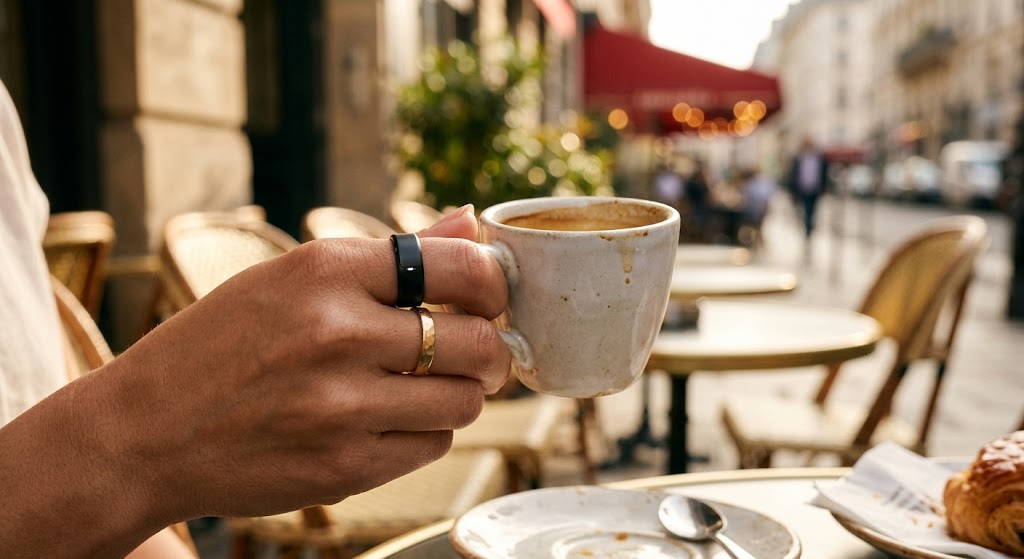
A well-designed smart ring slips into this ecosystem without causing a single ripple of aesthetic confusion. Crafted from titanium or precious metals, and often lined with medical-grade resin to house internal sensors, these rings track sleep, heart rate variability, body temperature, and daily activity entirely invisibly.
From a styling perspective, the smart ring is a dream. You can stack it alongside vintage silver bands or wear it solo on the index finger as a bold, architectural statement piece. Because it features no screens, flashing lights, or buzzing notifications, it allows you to remain entirely present in your environment—free from the constant micro-distractions that wrist-bound screens often encourage.
Hybrid Timepieces: Marrying Horological Heritage with Digital Insight
There is an undeniable romance to a traditional watch. The rhythmic ticking of gears, the sweep of a hand across an enamel dial, and the tactile feedback of winding a crown are sensory experiences deeply embedded in the history of personal style. Hybrid smartwatches bridge this chasm by retaining the classic analog face while embedding subtle biometric sensors and discreet internal motors beneath the surface.
At first glance, a hybrid timepiece is indistinguishable from a vintage mechanical watch found in a dusty boutique in Mayfair. Yet, as you move through your day, the sub-dials or subtle LED indicators track your progress toward your step goal, gently buzz to alert you to a critical calendar event, or silently log your sleep quality the night before.
For the corporate professional, the academic, or the devotee of classic tailoring, the hybrid watch is the ultimate compromise. It respects the codes of formal dressing while quietly keeping you accountable to your personal health metrics. You can pair a leather-strapped hybrid with a bespoke navy wool suit or a cashmere roll-neck sweater with absolute confidence, knowing your accessory is speaking the language of classic elegance rather than Silicon Valley utility.
Minimalist Smart Bands: Redefining the Digital Wristband
If you prefer a dedicated wrist-worn tracker that focuses heavily on fitness metrics without looking like a miniature smartphone strapped to your arm, the minimalist smart band is your canvas. The key to styling these devices lies in customization and hardware finish.
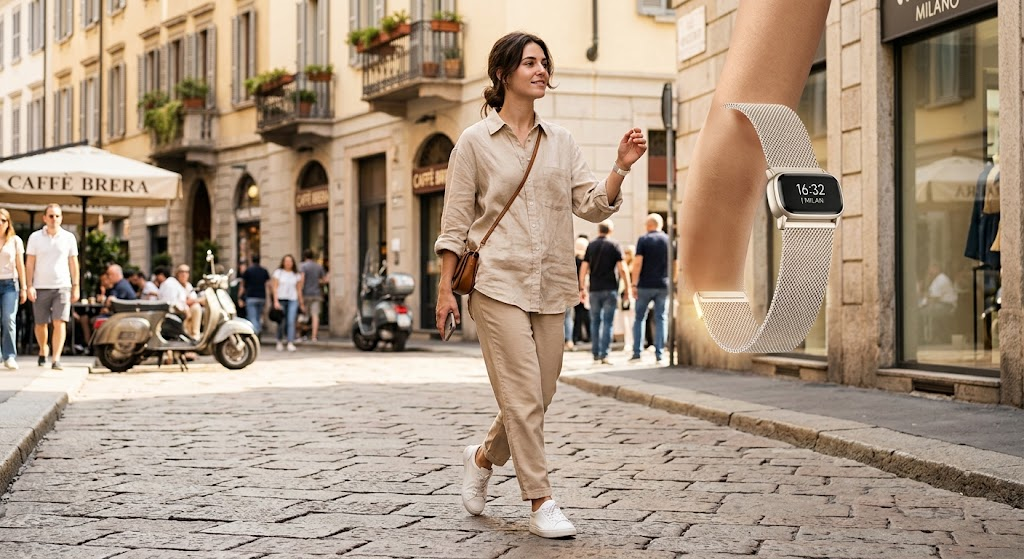
Gone are the days of being locked into a single rigid strap. Today’s leading bands feature quick-release mechanisms that invite you to swap out straps the way you would change your belt or shoes. Transitioning from a perforated fluoroelastomer band for your morning Pilates session to a supple, full-grain Italian calfskin or Milanese mesh strap for your evening dinner reservation takes less than thirty seconds. This modularity is what transforms a utilitarian gadget into a versatile fashion accessory.
The Psychology of Wearable Integration: Why We Wear What We Wear
Why do we care so deeply about how our technology looks? Fashion is never merely about keeping warm or covering the body; it is a complex, non-verbal system of communication. Every garment, texture, and accessory we choose sends immediate signals to the world about who we are, what we value, and how we wish to be perceived.
When you strap an ugly, bulky fitness tracker to your wrist while wearing a meticulously tailored designer ensemble, you create a jarring mixed message. It suggests a disjointed lifestyle—as though your health goals and your aesthetic identity are at war with one another.
Resolving the Identity Conflict
True luxury lifestyle curation is about coherence. When your wellness technology aligns with your personal style, it communicates a powerful narrative: you take your health seriously, but you refuse to compromise your standards of beauty and craftsmanship to do so. It signals intentionality.
Moreover, psychological research into habit formation reveals that the tactile and aesthetic appeal of an object directly influences our willingness to use it consistently. If you genuinely love the way your health tracker looks—if it feels like a cherished piece of jewelry rather than a medical monitor—you are significantly more likely to wear it consistently, keep it charged, and engage with the insights it provides. Style is not the enemy of wellness; when properly harnessed, it is the ultimate adoption driver.
Advanced Styling Strategies: Integrating Tech into Diverse Wardrobes
Having established the foundational shift in materials and form factors, we now turn our attention to the practical execution of styling these pieces across various facets of a dynamic lifestyle. How do you actually wear these devices when moving from the gym to the boardroom, and onward to an evening gala?
The Corporate and Professional Arena
In high-level professional environments, dress codes may be fluid, but the underlying expectation of polish remains absolute. Whether you operate in finance, law, tech leadership, or creative direction, your accessories must project competence, reliability, and refined taste.
- The Golden Rule: Never wear a rubber or silicone strap in a formal business setting. It disrupts the line of a crisp shirt cuff and introduces an overly casual athletic element into an environment built on structure.
- The Execution: Opt for a smart ring in titanium or gold finish, or a hybrid timepiece equipped with a dark brown or matte black leather strap. If you wear a metal-banded watch, ensure the metal tone matches your other hardware—your belt buckle, cufflinks, or ring. Mixing bright polished steel with warm yellow gold hardware can disrupt an otherwise cohesive look.
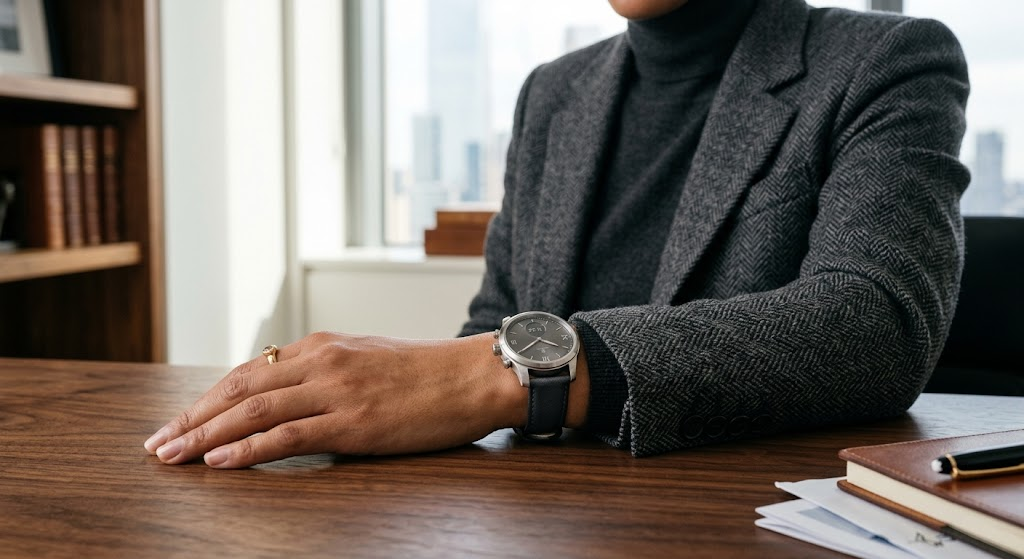
- Styling Scenario: Picture a sharp charcoal grey herringbone blazer over a fine-gauge merino wool turtleneck, paired with slim trousers. On your wrist, a minimalist hybrid watch with a brushed stainless steel case and a black alligator-embossed leather strap. The tech is entirely invisible to the casual observer, yet you are silently tracking your stress levels through a demanding afternoon board meeting.
Casual Elegance and Weekend Wear
Weekend dressing is where personal style truly breathes. It is an exercise in relaxed sophistication—think unstructured tailoring, luxury knitwear, premium denim, and artisanal outerwear. This is the natural habitat of the fashion-forward fitness tracker, as casual attire inherently permits a slightly more experimental accessory game.
- The Golden Rule: Embrace texture and mixed media. Weekend wear invites you to play with contrast.
- The Execution: This is the ideal time to utilize Milanese mesh metal bands, woven leather straps, or ceramic finishes. A ceramic smart band in crisp white or deep obsidian looks remarkably chic when paired with an oversized beige linen shirt and relaxed-fit cotton trousers.
- Styling Scenario: You are strolling through a weekend farmers’ market or meeting friends for brunch. You wear a cream cashmere crewneck sweater, raw selvedge denim, and minimalist white leather sneakers. On your finger, a titanium smart ring catches the morning light, subtly signaling a commitment to wellness that feels entirely effortless and unforced.
The Common Pitfalls: Styling Mistakes to Avoid
Even with the most luxurious hardware on the market, it is remarkably easy to stumble into styling traps that instantly cheapen your look. Avoiding these common mistakes ensures your tech accessories always elevate your wardrobe rather than undermine it.
+-------------------------------------------------------------------------+
|                    WEARABLE STYLING: DO'S AND DON'TS                    |
+-----------------------------------+-------------------------------------+
| DO                                | DON'T                               |
+-----------------------------------+-------------------------------------+
| Match metal finishes across items | Wear neon silicone with tailoring   |
| Swap straps to match occasions    | Ignore screen glare in formal events|
| Treat tech as a jewelry accent    | Over-stack wrist accessories        |
+-----------------------------------+-------------------------------------+
1. The Athletic Mismatch in Formal Settings
The most common infraction is wearing a high-performance sports band to a wedding, a formal dinner, or a black-tie event. Even if the band is sleek and black, the material language of rubber and plastic breaks the unbroken line of evening wear. If you must track your sleep and activity during a formal event, switch to a smart ring or remove the wristband entirely for the duration of the evening.
2. Hardware Clashes
Pay strict attention to metal tones. If your signature jewelry consists of vintage yellow gold heirlooms, strapping a cool-toned silver titanium band next to them creates a jarring metallic discord. Modern wearable brands offer multiple metal finishes precisely to prevent this issue. Take the time to select the finish that harmonizes with your existing jewelry collection.
3. Over-Accessorizing the Wrist
When you wear a smart band or hybrid watch alongside multiple heavy silver bracelets or a beaded wrap, you create visual clutter. The human eye needs resting points. If your wrist tracker has a prominent display or a bold metallic bezel, let it breathe. Pair it with simplicity on the opposing wrist to maintain an uncluttered, editorial silhouette.
Evaluating Quality: What Experienced Buyers Look For
When investing in a fashion-forward fitness tracker or smart ring, how do you distinguish between genuine luxury craftsmanship and cheap plastic wrapped in a thin veneer of marketing? Experienced buyers look beyond the spec sheet and examine the fine details of construction and user experience.
- Seamless Integration of Sensors: On a poorly made device, sensors protrude awkwardly, creating pressure points against the skin or trapping moisture and lint. High-end trackers feature flush, biocompatible inner linings—often made of medical-grade epoxy or smooth ceramic—that sit comfortably against the skin without leaving indentations.
- Strap Interchangeability and Mechanism Quality: Examine the clasp and the strap attachment mechanism. Does it click into place with a reassuring, mechanical solidity, or does it feel loose, wiggly, and prone to accidental release? Luxury accessories rely on precision engineering where moving parts operate with absolute smoothness.
- Battery Life and Charging Elegance: True luxury is frictionless. A device that requires you to wrestle with clunky proprietary charging cables every single night disrupts the rhythm of daily life. Look for devices that offer multi-day battery life and come with elegantly designed charging docks that double as tasteful nightstand objects.
The Future Horizon: Where Fashion and Biotechnology Converge
As we look toward the future of luxury lifestyle and personal technology, the boundaries between what is digital and what is textile are poised to dissolve entirely. We are moving beyond the era of hard accessories strapped to the body and entering the realm of ambient intelligence.
We are already seeing the early stages of smart textiles—fabrics woven with conductive threads that can monitor heart rate, respiration, and muscle engagement directly through a tailored jacket lining or an athletic baselayer. Designer collaborative editions between haute couture houses and biometric tech pioneers are transforming health monitoring into limited-edition collectible art pieces.
In this near future, the question will no longer be “How do I make my fitness tracker match my outfit?” Instead, your clothing and your wellness ecosystem will be designed from the ground up as a single, harmonious expression of your lifestyle. Until then, mastering the art of wearable integration allows you to enjoy the best of both worlds: rigorous, data-driven self-optimization wrapped in uncompromising personal style.
Conclusion
The intersection of fashion and wellness is no longer a compromised battleground where style surrenders to utility. As we have explored throughout this guide, the modern wellness tracker has evolved into a sophisticated design object—one that respects the codes of luxury craftsmanship, material integrity, and personal expression.
By choosing form factors like discreet smart rings, timeless hybrid timepieces, and customizable minimalist bands, you no longer have to choose between monitoring your health and curating your wardrobe. True luxury is holistic; it encompasses how you feel on the inside, how you perform throughout your day, and how you present yourself to the world.
As you refine your personal collection, remember that the most successful style choices are those rooted in intentionality. Select pieces that honor your aesthetic, adapt effortlessly to your routine, and serve your long-term well-being with quiet elegance. Here at Royal Fashion Tech, we believe that embracing the future of personal technology should never require a compromise on beauty.
Frequently Asked Questions
Can I wear a smart ring alongside traditional gold and silver jewelry?
Yes, absolutely. In fact, smart rings are specifically designed to stack effortlessly with wedding bands, signet rings, and fashion rings. To maintain a cohesive look, match the metal finish of your smart ring (such as polished gold, brushed titanium, or black ceramic) to your existing ring stack, or deliberately mix warm and cool metals for an eclectic, curated aesthetic.
Are hybrid smartwatches accurate enough for serious fitness tracking?
Hybrid smartwatches excel at tracking foundational metrics like daily step counts, sleep duration, resting heart rate, and overall activity levels. While they may not feature the advanced running dynamics or specialized sports profiles of a bulky dedicated sports watch, they provide more than enough actionable data for the average wellness-conscious professional.
How do I clean and maintain a leather strap on a fitness tracker?
Treat a wearable leather strap the same way you would treat a luxury watch strap or a fine leather belt. Avoid submerging it in water, wipe away sweat with a soft, dry microfiber cloth after workouts, and condition the leather periodically with a neutral leather balm to prevent cracking and preserve its suppleness.
Is it acceptable to wear a fitness tracker to formal black-tie events?
In strict black-tie or ultra-formal environments, traditional etiquette dictates leaving visible tech at home. However, if tracking is essential to your routine, a discreet titanium or ceramic smart ring remains entirely invisible under the cuff and is widely accepted in contemporary formal settings.
Do luxury fitness trackers require subscriptions to access data?
Some premium wearable brands utilize subscription models to unlock advanced, long-term health analytics and personalized AI-driven coaching insights. Always review the brand’s software pricing structure before purchasing to understand whether core metrics are available out of the box or if a recurring membership is required.
How can I prevent skin irritation from wearing a tracker 24/7?
Skin irritation usually occurs when moisture, soap residue, or sweat gets trapped beneath the band or sensor housing. To prevent this, regularly clean your device with mild soap and water, ensure your wrist is completely dry before putting it back on, and periodically switch wrists or remove the device for a brief period while resting.
Can I swim or shower with a fashion-forward wellness tracker?
Most high-end trackers feature robust water resistance ratings (typically 5 ATM or higher), making them safe for swimming, showering, and daily hand-washing. However, if your device is fitted with a genuine leather strap, you should always remove the strap or avoid water exposure to protect the organic material.
What is the average lifespan of a luxury wellness tracker?
Due to internal battery degradation and rapid technological advancements, most high-end wearable devices have an optimal lifecycle of approximately two to four years. Choosing a device crafted from durable materials like titanium, ceramic, or surgical steel ensures the physical hardware remains pristine throughout its functional lifespan.